Junte-se a nós em uma viagem ao mundo dos livros!
Adicionar este livro à prateleira
Grey
Deixe um novo comentário Default profile 50px
Grey
Assine para ler o livro completo ou leia as primeiras páginas de graça!
All characters reduced
Great Depression - cover
LER

Great Depression

Amelia Scott

Tradutor A AI

Editora: Publifye

  • 0
  • 0
  • 0

Sinopse

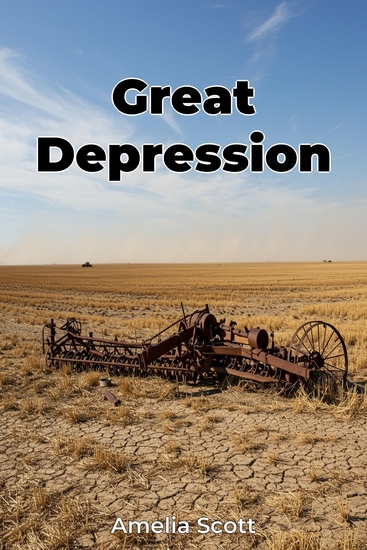
Great Depression explores the multifaceted causes and profound consequences of the 1930s economic crisis across the Americas. This book examines how pre-existing economic vulnerabilities, amplified by policy choices and the stock market crash, led to unprecedented economic hardship. It highlights governmental actions like the New Deal and shifts in international trade policies that shaped the era's economic landscape. A unique aspect of this book is its comparative analysis of various countries in the Americas, revealing common threads and divergences in their responses to the crisis.

 
The book progresses by first establishing the historical context of the 1920s, then analyzing the economic devastation, including the collapse of industries and the rise of unemployment and poverty. It then examines diverse policy responses across the Americas, and concludes by assessing the long-term consequences on social structures and political landscapes.

 
It draws from macroeconomic data, government documents, and personal narratives, offering a balanced perspective on ongoing debates regarding monetary policy, income inequality, and international trade imbalances. This approach offers insights applicable to contemporary discussions about economic policy, financial regulation, and social welfare programs.
Disponível desde: 19/03/2025.
Comprimento de impressão: 54 páginas.

Outros livros que poderiam interessá-lo

  • Why Do Governments Fail? - A Thorough Investigation Of How Absolute Power Power Retention Economic Prosperity Poverty General Insecurity Corruption Elected Candidates' Quality Electorates' Positive Voting Behavior Electoral System & Party Ethics - cover

    Why Do Governments Fail? - A...

    George Westlings, Richardson...

    • 0
    • 0
    • 0
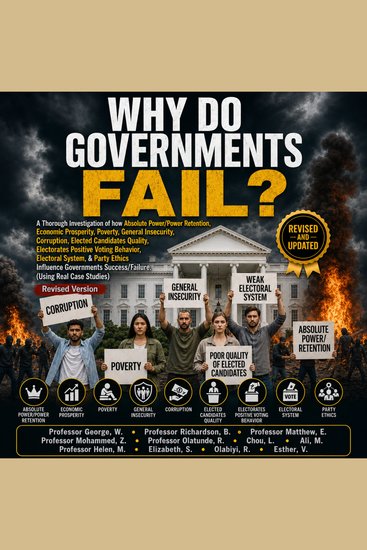
    The book: “Why Do Governments Fail?” Its subtitle is “A Thorough Investigation Of How Absolute Power/Power Retention, Economic Prosperity, Poverty, General Insecurity, Corruption, Elected Candidates' Quality, Electorates' Positive Voting Behavior, Electoral System, & Party Ethics Influence Governments' Success/Failure. (Using Real Case Studies) Revised Version” measured various incidences leading to government failures or successes. An ugly trend among unpatriotic politicians to maintain their selfish grip on power against the majority wishes of the citizenry continues to contribute to government failures in most African countries, such as Cameroon, Zimbabwe, Libya, etc., while the respect for tenure of political offices in most Western nations continues to strengthen democratic precedents and benefits.  
    Economic prosperity is a yardstick upholding the democratic health of most advanced nations, such as the United States, with centuries of democratic practice, compared to economically challenged nations where some undemocratic forces capitalize on their countries’ staggering economic conditions to seize power through illegitimate means, such as the military coups that occurred in Niger, Burkina Faso, and Mali. 
    The people, because of the unbearable poverty level in their countries, decide to rally support for these military juntas, forgetting the ugly events that took place in Libya. They never once consider the fact that Gaddafi also started as a people’s hero before allowing himself to be blinded by absolute power. The people rejoicing and singing praises to these military juntas today have never thought of the fact that their celebrated military rulers might become their worst Gaddafi of tomorrow. For instance, these juntas are gradually metamorphosing into Gaddafi’s tactics by elongating their tenure in office and postponing their countries’ election timetables indefinitely.
    Ver livro
  • History of Poland between 966-1919 - The Rise and Fall of the Polish Lithuanian Commonwealth - cover

    History of Poland between...

    HISTORY FOREVER

    • 0
    • 0
    • 0
    ★ Do you want to discover the History of Poland? ★ 
    If your answer is yes, get this book now! 
    ★ BUY THIS BOOK NOW AND DISCOVER MORE ABUOT POLAND  TODAY! ★ 
    In this book you will discover; 
    ·       History of the Polish Kingdom: Lech, Czech, and Rus 
    ·       Vladislav the Short & Kashmir the Great 
    ·       The Grand Duchy of Lithuania – The 15th century 
    ·       Polish History of the 16th and 17th century 
    ·       Polish History of the 18th and 19th century 
    ·       Occupation & Revolution - The French Polish Legion 
    ·       The November Uprising 
    ·       The Galician Province 
    ·       The Polish Lithuanian Commonwealth 
    ·       The Great Northern War 
    ·       Poland after the Partition 
      
    ★ BUY THIS BOOK NOW AND DISCOVER MORE ABUOT POLAND TODAY! ★
    Ver livro
  • Magna Carta - Its Medieval Writings Rights and Background - cover

    Magna Carta - Its Medieval...

    Kelly Mass

    • 0
    • 0
    • 0
    The Magna Carta Libertatum, commonly known as the Magna Carta, is a royal charter of rights that was signed by King John of England on June 15, 1215, at Runnymede, near Windsor. This historic document was initially drafted by Archbishop of Canterbury Stephen Langton in response to escalating tensions between King John and a group of discontented barons. The Magna Carta sought to resolve these tensions by outlining a series of promises and protections, aimed at securing peace between the monarchy and the nobility. 
    At its core, the Magna Carta addressed several critical grievances, promising protection for the rights of the Church, safeguarding barons from illegal imprisonment, guaranteeing access to swift justice, and imposing limitations on feudal payments to the Crown. These promises were to be enforced through the creation of a council of 25 barons, which would oversee the king's adherence to the terms. However, the charter's effectiveness was short-lived. Within a few months, Pope Innocent III annulled the document, declaring it void, as neither King John nor the rebel barons honored their commitments. This revocation led directly to the First Barons' War, a conflict that further destabilized the kingdom.
    Ver livro
  • Tomorrow with Bayonets - Dublin: July 1921 – July 1922 - cover

    Tomorrow with Bayonets - Dublin:...

    Derek Molyneux, Darren Kelly

    • 0
    • 0
    • 0
    The raw intensity of the Irish Civil War is brought to life in this gripping, fast-paced journey from July 1921 to July 1922 – a year of change and conflict. Dublin's descent into violent unrest surpasses the turbulence of the Easter Rising. Treaty debates spark dissension, and as tensions mount, Dublin becomes a tinderbox of espionage, betrayal, and guerrilla warfare. Former allies who fought shoulder to shoulder in the IRA now find themselves divided and entrenched in an ideological struggle that threatens to tear Dublin and Ireland apart. More than a historical recount, 'Tomorrow With Bayonets' offers a visceral portrayal of a nation grappling with its identity and sovereignty, seen through the eyes of combatants, leaders, and civilians caught in the crossfire.
    
    
    The Provisional Government's National Army and the IRA engage in sporadic but fierce clashes as unrelenting violence and chaos engulf the country. In Northern Ireland, there is growing disillusionment among IRA units due to the diminishing credibility of assurances from Michael Collins. Ongoing assaults on their communities, the nationalist population experiences a rising number of casualties due to rampant brutality from unionist militias. A suppression of inquiries into killings leads to a widespread feeling of abandonment by the Provisional Government.
    
    
    On June 4 1922, the Provisional Government implemented 'a policy of peaceful obstruction' towards the Belfast Government, explicitly forbidding any troops from the twenty-six counties from entering the six-county area. In an apocalyptic climax, Dublin is engulfed in explosions, assassinations and relentless urban warfare. This powerful account, not for the faint-hearted, leaves a lasting impact, resonating with the reader long after the final page.
    Ver livro
  • Fluent in 3 Months - How Anyone at Any Age Can Learn to Speak Any Language from Anywhere in the World - cover

    Fluent in 3 Months - How Anyone...

    Benny Lewis

    • 0
    • 0
    • 0
    Benny Lewis, who speaks over ten languages—all self-taught—runs the largest language-learning blog in the world, Fluent In 3 Months. Lewis is a full-time "language hacker," someone who devotes all of his time to finding better, faster, and more efficient ways to learn languages. Fluent in 3 Months: How Anyone at Any Age Can Learn to Speak Any Language from Anywhere in the World is a new blueprint for fast language learning. Lewis argues that you don't need a great memory or "the language gene" to learn a language quickly, and debunks a number of long-held beliefs, such as adults not being as good of language learners as children.
    Ver livro
  • I Claim the Rights of Man - cover

    I Claim the Rights of Man

    Rev. Henry McNeal Turner

    • 0
    • 0
    • 0
    Reverend Henry McNeal Turner was an African Methodist Episcopal minister and one of the greatest defender of black American rights after the Civil War. During the Reconstruction, he was elected as a state representative of Georgia, where he served until being forced out by anti-black Senators. In response, he gave this powerful 1868 speech which denounced the individuals who were so cowardly they would reject a man legally elected on wholly fallacious grounds.
    Ver livro