¡Acompáñanos a viajar por el mundo de los libros!
Añadir este libro a la estantería
Grey
Escribe un nuevo comentario Default profile 50px
Grey
Suscríbete para leer el libro completo o lee las primeras páginas gratis.
All characters reduced
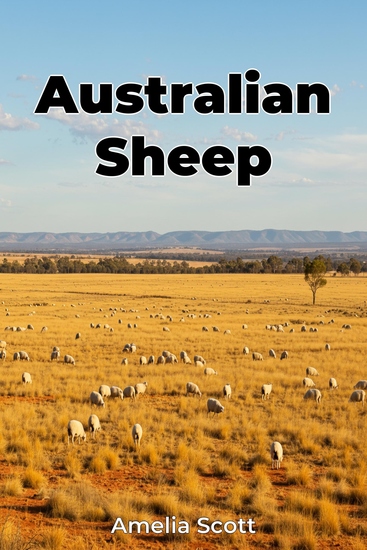
Australian Sheep - cover

Australian Sheep

Amelia Scott

Traductor A AI

Editorial: Publifye

  • 0
  • 0
  • 0

Sinopsis

Australian Sheep explores the profound influence of sheep farming on Australia's economy and its rise to dominance in the global wool industry. More than just an account of agriculture, the book uncovers how sheep transformed the nation's social, economic, and political landscapes. Intriguingly, the introduction of merino sheep, adaptable to Australia's harsh climate, was a turning point, while the development of vast pastoral leases reshaped the land and impacted Indigenous populations.

 
The book progresses systematically, first examining the genetic evolution of Australian sheep breeds, including the selective breeding practices that enhanced wool quality. It then delves into land management, analyzing the environmental impact of grazing and the evolution of sustainable farming approaches. Finally, it explores trade policies and how government regulations solidified Australia's position in the global wool market.

 
This approach offers a unique, multi-layered perspective, blending historical analysis with economic and environmental considerations, making it valuable for anyone interested in Australian history and economics.
Disponible desde: 20/03/2025.
Longitud de impresión: 61 páginas.

Otros libros que te pueden interesar

  • Claudius - The Successful Roman Emperor Who Had Cerebral Palsy - cover

    Claudius - The Successful Roman...

    Kelly Mass

    • 0
    • 0
    • 0
    Tiberius Claudius Caesar Augustus Germanicus, better known as Emperor Claudius, ruled the Roman Empire from 41 to 54 AD. Born in Lugdunum (modern-day Lyon, France), in 10 BC, Claudius was the son of Drusus and Antonia Minor, both prominent figures in the Roman elite. His birthplace marked a significant departure from previous emperors, as he was the first Roman Emperor born outside Italy. Though Claudius’ family was rooted in the ancient Sabine people, his upbringing would not follow the traditional path of an elite Roman, largely due to his physical infirmities. He suffered from a limp and mild deafness, conditions that led his family to deem him unfit for public life and dismiss him from military and political endeavors. 
    Growing up in the shadows of more capable and ambitious relatives, Claudius was largely ignored by the Roman aristocracy. His health issues, though perhaps a result of childhood illness, kept him out of sight and out of mind during the brutal purges of Tiberius and Caligula. This absence from political life proved advantageous, as it spared him the many assassination attempts that claimed the lives of his more prominent family members. In a twist of fate, following the assassination of Caligula in 41 AD, the Praetorian Guard, upon finding him hiding in fear, declared Claudius the new emperor. As the only remaining adult male in his family, Claudius ascended to the throne, despite his perceived weakness. 
    Despite initial doubts about his ability to rule, Claudius quickly proved to be a capable and intelligent administrator. He worked tirelessly to stabilize the Roman Empire, which had suffered under the excesses of Caligula’s reign. One of his first actions was to restore the empire’s finances, expanding the imperial bureaucracy to include freedmen, and re-establishing order in the imperial administration.
    Ver libro
  • Sundaland: The History of the Asian Landmass that Started Sinking After the Ice Age - cover

    Sundaland: The History of the...

    Editors Charles River

    • 0
    • 0
    • 0
    By the time the Pleistocene Epoch ended around 12,000 years ago, Homo sapiens had become one of the most significant species on the planet. 	It was also near the end of that period of time that modern humans began to gradually populate what would become Europe, Asia, and the Americas, eventually becoming the inheritors of the Paleolithic era and the only human species to make it into the Neolithic era. The process was long and difficult, and the survival of the species only happened through a combination of human tenacity and a fair amount of luck. As much as humans evolved during the Pleistocene, the topography, geography, and environment changed even more. 
    The cold Pleistocene temperatures lowered water levels across the planet, exposing land that was not there before or after the period. At the same time, significant regions of the planet were very different during the Pleistocene, including Southeast Asia, particularly the modern islands of Bali, Borneo, Sumatra, and the Malay Peninsula, roughly equivalent to parts of Indonesia, Malaysia, Myanmar, and Thailand. This region, which modern scholars refer to as Sunda or Sundaland, was unique because all of it was connected by land, meaning today’s islands were once part of a contiguous subcontinent, and in terms of the people, flora, and fauna, it was very different than it is today. If a modern traveler could somehow transport back to the Pleistocene, Sundaland would look nothing like modern Southeast Asia and would resemble as much of a lost world as something out of a science fiction novel.  
    Although much is still unknown about Sundaland, researchers have uncovered plenty of evidence bringing this lost world to life. As anthropologists and archaeologists developed new models and discovered ancient material culture, they learned that Sundaland played a significant role in the development of Neolithic Southeast Asia in many ways. 
    Ver libro
  • The Message in the Teachings of Kamma Rebirth & Saṃsāra - A Gateway to Deeper Understanding - cover

    The Message in the Teachings of...

    Ashin Ottama

    • 0
    • 0
    • 0
    This essay is a revised and expanded version of a talk I gave to three American psychologists in March 1995 at the Mahāsi Training School in Yangon. To this written form of the talk I have added the sections on “solidity” and “objective matter” as well as some concluding reflections. 
    The essay is intended to preserve the direct and informal tone of a listener-oriented, interactive talk; hence doctrinal expressions are reduced to the minimum. Passages representing my own thoughts are clearly introduced as such. My explanations are supported by many parallels, comparisons, and analogies from daily life as well as from science. My predilection for examples from physics should not give the impression that I am an expert in the subject. I assure the reader I am not. 
    As the background to this essay I rely on the original Teaching of the Buddha and on the Theravāda Abhidhamma. I sometimes distinguish between the “original Teaching of the Buddha” and the Theravāda. When I make this distinction, by the former I mean the teachings found in the main Nikāyas of the Pali Canon, which were part of the general Buddhist heritage; by the latter I refer to the specific mode of interpretation found in the Pali Abhidhamma and the Commentaries. For people not yet familiar with the Buddha’s doctrine I have included some basic information from the ancient texts. The doctrinal points, however, are not my main concern here. 
    My object in discussing the three themes of the ancient Teaching is to invite all sincerely, seriously investigating people to question deeply the so-called “given realities” of our lives and to reflect thoroughly on the nature and predicament of our existence. 
    -Ashin Ottama
    Ver libro
  • Stiff Secrets of Mortality - "Master mortality's mysteries! Enhance your learning with our dynamic audio lessons for profound clarity and confidence" - cover

    Stiff Secrets of Mortality -...

    Hollis Verner

    • 0
    • 0
    • 0
    Stiff Secrets of Mortality: A Simplified Guide to Understanding Life and Death** 
    Are you eager to advance in your career and enhance your comprehension of life's significance? 
    Searching for a thorough guide that covers all the essential aspects of exploring mortality? 
    Your search ends here! 
    This guide acts as your ultimate companion for deepening your insights, applying your knowledge, and engaging in practical exercises. With this resource, you’re set up for success. 
    Updated for Current Insights on Mortality. 
    Key features of this comprehensive guide include: 
    - In-depth insights into the significance of exploring mortality 
    - Detailed explanations of the concepts surrounding life's impermanence 
    - Effective strategies for understanding and preparing for discussions on mortality 
    Our guide stands out due to its thorough coverage, crucial for your personal and professional growth. Concepts are not just glossed over; they are explored with accuracy and depth. 
    Please note that this guide is an independent resource and is not officially connected to any specific entity regarding mortality exploration. 
    Crafted with a clear layout and accessible language, our guide ensures seamless transitions between topics. Bid farewell to convoluted terminology and embrace straightforward, precise, and accurate content. 
    So, why hesitate? Click the BUY NOW button, secure your guide, and embark on your journey of understanding life's significance! 
    Unlock the secrets of mortality and enrich your understanding of life today!
    Ver libro
  • Awesome Arizona - 200 Amazing Facts about the Grand Canyon State - cover

    Awesome Arizona - 200 Amazing...

    Roger Naylor

    • 0
    • 0
    • 0
    Which state has the most national monuments? Where in America can you find one of the Seven Natural Wonders of the World? Where is the largest contiguous forest of ponderosa pine? In Awesome Arizona, Roger Naylor, "the Dean of Arizona Travel Writers," has amassed 200 amazing facts and fascinating commentary about his beloved state. This is the fast-paced, funny encyclopedia that lovers of Arizona have been craving. 


    Awesome Arizona captures the essence of the sixth-largest state, from its rowdy past to its epic landscape bulging with mountains, slashed by canyons, and blown apart by volcanoes. Learn about trees that once shaded dinosaurs, the West's most legendary gunfight, the world's largest antique, the best-preserved meteor crater on earth, where the post office still delivers mail by mule, the longest poker game in history, how Arizona saved the unicorn, and so much more.
    Ver libro
  • In Search of the Romanovs - A Family’s Quest to Solve One of History’s Most Brutal Crimes - cover

    In Search of the Romanovs - A...

    Peter Sarandinaki

    • 0
    • 0
    • 0
    In 1918 a famed general of the Russian White Army battled through the Red Army to save Emperor Nicholas II—but he arrived too late. The Romanovs had already been murdered. 


    In this thrilling true-life detective story, we follow Anna, the general's courageous young daughter, who fled across the continent and boarded a ship with her husband to escape the bloodshed. Beneath her bunk was a box, and in this box lay grisly evidence of what had become of Russia's royal family, the Romanovs. Generations later, Anna's grandson Peter Sarandinaki set out to finish his great-grandfather's mission to find the Romanovs' remains, enlisting searchers and scientists to finally piece together the answers to some of history's most perplexing questions: What really happened to Tsar Nicholas, Empress Alexandra, and their children? And what about the tsar's brother, Mikhail, who simply disappeared? 


    A riveting and deeply personal story, In Search of the Romanovs reveals hidden truths in the legends about the murder and disappearance of Russia's most famous royal family.
    Ver libro