¡Acompáñanos a viajar por el mundo de los libros!
Añadir este libro a la estantería
Grey
Escribe un nuevo comentario Default profile 50px
Grey
Suscríbete para leer el libro completo o lee las primeras páginas gratis.
All characters reduced
White House Traditions - cover

White House Traditions

Amelia Khatri

Traductor A AI

Editorial: Publifye

  • 0
  • 0
  • 0

Sinopsis

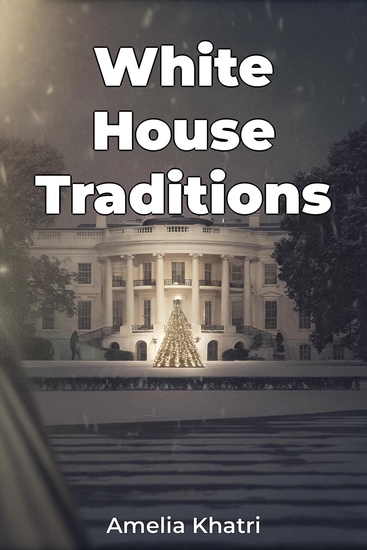
White House Traditions explores the history and significance of the rituals and customs that have shaped the American presidency. It delves into how events like the Easter Egg Roll and the White House Christmas tree have evolved, reflecting changing social norms and political landscapes. The book argues that these traditions are powerful symbols of continuity, leadership, and national identity, connecting each administration to the historical narrative of the American presidency.

 
The book examines the political implications of these traditions, such as how they have been used to project power and unite the nation. It also highlights the human element, focusing on the roles of First Families and White House staff in maintaining these customs.

 
Beginning with an introduction to White House traditions, the book progresses through prominent examples like holiday celebrations and state dinners, culminating in an assessment of their future relevance.
Disponible desde: 15/02/2025.
Longitud de impresión: 53 páginas.
Otros libros que te pueden interesar

  • Battle of Woody Point The: The History of the Confrontation that Led to the Deaths of the First American Settlers in the Pacific Northwest - cover

    Battle of Woody Point The: The...

    Editors Charles River

    • 0
    • 0
    • 0
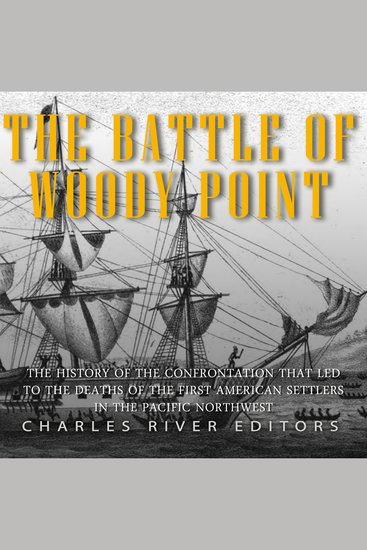
    The fur trade had its tensions, but for many years, traders and natives worked out their own systems, times, and traditions, allowing many different groups to interact and even compete without issues that led to war. Though native groups sometimes found themselves in conflicts based on long-standing rivalries or relations with the Europeans, most of the fur traders, the trappers, the Indians, and Hudson’s Bay Company officials lived peaceably. The great amount of distance from one another in this land of millions of miles likely helped to alleviate tensions. When a new vision for the Hudson’s Bay Company came about, one where settlers, not itinerants, would be responsible for the colony, the rules changed. 
    In 1810, through the Pacific Fur Company, John Jacob Astor began to direct his energies at the still mostly unexploited regions accessible from the mouth of the Columbia River. This was, of course, in open defiance of British claims, but that was very much in keeping with Astor’s style. Astor put up the money, and a group of American and Canadian fur traders would manage affairs on the ground, traveling to the region to erect Fort Astoria and a string of trading posts in the region that could deal with the natives, trade with Asia and the East Coast, and amass untold riches. Or at least that was the plan. 
    Fort Astoria wouldn’t last a decade, and its turbulent history was so full of unfortunate twists and turns, a mixture of bad luck and incompetence, that the story still fascinates people today. And among all the chapters of that short history, none are as interesting as the fateful Battle of Woody Point, a misnomer for a confrontation that was brought about by misunderstandings, arrogance, and misplaced pride. The episode, despite its brevity and its occurrence in the furthest reaches of North America at the time, would color relations between whites and natives in the Pacific Northwest for decades.
    Ver libro
  • How to Write a Sentence - And How to Read One - cover

    How to Write a Sentence - And...

    Stanley Fish

    • 0
    • 0
    • 0
    New York Times Bestseller 
    “Both deeper and more democratic than The Elements of Style” —Adam Haslett, Financial Times 
    “A guided tour through some of the most beautiful, arresting sentences in the English language.” —Slate 
    In this entertaining and erudite gem, world-class professor and New York Times columnist Stanley Fish offers both sentence craft and sentence pleasure, skills invaluable to any writer (or reader).  
    Like a seasoned sportscaster, Fish marvels at the adeptness of finely crafted sentences and breaks them down into digestible morsels, giving readers an instant play-by-play. Drawing on a wide range of great writers, from Philip Roth to Antonin Scalia to Jane Austen, How to Write a Sentence is much more than a writing manual—it is a spirited love letter to the written word, and a key to understanding how great writing works. It is a book that will stand the test of time.
    Ver libro
  • Three Books of Occult Philosophy - cover

    Three Books of Occult Philosophy

    Agrippa Henry Cornelius

    • 0
    • 0
    • 0
    Three Books of Occult Philosophy (De Occulta Philosophia libri III) is Heinrich Cornelius Agrippa's study of occult philosophy, acknowledged as a significant contribution to the Renaissance philosophical discussion concerning the powers of ritual magic and its relationship with religion. 
    The three books deal with Elemental, Celestial and Intellectual magic. The books outline the four elements, astrology, kabbalah, numbers, angels, God's names, the virtues and relationships with each other as well as methods of utilizing these relationships and laws in medicine, scrying, alchemy, ceremonies, origins of what are from the Hebrew, Greek, and Chaldean context. 
    These arguments were common amongst other hermetic philosophers at the time and before. In fact, Agrippa's interpretation of magic is similar to the authors Marsilio Ficino, Pico della Mirandola and Johann Reuchlin's synthesis of magic and religion and emphasize an exploration of nature. Unlike many grimoires of the time, before and past, these books are more scholarly and intellectual than mysterious and foreboding. These books are often read as authoritative by those interested in the occult even today. 
    Three Books of Occult Philosophy helped perpetuate the belief in modern popular culture that the Knights Templar practiced witchcraft. It was one of the first literary works to transform the accusation of idolatry against the Order, to magic use
    Ver libro
  • Bella Caledonia - An Anthology of Writing from 2007 - 2021 - cover

    Bella Caledonia - An Anthology...

    Mike Small

    • 0
    • 0
    • 0
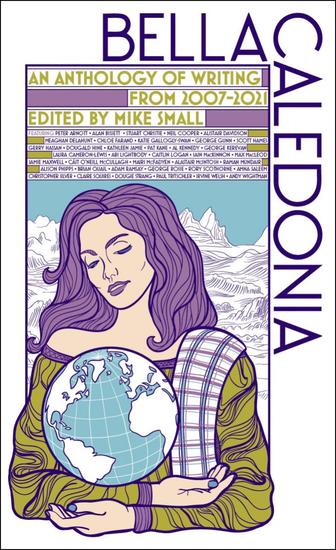
    In October 2007, writers Mike Small and Kevin Williamson launched Bella Caledonia at the Radical Book Fair in Edinburgh. Since then, Bella has consistently explored ideas of self-determination and offered Scotland's most robust and insightful political commentary.
    In the run up to Scottish independence referendum, international interest grew and Bella Caledonia had more than 500,000 unique users a month, with a peak of one million in August ― and since then has been given multiple awards recognising it as one of the top 10 political blogs in the UK.
    This anthology, curated by Mike Small, is a flavour of Bella's output over these 14 years ― the editor's pick.
    Bella is aligned to no political party and sees herself as the bastard child of parent publications too good for this world; from Calgacus to Red Herring, from Harpies & Quines to the Black Dwarf.
    Under Mike's editorship, Bella has developed a 'Fifth Estate' as a way of disrupting the passive relationship of old media, creating something more active and appropriate for the 21st century ― it's about concentration of ownership, and bringing together radical coverage with cultural analysis. Hence the plethora of wide-ranging voices in this anthology, each representing outlier viewpoints in contemporary society ― novelists, poets, bloggers and journalists publishing in non-mainstream media outlets, and the social media.
    *
    "Bella Caledonia has been a flagship for progressive thought in Scotland, providing a platform for informed and creative writing, advocating a progressive and independent nation fit for the future."
    Stuart Cosgrove
    "Bella has been to be a constant thorn in the side of the powerful voices who would prefer that conventional wisdom went unchallenged, that awkward questions went unasked, and bold solutions went unheard."
    Peter Geoehgan
    * The Contributors:
    Andy Wightman • Alan Bissett • Brian Quail • George Rosie • Kathleen Jamie • Peter Arnott • Scott Hames • Laura Easton Lewis • Meaghan Delahunt • AL Kennedy • Alistair Davidson • Alastair McIntosh • Katie Gallogly-Swan • Max Macleod • Caitlin Logan • Irvine Welsh • Paul Tritschler • Chloé Farand • Abi Lightbody • Pat Kane • Adam Ramsay • Rory Scothorne • Alison Phipps • Jamie Maxwell • Amna Saleem • Neil Cooper • Dougie Strang • Mairi McFadyen • Christopher Silver • George Gunn • Stuart Christie • George Kerevan • Iain MacKinnon • Dougald Hine • Cait O'Neil McCullagh • Raman Mundair • Gerry Hassan
    About The Editor:
    Mike Small is a writer, journalist, author and publisher. He has written for the Guardian, Sunday Herald, Sunday National, Open Democracy, Variant, Lobster and Z Magazine. He is currently working on a biography of Patrick Geddes and a history of Scottish Anarchism. He has edited Bella Caledonia since 2007.
    Ver libro
  • The History of Wales - cover

    The History of Wales

    History Nerds

    • 0
    • 0
    • 0
    Wales has a long and storied history, filled with heroic deeds, legendary figures, and pivotal moments. In this concise history book, you will discover the fascinating story of Wales, from its ancient Celtic origins to the modern-day nation. From the reign of King Arthur and the battles of the Welsh princes to the industrial revolution and the rise of Welsh nationalism, this book provides a comprehensive overview of the key moments and figures that have shaped Wales over the centuries. With colorful details and engaging storytelling, this book is a must-read for anyone interested in Welsh culture and history.
    Ver libro
  • Race to the Moon The: The History and Legacy of the Cold War Competition Between the Soviet Union and the United States - cover

    Race to the Moon The: The...

    Editors Charles River

    • 0
    • 0
    • 0
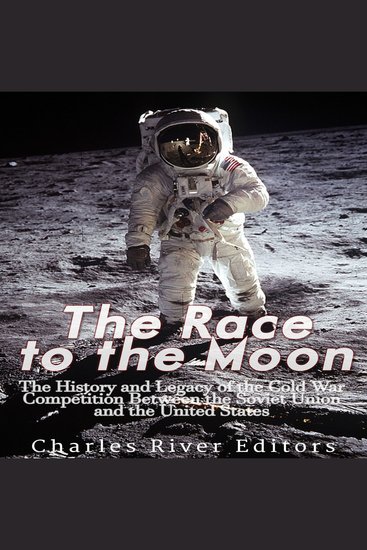
    Today the Space Race is widely viewed poignantly and fondly as a race to the Moon that culminated with Apollo 11 “winning” the Race for the United States. In fact, it encompassed a much broader range of competition between the Soviet Union and the United States that affected everything from military technology to successfully launching satellites that could land on Mars or orbit other planets in the Solar System. Moreover, the notion that America “won” the Space Race at the end of the 1960s overlooks just how competitive the Space Race actually was in launching people into orbit, as well as the major contributions the Space Race influenced in leading to today’s International Space Station and continued space exploration. 
    	In fact, the Soviet Union had spent much of the 1950s leaving the United States in its dust (and rocket fuel). President Eisenhower and other Americans who could view Soviet rockets in the sky were justifiably worried that Soviet satellites in orbit could soon be spying on them, or, even worse, dropping nuclear bombs on them. And in 1960, when Eisenhower’s administration began planning and funding for the famous Apollo program that would land the first men on the Moon in 1969, the Soviet Union was already thinking further ahead to Mars. 
    	During the 1960s, NASA would spend tens of billions on the Apollo missions, the most expensive peacetime program in American history to that point, and even though Apollo 11 was only one of almost 20 Apollo missions, it was certainly the crown jewel. only one of nearly 20 Apollo missions conducted by NASA. And to make Apollo 11 a success, it would take nearly a decade of planning by government officials, hard work by NASA scientists, intense training by the astronauts, and several missions preceding Apollo 11. It also cost over $20 billion, making the Apollo program the most expensive peacetime program in American history at the time.
    Ver libro