Junte-se a nós em uma viagem ao mundo dos livros!
Adicionar este livro à prateleira
Grey
Deixe um novo comentário Default profile 50px
Grey
Assine para ler o livro completo ou leia as primeiras páginas de graça!
All characters reduced
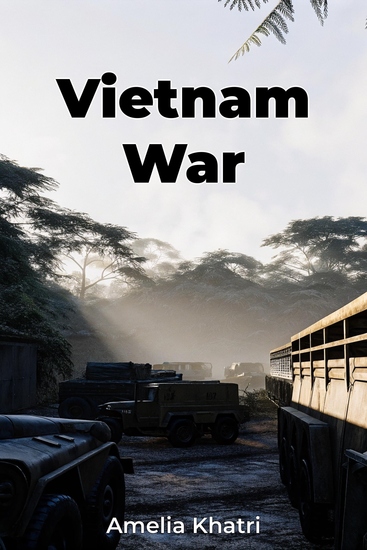
Vietnam War - cover
LER

Vietnam War

Amelia Khatri

Tradutor A AI

Editora: Publifye

  • 0
  • 0
  • 0

Sinopse

The Vietnam War explores the transformation of a regional conflict into a global ideological battleground, examining the military campaigns, political struggles, and widespread protests that defined a generation. It highlights the intricate web of guerrilla warfare tactics employed by the Viet Cong and North Vietnamese Army, the divisive political decisions of global powers, and the powerful anti-war movement that resonated across continents. The book emphasizes that the conflict was not merely a military engagement but a pivotal event that exposed the limitations of superpower intervention and fueled social upheaval globally.

 
The book begins by establishing the historical context, including the Cold War rivalry and French colonialism, before delving into the military strategies of both sides. It analyzes the political decisions of key players, such as the US and South Vietnamese governments, and dedicates a significant portion to exploring the anti-war movement and its impact. This comprehensive approach, drawing on primary and secondary sources, offers a fresh perspective by examining the war through the lens of both military strategy and social movements, ultimately assessing the long-term consequences of the war on Vietnam, the United States, and the global political order.
Disponível desde: 17/02/2025.
Comprimento de impressão: 59 páginas.
Outros livros que poderiam interessá-lo

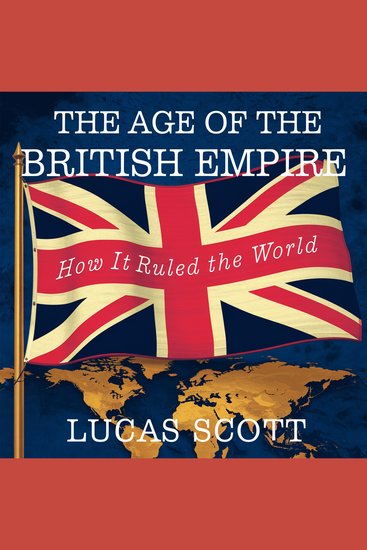
  • The Age of the British Empire – How It Ruled the World - The Rise Power and Legacy of the Largest Empire in History - cover

    The Age of the British Empire –...

    Lucas Scott

    • 0
    • 0
    • 0
    For over 400 years, the British Empire reshaped the world. At its height, it controlled over a quarter of the planet, influencing global trade, politics, and culture. But how did it rise to such power, and why did it ultimately decline? 
    This audiobook takes you deep into the story of the British Empire, uncovering its greatest achievements and most controversial moments. Discover: 
    ✅ How Britain became the world’s dominant naval and economic power 
    ✅ The role of the Industrial Revolution in expanding the empire 
    ✅ The impact of British rule on India, Africa, and beyond 
    ✅ Why the empire fell—and how it still shapes global politics today 
    The Age of the British Empire – How It Ruled the World is a must-listen for history lovers, empire enthusiasts, and anyone fascinated by the rise and fall of global superpowers.
    Ver livro
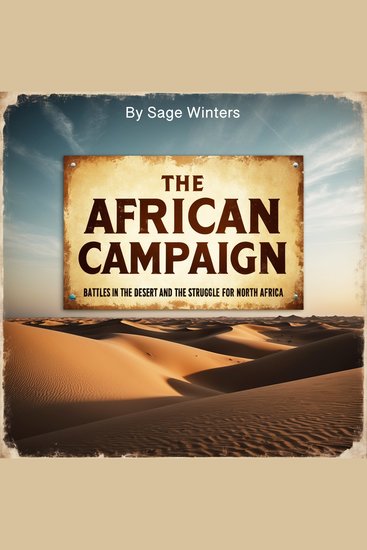
  • The African Campaign - Battles in the Desert and the Struggle for North Africa - cover

    The African Campaign - Battles...

    Sage Winters

    • 0
    • 0
    • 0
    The North African Campaign, which unfolded between 1940 and 1943, was a pivotal series of battles and military operations during World War II. Spanning vast desert landscapes, the struggle for control of North Africa became a key theatre of war, involving significant military forces from the Axis Powers—primarily Germany and Italy—and the Allied forces, including Great Britain, the United States, and various Commonwealth nations. The campaign’s significance went beyond the battles themselves; it had a profound impact on the broader strategies of World War II, shaping both the fortunes of the combatants and the postwar political landscape. 
      
    At the heart of the North African Campaign was the desert itself. The harsh conditions—extreme temperatures, limited water, and vast, featureless terrain—made it a unique battlefield where traditional warfare tactics were often less effective. The landscape dictated strategy and logistics, placing a premium on mobility and resourcefulness. The campaign saw the rise of new tactics and the introduction of novel technologies that would influence the outcome of the war. 
      
    The struggle for control of North Africa was strategically vital for several reasons. The region provided access to key shipping lanes in the Mediterranean, which were crucial for the transportation of troops and supplies between Europe and the Middle East. Additionally, North Africa was rich in natural resources, particularly oil, which became increasingly important as the war progressed. For the Axis powers, particularly Germany, securing North Africa was seen as a stepping stone toward further advances into the Middle East and the oil fields of the Caucasus. For the Allies, controlling the region was vital to prevent the Axis from gaining a foothold in the Suez Canal and threatening British colonial interests in Asia and Africa.
    Ver livro
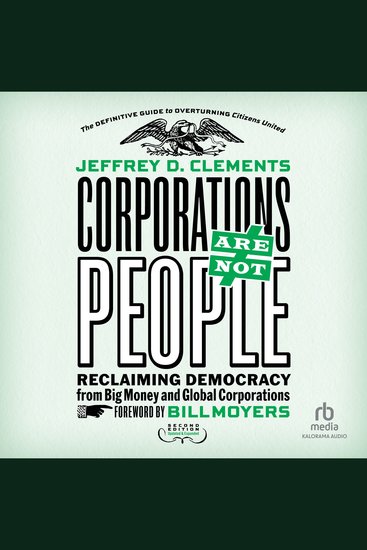
  • Corporations Are Not People - Reclaiming Democracy from Big Money and Global Corporations (2nd Edition) - cover

    Corporations Are Not People -...

    Jeffrey D. Clements, Bill Myers

    • 0
    • 0
    • 0
    A revised and updated edition of the definitive guide to overturning Citizens United. 


    Since the Supreme Court's Citizens United ruling that the rights of things—money and corporations—matter more than the rights of people, America has faced a crisis of democracy. In this timely and thoroughly updated second edition, Jeff Clements describes the strange history of this bizarre ruling, its ongoing destructive effects, and the growing movement to reverse it. 


    He includes a new chapter, "Do Something!," showing how—state by state and community by community—Americans are using creative strategies and tools to renew democracy and curb unbalanced corporate power. Since the first edition, sixteen states, one-hundred-sixty members of Congress, and five hundred cities and towns have called for a constitutional amendment to overturn Citizens United, and the list is growing. This is a fight we can win! 


    "More relevant than ever, this updated edition of Corporations Are Not People chronicles the remarkably vibrant, nationwide grassroots movement to 'get money out and voters in.' " —Katrina vanden Heuvel, Editor and Publisher, The Nation
    Ver livro
  • Denial - How We Hide Ignore and Explain Away Problems - cover

    Denial - How We Hide Ignore and...

    Jared Del Rosso

    • 0
    • 0
    • 0
    Donald Trump won the election; climate change isn't real; America is a color-blind country. Despite overwhelming evidence to the contrary, why do so many of us refuse to admit the truth? Denial is so much a part of our lives that we deny its existence all the time. 


    In an easy-listening style that draws on examples from current events, politics, and pop culture, Del Rosso teases out the complexities of denial, from "not noticing" that someone has food stuck in their teeth, to companies that engage in widespread fraud, like Enron and Wells Fargo, to the much larger-scale denials of climate change or systemic racism. Del Rosso builds a fascinating typology of the forms and meanings of denial, exploring the behavior of those who refuse to acknowledge their actions, and what it means to live in a society where such lying, fraud, and corruption is commonplace. 


    In wide-ranging examples, Del Rosso explores the causes, strategies, and consequences of denial. When scandal hits and accusations of misconduct are made, he argues that individuals like Harvey Weinstein or Brett Kavanaugh, or organizations like the Catholic Church or Penn State, go through a series of moves to try to avoid accountability. He effectively argues that recognizing what denial looks like is the crucial first step in mitigating its effects on us and society as a whole.
    Ver livro
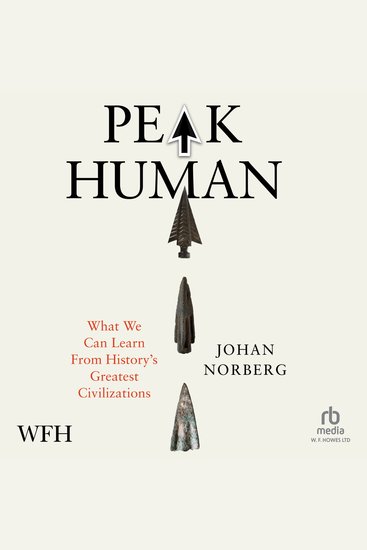
  • Peak Human - What We Can Learn From History’s Greatest Civilizations - cover

    Peak Human - What We Can Learn...

    Johan Norberg

    • 0
    • 0
    • 0
    All golden ages are marked by periods of spectacular cultural flourishing, scientific exploration, technological achievement and economic growth; yet no two are the same. Their beliefs, societies and place in the wider world all vary. Despite this, all previous golden ages have ended, whether it be because of external pressures or internal fracturing; too much hubris or too little wariness. 
     
    Looking at seven of humanity's greatest civilisations - ancient Athens, the Roman Republic, Abbasid Baghdad, Song C hina, Renaissance Italy, the Dutch Republic and the Anglosphere - historian and commentator Johan Norberg seeks to distil their strengths and shortcomings in answering the question: how do we ensure that our current golden age doesn't end? 
     
    As insightful as it is riveting, Peak Human is at once a paean to our incredible progress and a warning that we cannot afford to be complacent.
    Ver livro
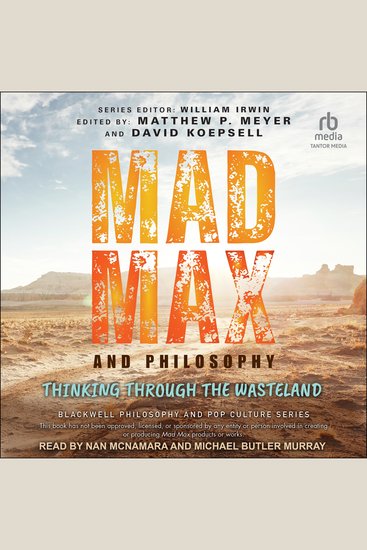
  • Mad Max and Philosophy - Thinking Through the Wasteland - cover

    Mad Max and Philosophy -...

    William Irwin

    • 0
    • 0
    • 0
    Beneath the stylized violence and thrilling car crashes, the Mad Max films consider universal questions about the nature of human life, order and anarchy, justice and moral responsibility, society and technology, and ultimately, human redemption. In Mad Max and Philosophy, a diverse team of political scientists, historians, and philosophers investigates the underlying themes of the blockbuster movie franchise, following Max as he attempts to rebuild himself and the world. 


    This book guides you through the barren wastelands of a post-apocalyptic future as you explore ethics and politics in The Wasteland, the importance of costumes and music, humankind's relationship with nature, commerce, gender, religion, madness, and more. 


    ● Covers all of George Miller's Mad Max films 


    ● Discusses connections between Mad Max and major philosophers 


    ● Follows Max's journey from policeman and family man to lost soul in search of redemption 


    ● Examines the future of technology and possible impacts on society, the environment, and access to natural resources 


    ● Delves into feminist themes and relationships between power and procreation
    Ver livro