¡Acompáñanos a viajar por el mundo de los libros!
Añadir este libro a la estantería
Grey
Escribe un nuevo comentario Default profile 50px
Grey
Suscríbete para leer el libro completo o lee las primeras páginas gratis.
All characters reduced
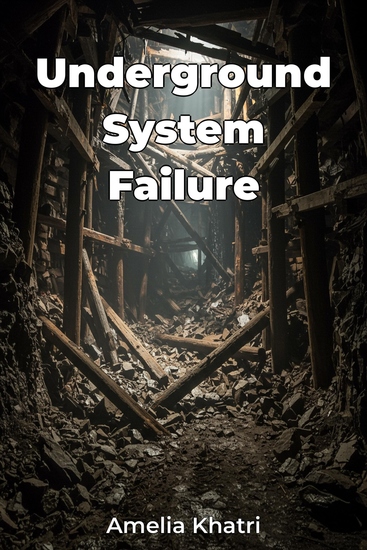
Underground System Failure - cover

Underground System Failure

Amelia Khatri

Traductor A AI

Editorial: Publifye

  • 0
  • 0
  • 0

Sinopsis

Underground System Failure explores the critical intersection of historical mining disasters and modern subterranean infrastructure, highlighting the shared vulnerabilities of these seemingly disparate systems. By examining both historical events and contemporary structures, the book argues that recognizing recurring patterns in system failures is paramount for enhancing safety and survivability in underground environments. One intriguing aspect explored is that many historical mining disasters, such as those arising from inadequate ventilation, share common precursors with potential failures in modern facilities.

 
The book progresses by initially presenting core concepts of system failure, resilience engineering, and risk management. It then dives into detailed case studies of both mining disasters and modern facility incidents, dissecting each event to identify root causes and evaluate the effectiveness of response efforts. A key insight is the comparison of historical mining accident data with contemporary risk assessments, revealing correlations and divergences in failure modes.

 
The analysis reveals a clear need for a more holistic approach to risk assessment and emergency preparedness. The book makes a unique contribution by bridging the gap between historical analysis and modern engineering practices, offering practical guidelines for facility managers, engineers, and policymakers. By understanding the repetitive nature of errors and oversights, the book provides a framework for preventing and mitigating risks in increasingly vital underground spaces. The approach is fact-based and analytical, prioritizing clarity and accuracy to provide actionable recommendations for improving safety and resilience.
Disponible desde: 17/02/2025.
Longitud de impresión: 75 páginas.

Otros libros que te pueden interesar

  • Israel-Palestine - Federation or Apartheid? - cover

    Israel-Palestine - Federation or...

    Shlomo Sand

    • 0
    • 0
    • 0
    What kind of political structure might one day enable Israelis and Palestinians to overcome the seemingly interminable cycle of violence and live in peace with one another? For many years, politicians and citizens have called for a two-state solution—two independent states, Israel and Palestine, coexisting side by side. This was Shlomo Sand's view too, but as more settlements were built in the occupied West Bank and millions of Palestinians were forced to live in a situation of de facto apartheid, deprived of their basic civil rights and political freedoms, he came to the conclusion that the two-state solution had become an empty formula that no one seriously intended to implement. 


    It was in this context that Sand sought to find an alternative way out of the Israeli-Palestinian imbroglio. He discovered that some Zionists and other Jewish intellectuals had rejected the idea of an exclusive Jewish state and had supported moves to create a binational federation. They believed that only egalitarian integration within the framework of a common state would ensure that Israel could be a safe haven for all of its inhabitants. While the chances of realizing this egalitarian vision may seem remote in the current hostile context, it may well be that a binational state in which Israelis and Palestinians are treated as equals is the only realistic solution in the end.
    Ver libro
  • A Hundred Reasons Why People Believe In Stupid Things - English to Spanish - cover

    A Hundred Reasons Why People...

    Science-Based Language Learning Lab

    • 0
    • 0
    • 0
    Introduction to the 100 Somethings Language Learning Series


    Welcome to a fresh, captivating way to learn a new language! The "A Hundred Reasons Why..." series helps you master Spanish through topics that interest you, such as art, science, and history. Each book offers 100 carefully selected reasons that serve as concise knowledge nuggets in both English and Spanish.


    How It Works:
     
      - Each reason is first presented in Spanish for you to interpret.
     
    - The next page provides the English translation and then repeats the reason in Spanish to help you understand unfamiliar terms. The second half of the book presents the content in English, then in the target language, and finally in English again, giving you the chance to translate in both directions and demonstrate true mastery of the material.
     
    - This format is repetitive to aid memorization and concise, ensuring streamlined learning.


    Benefits:
     
    - Concise Learning: The brief, one-sentence reasons are easy to remember and relate directly to your interests.
     
    - Reinforced Learning: Switching between English and Spanish solidifies your vocabulary and grammar naturally.
     
    - Engaged Learning: Associating new words with topics you're passionate about keeps your learning dynamic and engaging.
     
    - Dual Knowledge: You not only learn a new language but also deepen your knowledge of the specific subject matter.


    Ideal for those who thrive on clear and targeted information, this series makes learning both educational and enjoyable. Whether you're a beginner or looking to expand your linguistic skills, these books are crafted to enhance your journey effectively. Embrace this innovative approach and let your passions fuel your progress in mastering Spanish!
    Ver libro
  • Middle Ages - Medieval Events Crusades and the Black Death (3 in 1) - cover

    Middle Ages - Medieval Events...

    Kelly Mass

    • 0
    • 0
    • 0
    This is a combo book about the middle ages, which comprises the following titles: 
    1 - Middle Ages: In the history of Europe, the Middle Ages or Middle Ages time period lasted around from the fifth to the late 15th centuries, likewise to the postclassical period of worldwide history. It started with the fall of the Western Roman Empire and transitioned into the Renaissance and the Age of Discovery. 
    2 - Black Death: Here we have it: We may be looking at the years 2020-2021 and think a certain virus has been bad for the world population. However, what happened in these two years is nothing, proportionally, to the hundreds of millions of people who got wiped out by rat infestations spreading insanitary bacteria, resulting in the disease and death of huge parts of the European population in the mid-centuries. 
    The genesis or origin of the Black Death is a point of contention. The epidemic started in Central Asia or East Asia, but it wasn't till 1347 that it made its conclusive presence in Crimea. It spread out through the Mediterranean Basin, reaching Africa, Western Asia, and the remainder of Europe through Constantinople, Sicily, and the Italian Peninsula, probably brought by fleas surviving on black rats carried by Genoese servant ships. 
    3 - Crusaders: The Crusades are one of those dark chapters in history that we would rather forget, especially religious people. In name of the church, or other religions, like the Muslim faith, people killed, destroyed, looted, and burned cities to the ground. There is nothing “holy” about attacking and plundering, yet this is what they did. 
    The Crusades were a series of spiritual fights in the Middle Ages period that were begun, supported, and sometimes ordered by the Latin Church.
    Ver libro
  • Canaanites - The Ancient History of the People Who Inhabited Israel - cover

    Canaanites - The Ancient History...

    Kelly Mass

    • 0
    • 0
    • 0
    During the late 2nd millennium BC, Canaan was a Semitic-speaking civilization located in the Ancient Near East. The region held significant geopolitical importance, especially during the Late Bronze Age Amarna Period in the 14th century BC, when it became a crossroads for major empires. The Egyptian, Hittite, Mitanni, and Assyrian Empires all had areas of interest that converged or overlapped in Canaan, making it a key territory for trade, warfare, and cultural exchange. Much of our understanding of Canaan comes from archaeological excavations at sites such as Tel Hazor, Tel Megiddo, En Esur, and Gezer, where remnants of ancient Canaanite life have been uncovered. 
    In biblical texts, the term "Canaan" frequently appears to refer to the broader geographical region known as the Levant, particularly the Southern Levant. This area includes several territories that are central to the Bible’s narrative, such as the Land of Israel, Philistia, and Phoenicia. The Canaanites were the indigenous peoples of this region, and their diverse societies included both settled agricultural communities and nomadic-pastoral groups.
    Ver libro
  • The Shocking Truth about Political Corruption - cover

    The Shocking Truth about...

    Zoey Fraisers

    • 0
    • 0
    • 0
    Political corruption is a pervasive issue that has existed for centuries, shaping the course of governments and societies worldwide. It manifests in various forms, from bribery and fraud to nepotism and abuse of power. Regardless of the system of governance, corruption erodes trust, distorts policies, and undermines democratic principles. While many assume corruption is limited to authoritarian regimes, it is also deeply embedded in democratic institutions, where influence and money often dictate political decisions.  
      
    The roots of corruption can be traced back to the earliest civilizations, where leaders sought personal gain at the expense of their people. Throughout history, political scandals have exposed the extent of corruption within governments, from financial embezzlement to electoral fraud. These cases serve as stark reminders of how unchecked power can lead to widespread deception and exploitation. Corruption is not only a moral failure but a structural issue that allows those in power to manipulate systems designed to serve the public.  
      
    Beyond historical examples, the impact of corruption is far-reaching. It weakens economies by diverting public funds into private hands, leaving essential services such as healthcare, education, and infrastructure underfunded. It fuels inequality, as the wealthy and well-connected benefit from corrupt dealings while the average citizen suffers. When corruption becomes the norm, public trust in institutions erodes, leading to political apathy, civil unrest, and, in extreme cases, the collapse of governments. 
    Ver libro
  • Joy Unspeakable - Contemplative Practices of the Black Church (2nd edition) - cover

    Joy Unspeakable - Contemplative...

    Barbara A. Holmes

    • 0
    • 0
    • 0
    Joy Unspeakable focuses on the aspects of the Black church that point beyond particular congregational gatherings toward a mystical and communal spirituality not within the exclusive domain of any denomination. This mystical aspect of the black church is deeply implicated in the wellbeing of African American people but is not the focus of their intentional reflection. Moreover, its traditions are deeply ensconced within the historical memory of the wider society and can be found in Coltrane's riffs, Malcolm's exhortations, the social activism of the Black Lives Matter Movement and the presidency of Barack Hussein Obama. The research in this book—through oral histories, church records, and written accounts—details not only ways in which contemplative experience is built into African American collective worship but also the legacy of African monasticism, a history of spiritual exemplars, and unique meditative worship practices. A groundbreaking work in its original edition, Joy Unspeakable now appears in a new, revised edition to address the effects of this contemplative tradition on activism and politics and to speak to a new generation of readers and scholars.
    Ver libro