Join us on a literary world trip!
Add this book to bookshelf
Grey
Write a new comment Default profile 50px
Grey
Subscribe to read the full book or read the first pages for free!
All characters reduced
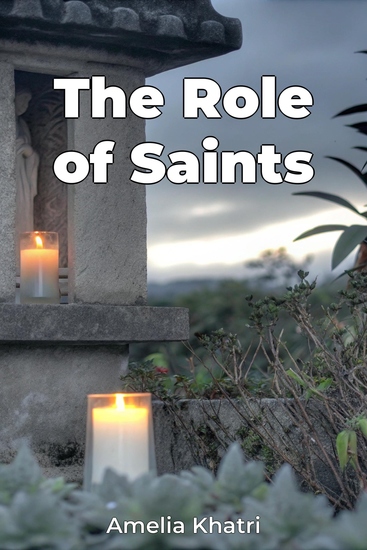
The Role of Saints - cover

The Role of Saints

Amelia Khatri

Translator A AI

Publisher: Publifye

  • 0
  • 0
  • 0

Summary

The Role of Saints delves into the pervasive phenomenon of sainthood across diverse religions and cultures, probing why certain individuals are elevated to venerated status. It explores the historical development, theological foundations, and sociological consequences of saint veneration, revealing its impact on faith, social structures, and cultural values. The book examines the varied criteria for sainthood, ranging from formal canonization processes to community-driven recognition, highlighting the cultural and historical factors shaping the selection of saints. The book investigates the role of miracles in establishing and sustaining a saint's reputation, analyzing how interpretations of these events vary. It also explores how saints function as symbols of identity, moral exemplars, and focal points for social movements. Beginning with a definition of "saint" and its historical development, the book progresses through analyses of recognition criteria, the nature of miracles, and the social and political roles of saints, concluding with their relevance in the modern world.
Available since: 02/14/2025.
Print length: 60 pages.

Other books that might interest you

  • The Fallacy of Freedom - cover

    The Fallacy of Freedom

    Gregory Heary

    • 0
    • 0
    • 0
    How can you achieve true freedom in a society laden with diverse and often conflicting beliefs? This book cuts through the noise, offering clarity on what it means to be free in a world governed by ideologies.Exploring the notion of freedom, this book presents a riveting analysis of its impact on society and individual minds. It highlights the tension between the advocates of free speech and expression and those who perceive these freedoms as threats. By dissecting the actions and motivations of both supporters and critics of freedom, the book provides a unique lens through which to view our own beliefs. The book delves deep into the battleground of ideologies where freedom clashes with traditional and modern beliefs. Proponents of freedom argue for its necessity in expression and innovation, while its opponents criticize its potential for leading to chaos and moral decay. Through a detailed analysis of these conflicting viewpoints, this book illuminates the complexities of freedom in society. It examines how historical and religious teachings shape our understanding and practice of freedom, advocating for a balanced mental hygiene that aligns with divine guidance. By embracing this approach, you're not just informed but transformed, equipped to use your freedom wisely and in ways that contribute to personal and communal well-being. This astute analysis not only clarifies what it means to be truly free but also challenges you to examine your own beliefs and the societal norms that shape them. It navigates the intricate dynamics of freedom and control, offering you a path to a more enlightened, purpose-driven life.Unlock the path to true freedom and mental clarity by picking up this book today!
    Show book
  • How to Start a Business - LAUNCH AND GROW YOUR BUSINESS: An 11-Step Guide to Help Aspiring Entrepreneurs Achieve Success and Financial Freedom - cover

    How to Start a Business - LAUNCH...

    Dwayne Roibnson

    • 0
    • 0
    • 0
    "How to Start a Business" is an essential book for new and aspiring entrepreneurs. Authored by a serial entrepreneur with a deep understanding of the entrepreneurial journey, it is not just a manual but a beacon for those venturing into the uncharted waters of business creation. 
    What sets this book apart is its uniquely structured 11-step roadmap, which carefully guides readers from ideation to successful business operations. This step-by-step approach demystifies the business creation process, making it accessible to anyone regardless of their previous business experience. Each chapter is a progression, building on the last, which meticulously helps the reader evolve from a concept to a fully operational entity. 
    At the core of this book is its practicality, but what truly sets it apart is its relatability. Unlike many guides offering theoretical knowledge, "How to Start a Business" is brimming with actionable advice drawn directly from the author’s experiences as a serial entrepreneur. The anecdotes of triumph and failure enrich this narrative, making it educational and deeply relatable. 
    The author's passion for entrepreneurship is not just palpable; it's transformative. His favorite excerpt underscores entrepreneurs' monumental impact on our world, emphasizing the transformative power of innovative ideas turned into reality. It’s a rallying call for dreamers and doers alike, inspiring the readers and igniting their own entrepreneurial spirit.
    Show book
  • Choosing Care Over Collapse - Integrate or Disintegrate - cover

    Choosing Care Over Collapse -...

    David Schreurs

    • 0
    • 0
    • 0
    In a world stretched thin by distraction and division, Choosing Care Over Collapse is a reflective guide to staying human. David Schreurs explores what it means to hold compassion and composure when the systems around us begin to fracture. This book isn’t about perfection, it’s about remembering. Remembering what matters, what connects us, and what keeps us from disintegrating. Written with warmth and clarity, it’s an invitation to slow down, integrate, and choose care, one small act at a time.
    Show book
  • The Shining Gateway - Illuminating the Path to Self-Mastery and Peace - cover

    The Shining Gateway -...

    James Allen, Tim Zengerink

    • 0
    • 0
    • 0
    What if you could illuminate a personal gateway that leads to inner strength, virtuous living, and enduring peace? 
    James Allen’s uplifting text explores the quest for self-mastery by emphasizing positive thought, ethical conduct, and spiritual harmony. Adapted for modern readers, The Shining Gateway underscores that each of us carries the capacity for profound transformation—a radiant journey that begins with how we choose to think, feel, and act. 
    What You’ll Discover in This Modern Translation: 
    - Key virtues that propel you toward higher living 
    - Techniques for sustaining a positive, resilient mindset 
    - The link between inner discipline and outer harmony 
    - Encouragement to see challenges as catalysts for self-growth 
    Imagine walking a bright, purposeful path every day—one in which your highest ideals guide each choice, cultivating a sense of deep fulfillment and tranquility. James Allen’s timeless guidance helps you unlock the shining gateway within. 
    Enter the radiant path. Get your copy now and kindle the inner light that leads to self-mastery and peace.
    Show book
  • Mass Murderers - Biographies of Some of the Most Heartless Men in History - cover

    Mass Murderers - Biographies of...

    Kelly Mass

    • 0
    • 0
    • 0
    This is a special combo, including multiple titles, which are about the following subjects: 
    1 - Oliver Cromwell: The reason why people thought he was so evil, is because of his brutality against the Irish at that time. Several Irish and English scholars agree that Cromwell was too cruel in Ireland. Other academics blame him of 'ethnic cleansing,' or the systematic expulsion of a certain ethnic population from a territory. It typically entails the execution and deportation of Catholics, and that he is despised by Irish Catholics. 
    2 - Enver Pasha: It doesn’t seem like Enver Pasha was a good man. His war crimes have caused the deaths of millions of innocent citizens. Sure, during a war and a collapsing empire, you try to do what you can to stop losing, but I doubt anyone in the right mind can justify his actions, which included the slaughter of minorities in the Ottoman Empire during World War 1, and even the Armenian Genocide, which consisted of releasing prisoners upon the Armenian population to have their way and abuse, murder, rape, and pillage. Deportation of Armenians to remote areas, away from their homes, caused many to starve, drown, or become severely ill. And to this day, the Turkish government is still somewhat reluctant to acknowledge the severity of that historical atrocity. 
    3 - Benito Mussolini: Ironically, when we think of fascism, we often look at someone as brutal and influential as Adolf Hitler, but the word “fascism” originated from Italian. The ideology that was carried out in the vicious Spanish War right before World War 2, and was embraced by Nazi Germany, was actually pushed and more or less invented by the Italians during a critical time in history when many changes were made, and when fear and uncertainty were all in the air. Mussolini was efficient and influential. He was a fearless leader not to be trifled with. Let’s take a look at what he did and why.
    Show book
  • End of World War II The: The History of the Battles that Ended the Fighting in Europe and the Pacific - cover

    End of World War II The: The...

    Editors Charles River

    • 0
    • 0
    • 0
    After the successful amphibious invasion on D-Day in June 1944, the Allies began racing east toward Germany and liberating France along the way. The Allies had landed along a 50 mile stretch of French coast, and despite suffering 8,000 casualties on D-Day, over 100,000 still began the march across the western portion of the continent. By the end of August 1944, the German Army in France was shattered, with 200,000 killed or wounded and a further 200,000 captured. However, Adolf Hitler reacted to the news of invasion with glee, figuring it would give the Germans a chance to destroy the Allied armies that had water to their backs. As he put it, “The news couldn’t be better. We have them where we can destroy them.” While that sounds delusional in retrospect, it was Hitler’s belief that by splitting the Allied march across Europe in their drive toward Germany, he could cause the collapse of the enemy armies and cut off their supply lines.  
    Near the end of 1944, as Allied forces were pushing across the Pacific and edging ever closer to Japan, plans were drawn up to invade the Ryuku islands, the most prominent of them being Okinawa. Military planners anticipated that an amphibious campaign would last a week, but instead of facing 60,000 Japanese defenders as estimated, there were closer to 120,000 on the island at the beginning of the campaign in April 1945. The Battle of Okinawa was the largest amphibious operation in the Pacific theater, and it would last nearly 3 months and wind up being the fiercest in the Pacific theater during the war, with nearly 60,000 American casualties and over 100,000 Japanese soldiers killed. In addition, the battle resulted in an estimated 40,000-150,000 Japanese civilian casualties.
    Show book