¡Acompáñanos a viajar por el mundo de los libros!
Añadir este libro a la estantería
Grey
Escribe un nuevo comentario Default profile 50px
Grey
Suscríbete para leer el libro completo o lee las primeras páginas gratis.
All characters reduced
The Hindenburg - cover

The Hindenburg

Amelia Khatri

Traductor A AI

Editorial: Publifye

  • 0
  • 0
  • 0

Sinopsis

The Hindenburg explores the tragic end of the LZ 129 Hindenburg, a symbol of technological ambition during the interwar period. It delves into the airship's innovative yet flawed engineering, the economic and political pressures driving its development in Nazi Germany, and the various theories surrounding the Hindenburg disaster. This book stands out by connecting the technical aspects with the broader historical context, offering a nuanced understanding beyond simple accident narratives.

 
The book examines how national prestige sometimes overshadowed safety considerations, leading to potentially risky technological endeavors. For instance, the choice of flammable hydrogen gas, despite the availability of non-flammable helium, highlights this prioritization.

 
The book progresses logically, starting with the airship era, detailing the Hindenburg's construction and operation, providing a minute-by-minute account of the final flight, and concluding with an analysis of the disaster's lasting impact on aviation history and technology.
Disponible desde: 17/02/2025.
Longitud de impresión: 53 páginas.
Otros libros que te pueden interesar

  • FBI’s Most Controversial Operations The: The History of the Federal Bureau of Investigation’s Notorious Activities in the 20th Century - cover

    FBI’s Most Controversial...

    Editors Charles River

    • 0
    • 0
    • 0
    No single figure in 20th century American history inspires such opposing opinions as J. Edgar Hoover, the iconic first Director of the Federal Bureau of Investigation. In his time, he was arguably the most powerful non-elected figure in the federal government. Serving under eight presidents (and outliving two of them), he remains the longest-serving head of a major government office, and Hoover died as he began: a civil servant, having been appointed by the Attorney General and serving at the pleasure of the president. That said, no civil servant had ever accrued to themselves the power and public attention that Hoover did. 
    To many Americans in mid-20th century, Hoover seemed like a real American hero. In a country suffering from the Great Depression and the crime wave of the early 1930s, Hoover was the symbol of law and order as his “G-Men” used the newest in scientific crime solving methods to bring gangsters like John Dillinger, Pretty Boy Floyd, and Baby Face Nelson to justice. During World War II, the FBI helped protect a country at war from German and Japanese spies and saboteurs. In the 1950s, at the dawn of the Cold War, Americans saw the FBI leading the charge against Soviet spies and domestic communists who seemed to be undermining the institutions of the country. Many boys across the country wanted to be G-Men, helping Mr. Hoover ferret out anyone who would harm the United States. 
    Few things have colored Hoover’s reputation quite like COINTELPRO, which has become the FBI’s most notorious operation, one that still has lasting ramifications. From 1956-1971, the FBI waged a secret war in America through a series of projects against groups believed to be potentially subversive, including various people and organizations involved in women’s rights, civil rights, Native American rights, anti-war groups, and even groups that supported animal rights.
    Ver libro
  • Scottish Uprisings The: The History of Scotland’s Most Famous Battles against England - cover

    Scottish Uprisings The: The...

    Charles River Editors

    • 0
    • 0
    • 0
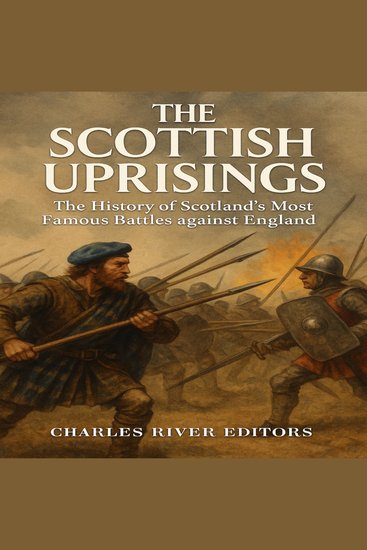
    From their very beginnings, England and Scotland fought each other. Emerging as unified nations from the early medieval period, their shared border and inter-related aristocracy created endless causes of conflict, from local raiders known as border reivers to full blown wars between their monarchies. Every century from the 11th to the 16th was colored by such violence, and there were periods when not a decade went by without some act of violence marring the peace. 
    	Out of all of this, the most bitterly remembered conflict is Edward I's invasion during the late 13th century. After Edward’s death, the English were eventually beaten back at the famous Battle of Bannockburn in 1314, and thus the early 14th century was a period featuring some of Scotland's greatest national heroes, including William Wallace and Robert the Bruce. It still resonates in the Scottish national memory, all the more so following its memorable but wildly inaccurate depiction in the 1995 film Braveheart, which had Scottish audiences cheering in cinemas. William Wallace is one of the most famous freedom fighters in history, and over 700 years after his death he is still remembered as Scotland’s beloved hero. But while the movie Braveheart helped make him a household name, and he is commemorated across Scotland as a natural leader and a loyal son of his homeland, he is also “the most mysterious of the leaders of the Scottish resistance to Edward I.” 
    England has more often been faced with the claims of competing kings and queens than with a period of no monarch at all. The major exception to that rule came in the 11 years between 1649 and 1660, when England was a republic. Following the disastrous reign of Charles I and the civil wars that led to his execution, Parliament and the army ruled England. That situation was one that would not have been possible without the Bishops’ Wars that preceded it.
    Ver libro
  • Reagan-Mondale Debate 1 - cover

    Reagan-Mondale Debate 1

    Ronald Reagan, Walter Mondale

    • 0
    • 0
    • 0
    The first of two debates between President Ronald Reagan and former Vice President Walter F. Mondale was held in Louisville, Kentucky on October 7, 1984. Barbara Walters was the debate moderator. James Weigart, Diane Sawyer, and Fred Barnes were the three panelists who asked questions. 
    This first debate was on the economy and domestic issues. Questions focused on the following topics: the nation’s economy, leadership qualities, religion, political issues, abortion, federal taxation, social welfare programs, the presidential campaign, and closing statements. Reagan won a landslide victory in 1984 winning every state except Minnesota and the District of Columbia. 
    Note: 43 seconds of the audio (part of Barbara Walter’s introduction) was garbled. The section from 57 seconds to 1 minute 40 seconds was omitted. This omitted section can be seen and heard in the text and video versions at the Ronald Reagan Presidential Library. Search online for “Ronald Reagan major speeches” to see both a text version and a video version of this debate.  
    Audio recording courtesy of the Ronald Reagan Presidential Library. 
    aspenleafmedia.com
    Ver libro
  • Meditations - cover

    Meditations

    Marcus Aurelius

    • 0
    • 0
    • 0
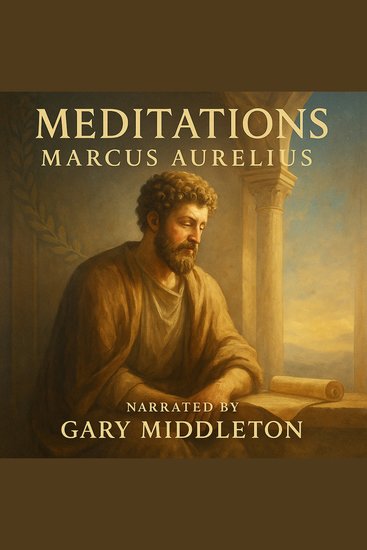
    Step into the private thoughts of one of history’s greatest leaders. Meditations by Marcus Aurelius offers timeless guidance on self-discipline, purpose, and inner peace — the quiet strength of a philosopher who ruled an empire. Written not for an audience, but for himself, these reflections reveal the Stoic path to clarity amidst chaos, reminding us that the truest victory lies in mastering one’s own mind. 
    Through vivid narration by Gary Middleton, this classic text comes alive as both an intimate confession and a practical handbook for modern life. Whether facing personal hardship or seeking calm in a turbulent world, Meditations invites you to pause, reflect, and rediscover virtue as the ultimate freedom.
    Ver libro
  • The Golden State Killer Case - cover

    The Golden State Killer Case

    William Thorp

    • 0
    • 0
    • 0
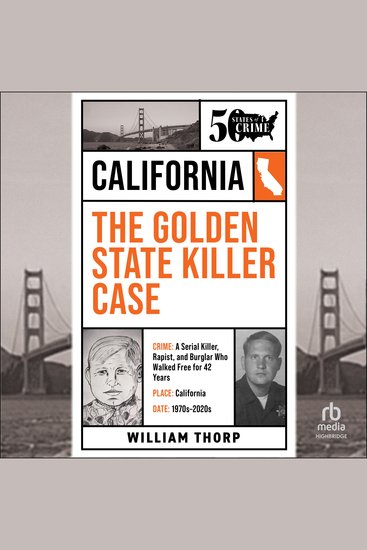
    In 2018, police announced that they had finally arrested the "Golden State Killer," a man responsible for over 140 burglaries, fifty rapes, and at least thirteen murders committed in California throughout the 1970s and '80s. That man turned out to be a former California police officer, Joseph James DeAngelo Jr. 


    Just two months earlier, the publication of I'll Be Gone in the Dark by Michelle McNamara had rocked the world of true crime. Published two years after her death, the book charts McNamara's obsessive search for the prolific criminal who had been known over the years as the East Area Rapist, the Original Night Stalker, and the Visalia Ransacker, among other epithets. McNamara is credited with coining the "Golden State Killer" moniker and heightening public awareness of the—at the time—still unsolved case. 


    William Thorp dives into the investigation, exploring the dark side of sunny California, the advances in forensic innovation that made solving this case possible, and the story inside the story—one of an amateur sleuth who dedicated the last years of her life to understanding how one of the country's worst criminals could have spent so many decades undetected.
    Ver libro
  • Ableism in Education - Rethinking School Practices and Policies - cover

    Ableism in Education -...

    Gillian Parekh

    • 1
    • 1
    • 0
    How we organize children by ability in schools is often rooted in ableism. 


    Ability is so central to schooling—where we explicitly and continuously shape, assess, measure, and report on students' abilities—that ability-based decisions often appear logical and natural. However, how schools respond to ability results in very real, lifelong social and economic consequences. Special education and academic streaming (or tracking) are two of the most prominent ability-based strategies public schools use to organize student learning. Both have had a long and complicated relationship with gender, race, and class. 


    In this down-to-earth guide, Dr. Gillian Parekh unpacks the realities of how ability and disability play out within schooling, including insights from students, teachers, and administrators about the barriers faced by students on the basis of ability. From the challenges with ability testing to gifted programs to the disability rights movement, Parekh shows how ableism is inextricably linked to other forms of bias. Her book is a powerful tool for educators committed to justice-seeking practices in schools.
    Ver libro