Junte-se a nós em uma viagem ao mundo dos livros!
Adicionar este livro à prateleira
Grey
Deixe um novo comentário Default profile 50px
Grey
Assine para ler o livro completo ou leia as primeiras páginas de graça!
All characters reduced
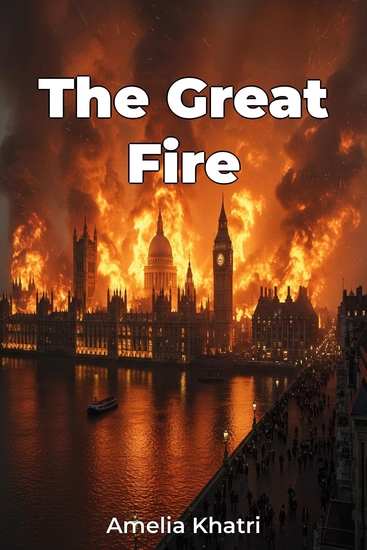
The Great Fire - cover
LER

The Great Fire

Amelia Khatri

Tradutor A AI

Editora: Publifye

  • 0
  • 0
  • 0

Sinopse

The Great Fire examines the catastrophic 1666 fire that devastated London, detailing its origins, impact, and the subsequent rebuilding efforts. It explores the vulnerable conditions of 17th-century London, such as densely packed wooden buildings and inadequate firefighting capabilities, which contributed to the rapid spread of the flames.

 
The book highlights how the disaster, while destructive, acted as a catalyst for modernization, prompting significant changes in urban planning and building codes.

 
The book progresses from setting the stage with a picture of 17th-century London to chronicling the fire itself, utilizing eyewitness accounts and official records. It then analyzes the reconstruction, focusing on architectural innovations led by Christopher Wren and the social and political consequences.

 
A key insight is the fire's role in forcing a reassessment of urban planning, leading to a more resilient city. The narrative emphasizes not only the tragedy but also the long-term positive outcomes, making it a unique contribution to London history.
Disponível desde: 17/02/2025.
Comprimento de impressão: 51 páginas.

Outros livros que poderiam interessá-lo

  • As the Crow Dies - cover

    As the Crow Dies

    Ken Casper

    • 0
    • 0
    • 0
    Vietnam took his legs. A murderer took his father. Somehow, Jason Crow has to take a stand. 
    Jason Crow comes home to Texas on clumsy, prosthetic legs, struggling with his lost dreams and the pitying curiosity of friends and strangers. But there's no time for him to brood, because his father has just been shot to death. 
    Unable to convince the police that his father was murdered, Jason begins his own investigation. In the process he uncovers family secrets that shake him to his core and make him question everyone and everything around him, including the love of Michiko, the beautiful Eurasian-American nurse he met in Japan. 
    While fighting his own insecurity as a double amputee, Jason must challenge forces capable of destroying him and those he loves to pursue the person who robbed him of his greatest hero: His dad. 
    This debut book in Ken Casper's Jason Crow West Texas Mystery Series treats readers to a powerful new voice in mystery fiction.
    Ver livro
  • Edge of Knowledge The: How Philosophy Shapes Science - cover

    Edge of Knowledge The: How...

    Henry J. Howes

    • 0
    • 0
    • 0
    The topic "The Edge of Knowledge: How Philosophy Shapes Science" explores the profound relationship between two fields that, while distinct, have deeply influenced each other throughout history. Philosophy lays the foundational questions about existence, reality, and knowledge, while science provides empirical methods and evidence to explore those questions. Together, they push the boundaries of human understanding, with philosophy offering the framework for inquiry and ethics, and science delivering the tools for discovery and innovation. This interplay drives the evolution of ideas, fostering groundbreaking insights into the mysteries of the universe and the principles guiding human progress.
    Ver livro
  • Against Decolonization - Taking African Agency Seriously - cover

    Against Decolonization - Taking...

    Olúfẹ́mi Táíwò

    • 0
    • 0
    • 0
    Decolonization has lost its way. Originally a struggle to escape the West's direct political and economic control, it has become a catch-all idea, often for performing "morality" or "authenticity;" it suffocates African thought and denies African agency. 


    Olúfemi Táíwò fiercely rejects the indiscriminate application of 'decolonization' to everything from literature, language and philosophy to sociology, psychology and medicine. He argues that the decolonization industry, obsessed with cataloguing wrongs, is seriously harming scholarship on and in Africa. He finds 'decolonization' of culture intellectually unsound and wholly unrealistic, conflating modernity with coloniality, and groundlessly advocating an open-ended undoing of global society's foundations. Worst of all, today's movement attacks its own cause: "decolorizers" themselves are disregarding, infantilizing and imposing values on contemporary African thinkers. 


    This powerful, much-needed intervention questions whether today's 'decolonization' truly serves African empowerment. Táíwò's is a bold challenge to respect African intellectuals as innovative adaptors, appropriators and synthesizers of ideas they have always seen as universally relevant.
    Ver livro
  • Crusades in Europe The: The History of the Catholic Crusaders’ Campaigns against the Ottomans and Christians across the Continent - cover

    Crusades in Europe The: The...

    Editors Charles River

    • 0
    • 0
    • 0
    Christianity was not a state religion for its first three centuries, and it was only when Emperor Constantine the Great declared it so in the early 4th century that the Church was faced with the thorny problem of state-sanctioned violence. The first major Christian authority to justify the use of arms in defense of Church and State was Augustine, Bishop of Hippo, who wrote in the 5th century, “They who have waged war in obedience to the divine command or in conformity with His laws, have represented in their persons the public justice or the wisdom of government, and in this capacity have put to death wicked men; such persons have by no means violated the commandment, ‘Thou shalt not kill.’”  
    	This opinion gained increasing influence in Western Christianity, though in the East, the attitude was (and continues to be) more nuanced. War was tolerated as a regrettable necessity in a world wounded by sin but never blessed. Canon law enacted in the Byzantine (Eastern Roman) Empire tended to treat soldiers who had killed as sinners needing to repent, and Bishop Basil of Caesarea (d. c. 330) believed that they needed to abstain from receiving communion for three years after battle. It was not that that the Eastern Roman Empire was a particularly peaceable state–far from it, in fact: it was engaged in almost continuous warfare for its entire existence. However, its conflicts were mostly defensive in character, fighting barbarians, Persians, or Muslims, and the idea of consecrating arms for the cause of Christianity was considered alien to its spirit.  
    At the Council of Clermont in July 1095, Pope Urban II canonized religious war by urging Western Europe's nobility to take up arms in defense of the Byzantine Empire against the Muslims, thus launching the Crusades, and religious military orders such as the Knights of Saint John, the Templars, and the Hospitallers arose.
    Ver livro
  • The Corpsewood Manor Murders in North Georgia - cover

    The Corpsewood Manor Murders in...

    Amy Petulla

    • 0
    • 0
    • 0
    Author Amy Petulla uncovers the curious case that left two men dead and the incredible story still surrounded by controversy, speculation, and myth. 


    In 1982, Tony West and Avery Brock made a visit to notorious Corpsewood Manor under the pretense of a celebration. They brutally murdered their hosts. Dr. Charles Scudder and companion Joey Odom built the "castle in the woods" in the Trion forest after Scudder left his position as professor at Loyola. He brought with him twelve thousand doses of LSD. Rumors of drug use and Satanism swirled around the two men. Scudder even claimed to have summoned a demon to protect the estate. The murders set the stage for a trial vibrant with local lore.
    Ver livro
  • Common Sense - cover

    Common Sense

    Thomas Paine

    • 0
    • 0
    • 0
    Do you want to listen to Common Sense? If so then keep reading…Common Sense is the timeless classic that inspired the Thirteen Colonies to fight for and declare their independence from Great Britain in the summer of 1776. Written by famed political theorist Thomas Paine, this pamphlet boldly challenged the authority of the British government and the royal monarchy to rule over the American colonists.By using plain language and a reasoned style, Paine chose to forego the philosophical and Latin references made popular by the Enlightenment era writers. As a result, Paine united average citizens and political leaders behind the central idea of independence and transformed the tenor of the colonists’ argument against the British. As the best-selling American title of all time, Common Sense has been eloquently described by historian Gordon S. Wood as "the most incendiary and popular pamphlet of the entire revolutionary era."Thomas Paine (1737–1809) was an English-American political activist, philosopher, and revolutionary. As one of the Founding Fathers of the United States, he authored the most influential pamphlets at the start of the American Revolution and inspired the colonists to declare independence from Great Britain in 1776. His ideas reflected the Enlightenment-era rhetoric of transnational human rights and the separation of church and state. He has been called a corset-maker by trade, a journalist by profession, and a propagandist by inclination.What are you waiting for Common Sense is one click away, start listening Now!
    Ver livro