¡Acompáñanos a viajar por el mundo de los libros!
Añadir este libro a la estantería
Grey
Escribe un nuevo comentario Default profile 50px
Grey
Suscríbete para leer el libro completo o lee las primeras páginas gratis.
All characters reduced
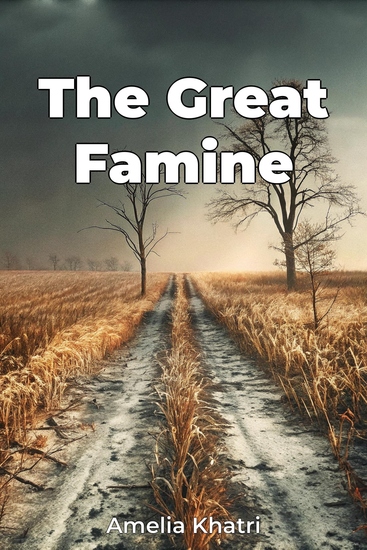
The Great Famine - cover

The Great Famine

Amelia Khatri

Traductor A AI

Editorial: Publifye

  • 0
  • 0
  • 0

Sinopsis

The Great Famine examines the multifaceted causes and devastating consequences of the Irish Potato Famine (1845-1849), a pivotal event in world history. It explores the confluence of environmental factors, specifically the arrival of potato blight, alongside existing socioeconomic conditions and British economic policies that transformed a localized agricultural crisis into a widespread catastrophe. The book highlights the biological vulnerability of Ireland's dependence on a single crop and the impact of British Colonialism on Irish land ownership and food distribution.

 
The narrative also traces the subsequent mass migration and its profound effects on both Ireland and the nations receiving the displaced population. The book argues that the famine was not merely a natural disaster, but a complex interplay of ecological vulnerability exacerbated by political and economic systems. By using government documents, personal letters, and research from agricultural science, The Great Famine adopts a narrative non-fiction approach to bring this history to life.

 
Structured to provide a comprehensive analysis, it begins with pre-famine conditions in Ireland, transitions to the blight's devastating effects, analyzes the British government's response, examines mass emigration, and concludes with the famine's long-term impact on Irish society and modern food security policies.
Disponible desde: 17/02/2025.
Longitud de impresión: 62 páginas.
Otros libros que te pueden interesar

  • Wording Around With Editing - Getting Your First Draft Ready to Publish - cover

    Wording Around With Editing -...

    Kathy Mac

    • 0
    • 0
    • 0
    Wording Around with Editing gives readers everything they need to get their first draft of any writing project ready to publish. 
    The first three chapters detail steps of the editing process and introduce the types of editing: Substantive, Stylistic and Copy. The next four chapters get into the nitty gritty of each of those, with an additional chapter on Proofreading. The final three chapters explain the importance of writing communities in helping writers bring their book to its very best form. Every chapter of Wording Around with Editing ends with a resource to help readers dive more deeply into that chapters' topic, as well as prompts that help authors take their first steps on each stage of the editing process. 
    "Kathy Mac is a 'writer's writer.' In this tight and mighty work, she cuts to the heart of what she's learned about process, craft, and loving yourself through the hard parts of writing." 
    – AJ Ripley 
    During the COVID-19 lockdown in the spring of 2020, poet and creative writing professor Kathy Mac (St. Thomas University, Fredericton, Canada) taught a free online course, the notes for which became Wording Around with Prose, the first in the Wording Around series. Wording Around with Editing: Getting your First Draft Ready to Publish is the second one in the series.
    Ver libro
  • The Eurasian Century - Hot Wars Cold Wars and the Making of the Modern Century - cover

    The Eurasian Century - Hot Wars...

    Hal Brands

    • 0
    • 0
    • 0
    We often think of the modern era as the age of American power. In reality, we're living in a long, violent Eurasian century. That giant, resource-rich landmass possesses the bulk of the global population, industrial might, and potential military power. Eurasia is a strategic prize without equal—which is why the world has been roiled, reshaped, and nearly destroyed by clashes over the supercontinent. 


    Since the early twentieth century, autocratic powers have aspired for dominance by seizing commanding positions in the world's strategic heartland. Offshore sea powers, namely the United Kingdom and America, have sought to make the world safe for democracy by keeping Eurasia in balance. America's rivalries with China, Russia, and Iran are the next round in this geopolitical game. If this new authoritarian axis succeeds in enacting a radically revised international order, America and other democracies will be vulnerable and insecure. 


    Hal Brands argues that a better understanding of Eurasia's strategic geography can illuminate the contours of rivalry and conflict in today's world. The Eurasian Century explains how revolutions in technology and warfare, and the rise of toxic ideologies of conquest, made Eurasia the center of twentieth-century geopolitics—with pressing implications for the struggles that will define the twenty-first.
    Ver libro
  • The Sibylline Oracles - cover

    The Sibylline Oracles

    Milton Terry

    • 0
    • 0
    • 0
    Brought to you by Altrusian Grace Media and narrated by Matthew Schmitz. 
    The Sibylline Oracles are a collection of oracular utterances written in Greek hexameters ascribed to the Sibyls, prophetesses who uttered divine revelations in a frenzied state.  
    Fourteen books and eight fragments of Sibylline Oracles from the 6th or 7th century AD survived. 
    Ver libro
  • Start of World War II The: The History of the Events that Culminated with Nazi Germany’s Invasion of Poland - cover

    Start of World War II The: The...

    Editors Charles River

    • 0
    • 0
    • 0
    "My good friends," the mustached, bony man with thick eyebrows and large, strong teeth somewhat reminiscent of those of a horse, shouted to the crowds from the second-floor window of his house at 10 Downing Street, "this is the second time in our history, that there has come back to Downing Street from Germany peace with honor. I believe it is peace for our time." The man addressing the crowd, British Prime Minister Neville Chamberlain, had just returned from the heart of Nazi Germany following negotiations with Adolf Hitler, and the crowd gathered outside the English leader's house on September 30, 1938 greeted these ringing words with grateful cheers. The piece of paper Chamberlain flourished exultantly seemed to offer permanent amity and goodwill between democratic Britain and totalitarian Germany. In it, Britain agreed to allow Hitler's Third Reich to absorb the Sudeten regions of Czechoslovakia without interference from either England or France, and since high percentages of ethnic Germans – often more than 50% locally – inhabited these regions, Hitler's demand for this territory seemed somewhat reasonable to Chamberlain and his supporters. With Germany resurgent and rearmed after the disasters inflicted on it by the Treaty of Versailles following World War I, the pact – known as the Munich Agreement – held out hope of a quick end to German ambitions and the return of stable, normal international relations across Europe. 
    Of course, the Munich agreement is now notorious because its promise proved barren within a very short period of time. Chamberlain's actions either failed to avert or actually hastened the very cataclysm he wished to avoid at all costs. The "Munich Agreement" of 1938 effectively signed away Czechoslovakia's independence to Hitler's hungry new Third Reich, and within two years, most of the world found itself plunged into a conflict which made a charnel house of Europe and left somewhere between 60-80 million people dead globally.
    Ver libro
  • Spanish and Portuguese in the New World The: The History and Legacy of the First European Rivalry in the Americas - cover

    Spanish and Portuguese in the...

    Editors Charles River

    • 0
    • 0
    • 0
    In 1451, Prince Henry the Navigator helped fund and develop a new type of ship, the caravel, that featured triangular lateen sails and would be able to travel in the open ocean and sail against the wind. In 1488, Bartholomew Diaz rounded the southern tip of Africa, named the Cape of Good Hope by King John of Portugal, and entered the Indian Ocean from the Atlantic. 
    One explorer, Christopher Columbus, sought funding from the Portuguese to search for a passage to Asia by sailing westwards, but he was rejected. At this time in the late 15th century, Portugal’s domination of the western African sea routes prompted the neighboring Crown of Castile and the Catholic monarchs in modern Spain to search for an alternative route to south and east Asia (termed Indies), so they provided Columbus with the funding he required. By the time Christopher Columbus started setting back east from the New World after landing there in October 1492, he had explored San Salvador in the Bahamas (which he thought was Japan), Cuba (which he thought was China), and Hispaniola, the source of gold. As the common story goes, Columbus, en route back to Spain from his first journey, called in at Lisbon as a courtesy to brief the Portuguese King John II of his discovery of the New World. King John subsequently protested that according to the 1479 Treaty of Alcáçovas, which divided the Atlantic Ocean between Spanish and Portuguese spheres of influence, the newly discovered lands rightly belonged to Portugal. To make clear the point, a Portuguese fleet was authorized and dispatched west from the Tagus to lay claim to the “Indies,” which prompted a flurry of diplomatic activity in the court of Ferdinand and Isabella.
    Ver libro
  • Montessori at Home - Nurture Independence in Your Child - cover

    Montessori at Home - Nurture...

    Johnny Nelson

    • 0
    • 0
    • 0
    Discover how to nurture confidence, independence, and joy in your child—starting right at home. Montessori at Home: Nurture Independence in Your Child is a compassionate, practical, and emotionally engaging guide for parents and caregivers seeking a more intentional way to raise children. Grounded in the timeless principles of Dr. Maria Montessori, this audiobook offers a clear path for integrating Montessori values into everyday family life—without needing a classroom or expensive materials. 
    From creating purposeful spaces to encouraging self-care, fostering focus, and building emotional intelligence, each chapter delivers actionable advice with heartfelt storytelling that resonates across all parenting styles. Rather than seeking control or perfection, this approach honors the child as an individual capable of learning through real-world experiences. You’ll discover how to guide instead of direct, observe instead of interrupt, and support instead of pressure—all while building a peaceful, trusting relationship with your child. 
    Perfect for parents of toddlers through early elementary-age children, homeschoolers, or those simply curious about mindful parenting, this audiobook brings clarity and calm to the often chaotic world of raising kids. Whether you're brand-new to Montessori or simply seeking to deepen your understanding, this book helps you bring its principles to life with ease, compassion, and authenticity. 
    If you want a home where children thrive through freedom, structure, and self-discovery, Montessori at Home is your roadmap to a more connected and fulfilling parenting journey.
    Ver libro