Junte-se a nós em uma viagem ao mundo dos livros!
Adicionar este livro à prateleira
Grey
Deixe um novo comentário Default profile 50px
Grey
Assine para ler o livro completo ou leia as primeiras páginas de graça!
All characters reduced
The Atomic Age - cover
LER

The Atomic Age

Amelia Khatri

Tradutor A AI

Editora: Publifye

  • 0
  • 0
  • 0

Sinopse

"The Atomic Age" explores the complex history, science, and impact of nuclear power, examining its evolution from theoretical physics to a technology that simultaneously promises clean energy and threatens global destruction. The book delves into the Manhattan Project's origins, the subsequent Cold War arms race, and the development of nuclear power plants, revealing how science, history, and ethical considerations are intertwined in the nuclear narrative. One intriguing fact is the dual-use nature of nuclear technology, offering both benefits and risks, while another is its profound effect on geopolitical strategies and environmental science. The book progresses through three major sections, starting by explaining the basic physics of fission, fusion, and radioactivity, ensuring accessibility for non-scientists. It then traces the historical development of the atomic age, from the bombings of Hiroshima and Nagasaki to the present day. Finally, it examines contemporary challenges like nuclear waste disposal and reactor safety, while also exploring opportunities such as fusion energy. By connecting scientific advancements with their historical and societal consequences, "The Atomic Age" provides a holistic perspective on nuclear technology suitable for students, researchers, and policymakers.
Disponível desde: 12/02/2025.
Comprimento de impressão: 79 páginas.
Outros livros que poderiam interessá-lo

  • To the Gnat - cover

    To the Gnat

    Samuel Rogers

    • 0
    • 0
    • 0
    LibriVox volunteers bring you 15 recordings of To The Gnat by Samuel Rogers. This was the Weekly Poetry project for May 19, 2013.Some comments from our readers.. "It might seem a tad mellow dramatic, but if you live in the country as I do, this might just resonate. Here it is the mosquito that presents as my mortal enemy, and if it infiltrates my room at night, there is no sleeping until it has been vanquished. (Arielph)"Coming from Scotland as I do where we have the dreaded Midgie, which feels like it has the teeth of a Doberman, I can sympathize with the poet on his anticipation of a sleepless night." (RMac01)"with midgies to the left of me, midgies to the right of me, I feel for Samuel Rogers!" (jannie)
    Ver livro
  • Longbow The: The History of the Weapon that Revolutionized Warfare in the Middle Ages - cover

    Longbow The: The History of the...

    Editors Charles River

    • 0
    • 0
    • 0
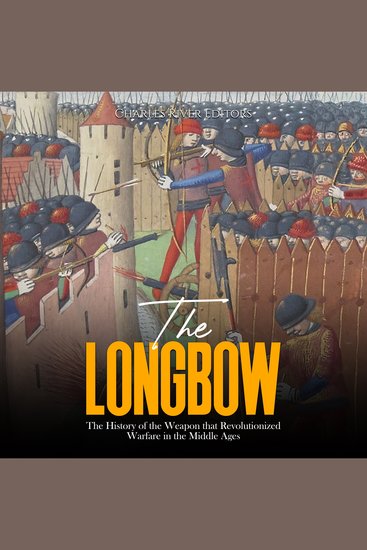
    While the bow was used throughout ancient times and the Middle Ages, on mainland Europe it was mostly replaced by the crossbow in the early 13th century, but that would change with the introduction of the longbow, a more powerful weapon than the traditional hunting bows. The original longbowmen were Welshmen recruited by King Edward I of England after he conquered Wales, and the weapon got its name from the fact that it was almost as tall as the man using it. This gave it a longer draw and therefore more force, as longbows were generally made of yew, a strong and pliable wood. The longbow was cheap and easy to make, but they required extensive training to be used well, so in England, commoners were encouraged and at times required to practice archery. A statute of Richard II dating from 1388 reads, “Servants and Laborers shall have Bows and Arrows, and use the same the Sundays and Holydays, and leave all playing at tennis or foot-ball, and other games called coits, dice, casting of the stone, kaikles [skittles], and other such importune games.” 
    	The longbow’s greatest day was at Agincourt in 1415, but the fact that this did not end the age of heavy plate cavalry indicated the longbow did have some limitations. For example, modern tests show that longbow arrows had trouble piercing plate armor, likely the main reason they were used as a massed weapon. With arrows raining down, it increased the chances of hitting a joint in the armor or an imperfection. Also, horse armor couldn’t protect the entire animal and the knights would soon find themselves dismounted. At some battles like Agincourt, the knights foundered in soft earth, and as their horses fell and the men became confused and hampered by the arrows clanking off their armor, they got mired in the mud and the English infantry could move in and finish them off. 
    Ver livro
  • Foul Ball - cover

    Foul Ball

    Jim Bouton

    • 0
    • 0
    • 0
    With his trademark wit and distinctive voice, legendary Ball Four author Jim Bouton recounts his battle against local elites' efforts to replace Wahconah Park, one of the oldest parks in the United States, against the wishes and votes of local citizens. But Foul Ball is more than just a lively romp about saving an old ballpark near Bouton's home in Massachusetts. In a detailed diary—his first since Ball Four—Bouton takes us along on his wild ride into the teeth of corporate malfeasance, anti-democratic processes, the tyranny of a one-newspaper town, and the real reason why the good old boys wanted to build a new stadium. For the first time in two decades, enjoy Foul Ball as never before with freshly edited content and a new foreword from Jim Bouton's wife, Paula.c
    Ver livro
  • The Collapse of the Indus Valley Civilization - Unraveling the Mystery Behind One of the World’s Oldest Lost Civilizations - cover

    The Collapse of the Indus Valley...

    David Hill

    • 0
    • 0
    • 0
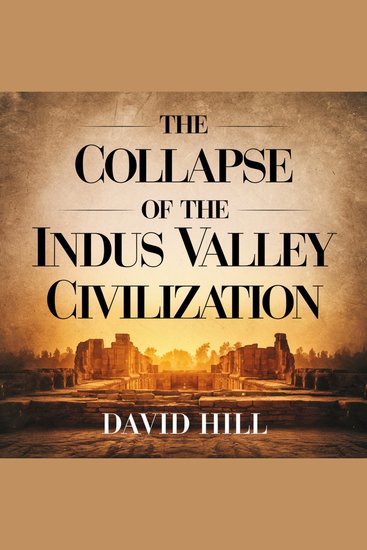
    The Indus Valley Civilization was one of the most advanced and mysterious ancient societies, yet it mysteriously declined and vanished. What caused the fall of this once-great civilization? Was it climate change, invasions, or internal decline? 
    This audiobook explores the rise, achievements, and sudden disappearance of the Indus Valley Civilization. From their sophisticated cities like Mohenjo-Daro and Harappa to their advanced drainage systems and trade networks, uncover the untold story of a lost world. 
    The Collapse of the Indus Valley Civilization is a must-listen for history lovers, archaeology enthusiasts, and anyone fascinated by the mysteries of ancient civilizations.
    Ver livro
  • The Dark Ages - cover

    The Dark Ages

    Charles Oman

    • 0
    • 0
    • 0
    "The world was changing, but it was not ending."
    
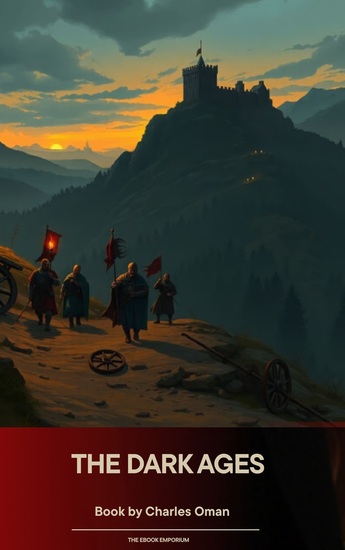
    Spanning nearly five centuries of transformation, Sir Charles Oman's classic work deconstructs the myth of the "Dark Ages" as a period of mere ignorance. Instead, he reveals a vibrant, violent, and crucial era where the wreckage of the Roman Empire was forged into the foundations of modern Europe. From the deposition of Romulus Augustulus to the death of Charles the Fat, Oman provides a sweeping narrative of the men and movements that shaped the West.
    
    The Clash of Civilizations: Oman masterfully tracks the rise and fall of dynasties. Witness the struggle of the Byzantine Empire to hold the East against the rising tide of Islam, the brutal expansion of the Frankish kings, and the terrifying shadow of the Viking raids. This is a history of grand strategy and battlefield tactics, where the author's expertise in military history shines through every chapter.
    
    The Pillars of the Middle Ages: Beyond the battlefield, The Dark Ages explores the intellectual and religious shifts of the era. Follow the influence of the papacy, the preservation of classical knowledge in monasteries, and the administrative genius of Charlemagne's Renaissance. Oman proves that this was an age of intense creativity and political evolution, setting the stage for the Crusades and the feudal system that would follow.
    
    History written with the precision of a scholar and the soul of a storyteller. Purchase "The Dark Ages" today and rediscover the roots of the Western world.
    Ver livro
  • Teaching Fiercely - Spreading Joy and Justice in Our Schools - cover

    Teaching Fiercely - Spreading...

    Kass Minor

    • 0
    • 0
    • 0
    In Teaching Fiercely: Spreading Joy and Justice in Our Schools, accomplished educator Kass Minor delivers an inspiring and practical exploration of what it means to be a just teacher in a system that actively incentivizes injustice. The author explains how to build joyful experiences even in the face of inevitable injustice and demonstrates how to accept the seemingly conflicting experience of joy in the face of heartbreak. 


    In the book, you'll learn to be a catalyst for change, unlearning the patterns of school that have marginalized children while becoming aware of tenets of justice as they manifest in educational spaces. You'll also discover: 


    ● Strategies for creating human-centered care and joy, in which thoughts, actions, and decisions are drawn from the school community 


    ● Techniques for creating student-centered experiences within standards-based classrooms 


    ● How to raise the level of family involvement in your students' education and improve communication 


    An essential blueprint for K-12 educators, school support staff, and school administrators, Teaching Fiercely will also earn a place on the bookshelves of education policymakers, researchers, and students.
    Ver livro