Unisciti a noi in un viaggio nel mondo dei libri!
Aggiungi questo libro allo scaffale
Grey
Scrivi un nuovo commento Default profile 50px
Grey
Iscriviti per leggere l'intero libro o leggi le prime pagine gratuitamente!
All characters reduced
Secret War Bunkers - cover

Secret War Bunkers

Amelia Khatri

Traduttore A AI

Casa editrice: Publifye

  • 0
  • 0
  • 0

Sinossi

Secret War Bunkers explores the hidden world of underground facilities built for wartime strategy, defense, and nuclear planning, revealing their crucial role in shaping military history and global conflict. These bunkers, vital nerve centers during intense periods like the Cold War, offer a unique perspective on how nations prepared for catastrophic events. The book argues that these facilities profoundly influenced geopolitical decision-making, representing both a commitment to national survival and an escalation of global power struggles.

 
The book progresses by examining the evolution of bunker technology from World War II through the Cold War, detailing the architecture and engineering designed to withstand threats like nuclear attacks. It also dives into the decision-making processes within these bunkers, exploring how leaders operated under immense pressure.

 
The book sets itself apart by offering a detailed comparative analysis of different national approaches to underground defense during the arms race and the social and political impacts of secret bunker programs. Supported by declassified documents and firsthand accounts, this book provides a framework for understanding the strategic implications of underground infrastructure.

 
Readers gain insights into how these bunkers shaped the past and may influence the future of international relations and civil defense policies, addressing debates surrounding nuclear deterrence and Cold War defense strategies.
Disponibile da: 17/02/2025.
Lunghezza di stampa: 60 pagine.


Altri libri che potrebbero interessarti

  • Wings of Justice - The Tuskegee Airmen and the War That Changed America - cover

    Wings of Justice - The Tuskegee...

    Davis Truman

    • 0
    • 0
    • 0
    Soar into the untold story of the heroes who defied gravity and racism. 
    In Wings of Justice, bestselling author Davis Truman delivers a gripping, emotionally charged tribute to the legendary Tuskegee Airmen, America’s first Black military pilots, who not only fought against the Axis powers during World War II but also challenged the deep-rooted injustice of segregation at home. 
    With vivid storytelling and powerful historical insight, this book follows the Airmen from the segregated airfields of Tuskegee, Alabama, to the skies over war-torn Europe. As they battled enemies abroad and prejudice within the ranks, these brave men rewrote the narrative of American heroism. 
    More than a story of war, this is a story of triumph, of courage, resilience, and the fight for equality. Wings of Justice will leave you inspired, enraged, and ultimately hopeful. It’s a must-read for anyone who believes in the power of history to shape a more just future. 
    History remembered. Justice reclaimed. Heroes are never forgotten.
    Mostra libro
  • How Do You Choose? - A Human Design Guide to What's Best for You at Work in Love and in Life - cover

    How Do You Choose? - A Human...

    Erin Claire Jones

    • 0
    • 0
    • 0
    Do you know what career you’re really meant to pursue? Can you identify the relationships you should really be investing in? Are you living your life to the fullest? Human Design is a mystical personality assessment that uses NASA data, astrology, and Eastern philosophy to generate mind-blowingly accurate insights into how you uniquely thrive at work, in love, and beyond. 
    In How Do You Choose?, world-renowned Human Design coach and educator Erin Claire Jones offers a roadmap to using this cosmic system as a practical tool for transformation. 
    Written as an easy-to-understand guide, Erin shares relatable stories from her own life, case studies from her work with thousands of clients, examples of how influential figures like Nelson Mandela, Taylor Swift, Beyoncé, Maya Angelou and more have used their Human Design gifts to change the world, actionable tips for immediate transformation, and more than a hundred journaling prompts. 
    After listening to Erin you will learn: 
    The professional roles you’re designed to pursue The relationship dynamics that make you feel most seenYour most potent communication strategies with colleagues, family, and friendsThe gifts you bring to a team and how you can be most effectiveThe way you are uniquely designed to make decisions of all kinds 
    Along the way, you will also become fluent in the language of Human Design as you dive into the fundamentals of Type, Strategy, and Authority, and discover how these elements can influence every decision you make. 
    Whether you want to advance your career, motivate others to change, take creative risks, find deeper connections, build better habits, start a new chapter, or simply create more happiness in your life and relationships, How Do You Choose? offers you a resource to shift your mindset and unlock your full potential.
    Mostra libro
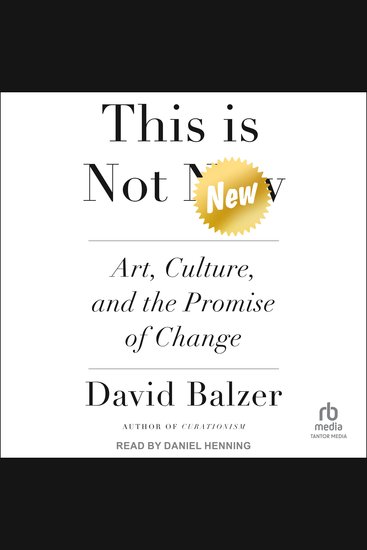
  • This is Not New - Art Culture and the Promise of Change - cover

    This is Not New - Art Culture...

    David Balzer

    • 0
    • 0
    • 0
    Praise for Curationism: "Balzer writes with zest, skepticism, and sly humor" —Sheila Heti, author of Pure Colour 


    What does it mean to call something "new"? Why is Western art and culture, even after postmodernism, still so obsessed with the concept? What are the consequences of relying on culture to bring about social change? 


    In this provocative book, David Balzer argues that Western culture was never designed to produce truly new or original artifacts. Rather, we move from fixation to fixation, trend to trend—a cycle of creation and destruction with deep origins in Judeo-Christianity and the paganism that preceded it. The culture industry promises its own form of change while preserving existing systems of power exactly as they are. 


    From the New Jerusalem to the New Left, from Vannevar Bush to Kate Bush, This is Not New asks difficult questions about the role of culture not in making change, but in delaying—even preventing—it.
    Mostra libro
  • Land With No Sun - A Year in Vietnam with the 173rd Airborne - cover

    Land With No Sun - A Year in...

    Ted G Arthurs

    • 0
    • 0
    • 0
    A first-person history of the action seen by the United States airborne infantry brigade in Vietnam, from a Silver Star awarded Command Sergeant Major. A no-holds-barred, straight-in-your-face account of combat in Vietnam. You know it's going to be hot when your brigade is referred to as a Fireball unit. From May 1967 through May 1968, Ted Arthurs was in the thick of it, humping an eighty-pound rucksack through triple canopy jungle, chasing down the Viet Cong and North Vietnamese in the Central Highlands of South Vietnam. As sergeant major for a battalion of eight-hundred men, it was his job to see them through this jungle hell and get them back home again.
    Mostra libro
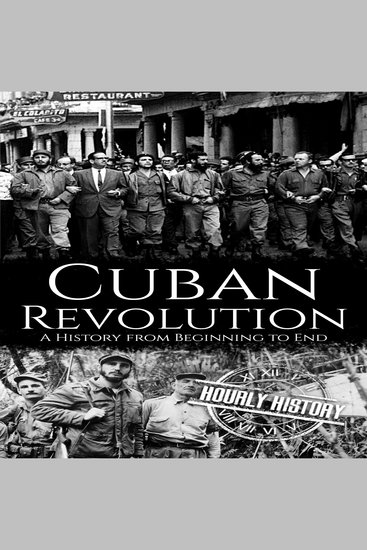
  • Cuban Revolution - A History from Beginning to End - cover

    Cuban Revolution - A History...

    Hourly History

    • 0
    • 0
    • 0
    During the 1960s and 1970s, the images of two men came to dominate the iconography of left-wing movements: Fidel Castro and Che Guevara. The story of the revolution these two men led in Cuba became a fable that drove and encouraged other revolutionary movements around the world. 
    The Cuban Revolution is certainly astonishing. Beginning with fewer than 100 armed men, the Fidelistas took on a government that had a well-equipped army, air force, and navy. On paper, the handful of rebels stood no chance. Yet somehow, holed up in the remote Sierra Maestra mountains, this tiny group not only survived but grew in support and power until it was finally able to overthrow the brutal and corrupt government of Fulgencio Batista. 
    How did that happen? How were these men able not just to prosecute a successful revolution in Cuba but to take such a hold on the hearts and minds of people that they became among the best-known revolutionaries in the world? This is the astonishing story of the Cuban Revolution.
    Mostra libro
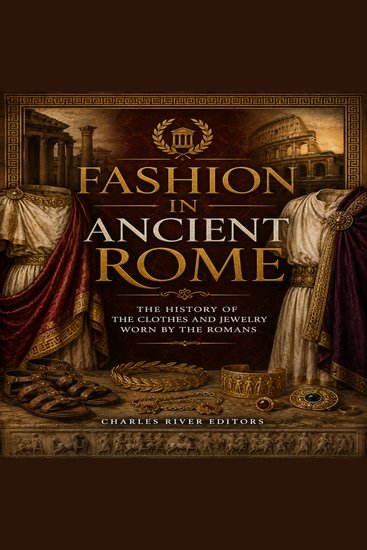
  • Fashion in Ancient Rome: The History of the Clothes and Jewelry Worn by the Romans - cover

    Fashion in Ancient Rome: The...

    Charles River Editors

    • 0
    • 0
    • 0
    More completely than almost any people before or since, the Romans turned clothing into a legal and political language. Far from being worn simply because they were warm, fine, or fashionable, clothes were a statement about where an individual stood in Rome’s rigid social hierarchy, and that hierarchy very much enforced itself through fashion, sometimes with codified laws. A boy wore one thing and a man another, and the day he changed clothes made him a citizen in the eyes of the state. A senator's shoes differed from a knight's, both differed from what an ordinary citizen put on his feet, and everyone could see the difference at a glance. A candidate for office whitened his toga so aggressively that the practice eventually lent its name to the office he sought. A general who triumphed wore a costume borrowed from a god, albeit for a single day, guarding against the suggestion that he might want to keep it. Even the color purple eventually became something a private person could be executed for wearing. 
    	This was not an accident of taste, because Rome built a society obsessed with status and visible markers, and clothes represented the primary identification. The toga, in particular, carried a weight of meaning that no other garment in the ancient world approached – it was inconvenient, expensive, difficult to wear, and impossible to work in, yet the Romans clung to it for close to a thousand years precisely because its uselessness was the point. A man in a toga announced that he was a Roman citizen at leisure, engaged in the business of public life rather than in labor. Virgil gave the Romans the phrase gens togata, “the people of the toga,” and the poet was not describing what Romans wore around the house. He was very much describing what they thought they were. 
    	Given the incredible expansion of the Roman Empire, it’s little surprise that ancient Roman artifacts of all kinds have survived to document the extent of Roman fashion. 
    Mostra libro