¡Acompáñanos a viajar por el mundo de los libros!
Añadir este libro a la estantería
Grey
Escribe un nuevo comentario Default profile 50px
Grey
Suscríbete para leer el libro completo o lee las primeras páginas gratis.
All characters reduced
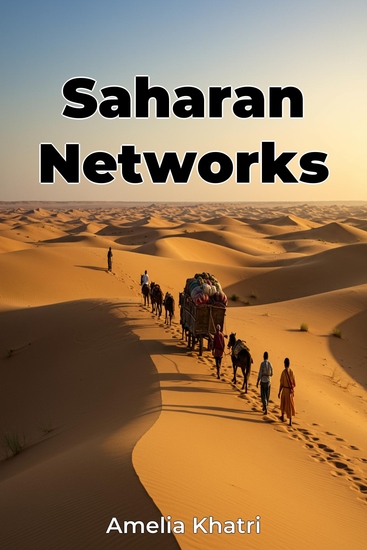
Saharan Networks - cover

Saharan Networks

Amelia Khatri

Traductor A AI

Editorial: Publifye

  • 0
  • 0
  • 0

Sinopsis

Saharan Networks explores the vital role of the Sahara Desert as a conduit for trade, cultural exchange, and globalization in world history. Challenging the perception of Africa as isolated, the book reveals intricate networks connecting sub-Saharan Africa to the Mediterranean, the Middle East, and beyond. These Saharan trade networks facilitated the exchange of commodities like gold and salt, impacting societies and enabling the rise of empires such as Ghana, Mali, and Songhai. The book examines the roles of Berber traders, Arab merchants, and African intermediaries, while investigating the social, religious, and political dimensions of this economic history. It progresses from establishing the geographical context to exploring key commodities, influential groups, and the eventual decline of these networks due to European maritime expansion. By utilizing diverse sources, including archaeological findings and historical chronicles, Saharan Networks emphasizes the agency of African actors in shaping trans-Saharan trade, offering a nuanced perspective on a crucial aspect of world history.
Disponible desde: 19/03/2025.
Longitud de impresión: 60 páginas.


Otros libros que te pueden interesar

  • Troy's Secrets: Unveiling the Hidden Legends of Ancient Heroes - "Dive into Troy's Secrets and experience thrilling audio lessons that breathe life into ancient heroes!" - cover

    Troy's Secrets: Unveiling the...

    Gideon Fairweather

    • 0
    • 0
    • 0
    Troy's Secrets: Unveiling the Hidden Legends of Ancient Heroes  
    ⭐⭐ Simplified Guide & Explanations Included⭐⭐ 
    Are you ready to deepen your understanding of timeless wisdom and unlock the captivating secrets of ancient heroes? 
    Searching for a comprehensive guide that reveals all the essential elements of these hidden legends? 
    Your quest ends here! 
    This guide will be your ultimate companion for enhancing your knowledge, applying insights, and engaging in immersive explorations. With this, you’re poised for success. 
    Updated to align with the latest discoveries in ancient legends. 
    Key Features of This Enriched Guide: 
    - Profound insights into Troy’s captivating hidden secrets 
    - In-depth exploration of the legends of ancient heroes  
    - Effective strategies for understanding and connecting with the material 
    Our guide stands out due to its extensive coverage, which is crucial for your journey into these legendary tales. Concepts aren't merely touched upon; they are explored with depth and clarity. 
    Please note that this guide operates independently and is not affiliated with any official entities related to ancient legends. 
    Crafted with a logical structure and straightforward language, our guide ensures smooth transitions between topics. Say farewell to convoluted jargon and embrace clear, concise, and engaging content. 
    So, why delay? Click the BUY NOW button, secure your guide, and embark on your adventure into the hidden legends of ancient heroes today!
    Ver libro
  • How the New Deal Built Florida Tourism - The Civilian Conservation Corps and State Parks - cover

    How the New Deal Built Florida...

    David J. Nelson

    • 0
    • 0
    • 0
    Countering the conventional narrative that Florida's tourism industry suffered during the Great Depression, this book shows that the 1930s were the starting point for much that characterizes modern Florida's tourism. David Nelson argues that state and federal government programs designed to reboot the economy during this decade are crucial to understanding the state today. 


    Nelson examines the impact of three connected initiatives—the federal New Deal, its Civilian Conservation Corps program (CCC), and the CCC's creation of the Florida Park Service. He reveals that the CCC designed state parks to reinforce the popular image of Florida as a tropical, exotic, and safe paradise. The CCC often removed native flora and fauna, introduced exotic species, and created artificial landscapes that were then presented as natural. Nelson discusses how Florida business leaders benefitted from federally funded development and the ways residents and business owners rejected or supported the commercialization and shifting cultural identity of their state. 


    A detailed look at a unique era in which the state government sponsored the tourism industry, helped commodify natural resources, and boosted mythical ideas of the "Real Florida" that endure today, this book makes the case that the creation of the Florida Park Service is the story of modern Florida.
    Ver libro
  • Everyday Leadership - Taking Charge in the Real World - cover

    Everyday Leadership - Taking...

    M.D. Ahron Friedberg, Sandra...

    • 0
    • 0
    • 0
    Everyday Leadership examines how individuals in everyday, relatively small settings can succeed in leadership positions. 


    The book provides tools for tackling the unique psychological and external challenges that everyday leaders face, and offers principles that they can adapt to their own situations. Dr. Ahron Friedberg, who regularly advises leaders and would-be leaders, emphasizes the social aspect of leadership, and explores how those who are new to leadership—and those in established positions—can leverage their support networks and thrive in their roles. The book follows the experience of real people who have faced leadership challenges and learned from them, demonstrating how listeners can learn from these examples and apply them to their own circumstances. Guided by a practical leadership roadmap, chapters examine concepts such as vision, determination, flexibility, planning, organization, and responsibility using extensive case studies, with reflective questions and key takeaways that help the listener consider how to apply these principles to their own leadership challenges. 


    This book is a must-listen for HR professionals, executive coaches, management consultants, leadership trainers, and organizational psychologists as well as those facing leadership challenges in their profession.
    Ver libro
  • Dark Ages - Historical Facts about the Plague the Inquisition and the Knights from the Middle Ages - cover

    Dark Ages - Historical Facts...

    Kelly Mass

    • 0
    • 0
    • 0
    This book contains the following titles: 
    Crusaders - The Crusaders is one of those dark chapters in history that we would rather forget, especially religious people. In name of the church, or other religions, like the Muslim faith, people killed, destroyed, looted, and burned cities to the ground. 
    Middle Ages - In the history of Europe, the Middle Ages or middle ages time period lasted around from the 5th to the late 15th centuries, likewise to the Post-classical period of worldwide history. 
    William Shakespeare - William Shakespeare is the celebrated script writer of the most popular plays in the English language. By writing both tragedies, romances, and comedies in the 16th century, he made a name for himself and became successful in the art of drama. 
    Black Death - Here we have it: We may be looking at the years 2020-2021 and think a certain virus has been bad for the world population. However, what happened in these two years is nothing, proportionally, to the hundreds of millions of people who got wiped out by rat infestations. 
    Anglo-Saxons - In the Early Middle Ages, the Anglo-Saxons were a cultural group that resided in England. They traced their roots back to the arrival of incomers to Britain in the fifth century, who originated from the North Sea coastlands of continental Europe. 
    Viking History - We all have a typical image of Vikings, from the horns on their helmets to the beards and the clothes they wear. Their ships have a certain charm, and their reputation is that they were brutal, raw, and believed in multiple gods. 
    Inquisition - Perhaps you have heard of the horrible stories of the Spanish, Portuguese, or French inquisition, the Catholic body of persecutors who would arrest the supposed “heathens” and accuse them of witchcraft, heresies, blasphemy, adultery, and a whole list of other sins or crimes.
    Ver libro
  • Augustus - Biography of Octavian the First Roman Emperor - cover

    Augustus - Biography of Octavian...

    Kelly Mass

    • 0
    • 0
    • 0
    Caesar Augustus, originally known as Gaius Octavius, was the first Roman Emperor and one of the most transformative figures in world history. Born into an affluent plebeian family, he belonged to an ancient and influential equestrian branch of the gens Octavia. His path to power began under extraordinary circumstances. Following the assassination of his maternal great-uncle, Julius Caesar, in 44 BC, Octavius was named in Caesar's will as his adopted son and successor. This inheritance not only granted him the prestigious name of Caesar but also gave him control over Caesar’s vast estate and the loyalty of his legions. These legions played a pivotal role in his rise to power, securing his place as one of the most powerful individuals in Roman history. 
    In the aftermath of Caesar's assassination, the Roman Republic was plunged into chaos, and Octavius, together with Mark Antony and Marcus Lepidus, formed the Second Triumvirate to avenge Caesar's death and secure their political dominance. This alliance, however, was marred by internal strife and competing ambitions. After their victory over Caesar’s assassins at the Battle of Philippi in 42 BC, the Triumvirs divided the Republic’s territories among themselves. Yet, the unity that had characterized their alliance quickly began to erode, as their personal and political ambitions led to inevitable conflict. Lepidus was soon sidelined, and in 36 BC, Antony’s support began to wane, leading to the climactic Battle of Actium in 31 BC. The defeat of Antony, coupled with the subsequent suicide of both Antony and his ally Cleopatra, left Octavian as the undisputed ruler of Rome.
    Ver libro
  • Ashanti Empire - Kingdom of the Golden Stool - cover

    Ashanti Empire - Kingdom of the...

    Rolf Hedger

    • 0
    • 0
    • 0
    The Ashanti Empire, flourishing from the 17th to the 19th century in what is now Ghana, stands as a testament to the resilience and sophistication of African states. This powerful kingdom was established through a unique blend of indigenous cultural traditions and political innovations, creating a centralized authority that not only governed a vast territory but also unified diverse ethnic groups under a single national identity. At the heart of this unity was the revered Golden Stool, a symbol of divine providence and the collective spirit of the Ashanti people. 
    Emerging from a landscape rich in natural resources and strategic trade routes, the Ashanti Empire developed robust economic foundations. Gold, kola nuts, and other valuable commodities flowed through well-established networks, facilitating both internal prosperity and external exchanges with neighboring regions and distant trading partners. This economic strength enabled the empire to invest in military expansion and administrative structures that further consolidated its power. 
    The political organization of the Ashanti Empire was characterized by a sophisticated hierarchy led by the Asantehene, whose authority was both political and spiritual. This dual role was crucial in maintaining social order and ensuring loyalty among the various clans and communities within the empire. The administration was further supported by councils of elders and local chiefs, who played significant roles in the governance process by mediating disputes and enforcing the laws that held the society together.
    Ver libro