¡Acompáñanos a viajar por el mundo de los libros!
Añadir este libro a la estantería
Grey
Escribe un nuevo comentario Default profile 50px
Grey
Suscríbete para leer el libro completo o lee las primeras páginas gratis.
All characters reduced
Record Keeping - cover

Record Keeping

Amelia Khatri

Traductor A AI

Editorial: Publifye

  • 0
  • 0
  • 0

Sinopsis

Record Keeping explores the captivating history of how societies have documented and preserved information, highlighting the crucial role of historical records in shaping civilizations. From ancient markings on stone to today's digital databases, the book traces the evolution of information management and its profound societal impact. Discover how early cultures, such as those in Mesopotamia and ancient Egypt, developed unique methods for preserving their histories, laws, and knowledge using cuneiform tablets and hieroglyphic records. The book uniquely links advances in record-keeping technologies to the progress of human civilization, demonstrating how these advancements have facilitated more sophisticated governance, commerce, and intellectual exchange.

 
The book progresses by examining the technologies of record-keeping, the impact on societal structures, and the ethical considerations surrounding information management. It delves into the societal impact of record-keeping practices, illustrating how accurate and accessible records are essential for legal frameworks and governmental accountability. The rise of digital records introduces new challenges, particularly in data privacy and security, which the book addresses through insights from archival science and information ethics.

 
Ultimately, Record Keeping provides essential insights into the importance of preserving knowledge in our increasingly digital world, drawing on archaeological findings, historical documents, and archival records.
Disponible desde: 29/03/2025.
Longitud de impresión: 75 páginas.
Otros libros que te pueden interesar

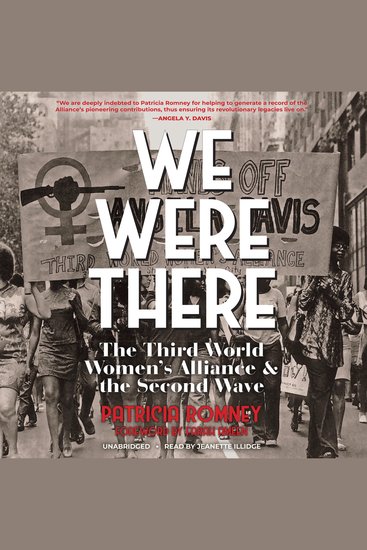
  • We Were There - The Third World Women’s Alliance and the Second Wave - cover

    We Were There - The Third World...

    Patricia Romney, Farah Ameen

    • 0
    • 0
    • 0
    From 1970 to 1980, the Third World Women’s Alliance lived the dream of third world feminism. The small bicoastal organization was one of the earliest groups advocating for what came to be known as intersectional activism, arguing that women of color faced a “triple jeopardy” of race, gender, and class oppression. Rooted in the Black civil rights move­ment, the TWWA pushed the women’s movement to address issues such as sterilization abuse, infant mortality, welfare, and wage exploitation, and challenged third world activist organizations to address sexism in their ranks. Widely recognized as the era’s pri­mary voice for women of color, this alliance across ethnic and racial identities was unique then and now.Interweaving oral history, scholarly and archival research, and first-person memoir, We Were There documents how the TWWA shaped and defined second wave feminism. Highlight­ing the essential contributions of women of color to the justice move­ments of the 1970s, this historical resource will inspire activists today and tomorrow, reminding a new generation that solidarity is the only way forward.
    Ver libro
  • Revolution and Terror - cover

    Revolution and Terror

    Graeme Gill

    • 0
    • 0
    • 0
    This book is a study of the relationship between revolution and terror. Historically many have claimed that revolution inevitably devolves into terror, best reflected in the way in which after coming to power the revolutionary elite turns on itself, and one section of it uses terrorist means to eliminate another section. Graeme Gill argues that in order to understand the relationship between revolution and terror, it is necessary to distinguish between different types of terror. There are three such types: revolutionary terror, in which the aim is to destroy enemies and thereby consolidate the regime; transformational terror, designed to drive the politico-socio-economic transformation of society that is the purpose of the 'great' revolutions; and inverted terror, which is when terror is turned against part of the elite and regime more broadly. The analysis explains how these different types of terror are related to the revolutionary seizure of power, showing that revolutionary and transformational terror are organically connected to revolution while for inverted terror the connection is mediated through the leader. The argument is prosecuted through detailed analysis of the French, Russian, and Chinese revolutions. The study ends by assessing the contemporary salience of the lessons of the great revolutions in the light of the low level of violence in the negotiated revolutions of 1989.
    Ver libro
  • The Magic in the Tragic - Rewriting the Script on Grief and Discovering Happiness in Our Darkest Days - A New Approach to Resilience Grieving and Healing in the Midst of Tragedy or Trauma - cover

    The Magic in the Tragic -...

    John Tsilimparis

    • 0
    • 0
    • 0
    Read by the author.  
    Discover a new way to think about your grief and loss. Esteemed psychotherapist and bereavement counselor John Tsilimparis, MFT, shows you the ways grief and loss intertwine with beauty, tenderness, and human connection to empower you to build emotional resilience in a difficult world. 
    What if you could flip the script on the pain in your life and learn how to cultivate purpose and joy—not after grief but during it, not despite hardship but because of it? What if you could find a type of magic in your tragedy? A way to understand your emotions and reframe your grief that opens you up rather than shuts you down? 
    Drawing on his own story, scientific and philosophical evidence, the soothing effects of the arts and nature, and three decades of experience as a psychotherapist and grief counselor, John Tsilimparis offers a new take on adversity in The Magic in the Tragic. In these uncertain times, you'll be equipped to:Approach grief in an empowering wayAcquire the tools needed to develop emotional resiliencyAddress fear and uncertainty head-on rather than avoid itEmbrace difficult times without sugarcoating themAccess the unseen beauty of your deepest emotionsDiscover the healing power and belonging of music, art, and nature 
      
    The Magic in the Tragic powerfully explores how the hardest things in life intersect purpose and meaning, splendor and connectedness. When you embrace the magic in your tragic seasons, you can step into the future with hope, knowing that even when grief comes, it comes with an invitation to new life.
    Ver libro
  • No Place for Mercy - cover

    No Place for Mercy

    Davis Truman

    • 0
    • 0
    • 0
    Where empire rose, mercy fell. 
    In No Place for Mercy, ancient Rome is unmasked—not as the marble-clad cradle of civilization, but as a brutal stage where sex, violence, and power played their most calculated roles. With a piercing lens, this provocative and deeply researched work reveals how sexual violence was not only a consequence of conquest but a deliberate tool of political manipulation and imperial propaganda. 
    From the mythologized Rape of the Sabine Women to the whispered scandals of imperial courts, No Place for Mercy exposes how Rome’s leaders wielded control over bodies as a means to control the narrative, transforming victims into symbols and violence into spectacle. 
    Drawing from primary sources, inscriptions, and visual art, this groundbreaking book explores how Roman elites exploited sexual violence to define citizenship, masculinity, and moral order. It challenges romanticized visions of antiquity and forces us to confront the uncomfortable truths beneath Rome’s glorious facade. 
    Bold, unflinching, and urgently relevant, this is history that speaks to today’s conversations about power, gender, and the weaponization of sexuality. For scholars, students, and anyone who dares to ask what lies beneath the empire’s polished stone, No Place for Mercy is an essential and unforgettable read.
    Ver libro
  • How the Other Half Lives: Studies Among the Tenements of New York - cover

    How the Other Half Lives:...

    Jacob A. Riis

    • 0
    • 0
    • 0
    How the Other Half Lives: Studies Among the Tenements of New York (1890) was a pioneering work of photojournalism by Jacob Riis, documenting the squalid living conditions in New York City slums in the 1880s. It served as a basis for future muckraking journalism by exposing the slums to New York City’s upper and middle class. The title of the book is a reference to a phrase of François Rabelais, who wrote in Pantagruel: "one half of the world does not know how the other half lives". (Summary by Wikipedia)
    Ver libro
  • In the Line of Battle - cover

    In the Line of Battle

    Walter Wood

    • 0
    • 0
    • 0
    “A COLLECTION OF absolutely authentic accounts by privates and non-commissioned officers.... We see a great simplicity and directness of observation and recital, so admirable that one page of such writing is worth all the folios of the war experts and correspondents, not to say romancers and publicists.” The Athenæum. “THE HUMAN SIDE, the naked horror and simple glory of actual conflict, is what Mr. Wood’s soldiers are concerned with, and the stories they tell give a clearer picture of this side of war than can be found in any other form.” Pall Mall Gazette. “A VERY REAL and deeply affecting book, and the editor has done a valuable work in collecting these poignant, odd, whimsical, terrible stories together.” Westminster Gazette. “NO MAN WHO boasts a heart, least of all any man of young limbs, will read these soldiers’ simple stories without a quickening of the pulse. They are at once a great stimulus and a great memorial.” Daily Telegraph.
    Ver libro