Junte-se a nós em uma viagem ao mundo dos livros!
Adicionar este livro à prateleira
Grey
Deixe um novo comentário Default profile 50px
Grey
Assine para ler o livro completo ou leia as primeiras páginas de graça!
All characters reduced
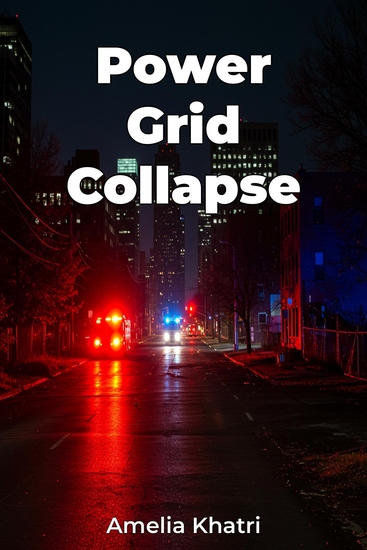
Power Grid Collapse - cover
LER

Power Grid Collapse

Amelia Khatri

Tradutor A AI

Editora: Publifye

  • 0
  • 0
  • 0

Sinopse

Power Grid Collapse explores the fragility of urban centers when faced with extended power outages, a growing concern given our increasing dependence on electricity. The book investigates the technical vulnerabilities of interconnected power grids, referencing historical blackouts like the Northeast Blackout of 1965 and the New York City blackout of 1977 to analyze societal responses and infrastructure failures. A key insight is that current emergency preparedness might be inadequate for long-term, widespread outages, highlighting the urgent need for proactive measures. 

 
The book adopts an analytical approach, drawing on data from power grid operators, historical event analyses, and urban planning research. It progresses from explaining power grid operations to examining vulnerabilities, then analyzes historical blackouts and culminates in recommendations for improving urban resilience. 

 
The central argument emphasizes infrastructure hardening and decentralized energy solutions as vital components of urban survival strategies, making this book a valuable resource for policymakers, urban planners, and anyone concerned about the resilience of modern cities.
Disponível desde: 17/02/2025.
Comprimento de impressão: 82 páginas.

Outros livros que poderiam interessá-lo

  • Taisho Era - Democracy and Social Change in a Modernizing Japan - cover

    Taisho Era - Democracy and...

    Rolf Hedger

    • 0
    • 0
    • 0
    The Taisho Era (1912–1926) marked a period of transition in Japan, bridging the highly centralized and authoritarian rule of the Meiji period with the growing democratic movements that characterized the early 20th century. Emperor Taisho ascended to the throne following the death of Emperor Meiji in 1912. Unlike his predecessor, who had been a strong and active ruler, Emperor Taisho was frail and suffered from chronic illness, which significantly limited his ability to govern. As a result, political power gradually shifted away from the emperor and toward elected officials and political parties, paving the way for what would become known as "Taisho Democracy." 
    At the dawn of the Taisho Era, Japan stood at a crossroads between tradition and modernization. The country had rapidly industrialized during the Meiji period, transforming from a feudal society into a modern industrial state. However, with this modernization came social and political unrest. As Japan’s economy expanded, so too did the urban population, leading to the rise of a new middle class that demanded greater political participation and social change. The oligarchic rule of the genrō—elder statesmen who had dominated Meiji politics—faced increasing pressure from political parties, intellectuals, and the general public. 
    The political landscape of early Taisho Japan saw significant changes, including the growing influence of elected politicians. The 1912–1913 Taisho Political Crisis was a defining moment in this shift. When Prime Minister Saionji Kinmochi refused to increase military funding, the army resigned in protest, forcing him to step down. This led to widespread public outrage and a movement advocating for the power of elected officials over military and oligarchic influence. In 1913, the Katsura Tarō government collapsed due to public demonstrations, highlighting the rising political consciousness of the people.
    Ver livro
  • Dancing on Bones - History and Power in China Russia and North Korea - cover

    Dancing on Bones - History and...

    Katie Stallard

    • 0
    • 0
    • 0
    History didn't end. Democracy didn't triumph. America’s leading role in the world is no longer assured. Instead, authoritarian rule is on the rise, and the global order established after 1945 is under attack. This is the phenomenon Katie Stallard tackles in Dancing on  
    Bones as she examines how the leaders of China, Russia, and North Korea manipulate the past to serve the present and secure the future of authoritarian rule. 
     
    Russia has annexed Crimea, started a war in eastern Ukraine, and repeatedly massed troops on its borders. China has stepped up war games near Taiwan and militarized the South China Sea, while North Korea has resumed missile testing and blood-curdling threats  
    against the United States. These three states consistently top lists of threats to US and European security, and yet the leaders of all three insist that it is their country that is threatened, rewriting history and exploiting the memory of the wars of the last century to  
    justify their actions and shore up popular support. Since coming to power, Xi Jinping has almost doubled the length of China’s World War II, Vladimir Putin has elevated the memory of the Great Patriotic War to the status of a national religion, and Kim Jong Un has invested  
    vast sums in rebuilding war museums in his impoverished state, while those who try to challenge the official version of history are silenced and jailed. But this didn’t start with Putin, Xi, and Kim, and it won’t end with them. 
     
    Drawing on first-hand, on-the-ground reporting, Dancing on Bones argues that if we want to understand where these three nuclear powers are heading, we must understand the stories they are telling their citizens about the past.
    Ver livro
  • American Epic - Reading the US Constitution - cover

    American Epic - Reading the US...

    Garrett Epps

    • 0
    • 0
    • 0
    In 1987, E. L. Doctorow celebrated the Constitution's bicentennial by reading it. "It is five thousand words long but reads like fifty thousand," he said. Distinguished legal scholar Garrett Epps disagrees. It's about 7,500 words. And Doctorow "missed a good deal of high rhetoric, many literary tropes, and even a trace of, if not wit, at least irony," he writes. 


    In American Epic, Epps takes us through a complete reading of the Constitution to achieve an appreciation of its power and a holistic understanding of what it says. In this book he seeks not to provide a definitive interpretation, but to listen to the language and ponder its meaning. He draws on four modes of reading: scriptural, legal, lyric, and epic. The Constitution's first three words, for example, sound spiritual—but Epps finds them to be more aspirational than prayer-like. He turns the Second Amendment into a poem to illuminate its ambiguity. He notices oddities and omissions. The Constitution lays out rules for presidential appointment of officers, for example, but not removal. Should the Senate approve each firing? Can it withdraw its "advice and consent" and force a resignation? And he challenges himself, as seen in his surprising discussion of the Defense of Marriage Act (DOMA) in light of Article 4, which orders states to give "full faith and credit" to the acts of other states.
    Ver livro
  • Charmides - cover

    Charmides

    Plato

    • 0
    • 0
    • 0
    "Charmides" is a dialogue written by Plato that delves into the nature of wisdom and self-knowledge. The conversation takes place between Socrates and Charmides, a young man renowned for his beauty and noble heritage. Socrates challenges Charmides' claim to possess self-control or temperance, arguing that true self-knowledge requires an examination of one's own nature. This leads to a discussion on the nature of wisdom and how it is cultivated through inquiry and self-examination, rather than being possessed as a physical object. Read in English, unabridged.
    Ver livro
  • The Einstein Syndrome - Bright Children Who Talk Late - cover

    The Einstein Syndrome - Bright...

    Thomas Sowell

    • 0
    • 0
    • 0
    The Einstein Syndrome is a follow-up to Late-Talking Children, which established Thomas Sowell as a leading spokesman on the subject of late-talking children. While many children who talk late suffer from developmental disorders or autism, there is a certain well-defined group who are developmentally normal or even quite bright, yet who may go past their fourth birthday before beginning to talk. These children are often misdiagnosed as autistic or retarded, a mistake that is doubly hard on parents who must first worry about their apparently handicapped children and then see them lumped into special classes and therapy groups where all the other children are clearly very different. Since he first became involved in this issue in the mid-90s, Sowell has joined with Stephen Camarata of Vanderbilt University, who has conducted a much broader, more rigorous study of this phenomenon than the anecdotes reported in Late-Talking Children. Sowell can now identify a particular syndrome, a cluster of common symptoms and family characteristics, that differentiates these late-talking children from others; relate this syndrome to other syndromes; speculate about its causes; and describe how children with this syndrome are likely to develop.
    Ver livro
  • A Rare Recording of Franklin Delano Roosevelt - cover

    A Rare Recording of Franklin...

    Franklin Delano Roosevelt

    • 0
    • 0
    • 0
    The following is Roosevelt's Infamy Speech to a joint session of Congress on December 8, 1941, one day after the Japanese bombed Pearl Harbor. Franklin Delano Roosevelt (January 30, 1882 - April 12, 1945), was an American politician and lawyer who served as the 32nd president of the United States from 1933 until his death in 1945. As the leader of the Democrat Party, Roosevelt won a record four presidential elections, directing the federal government during most of the Great Depression, implementing his New Deal domestic agenda, which would define modern liberalism in the United States throughout the middle third of the 20th century. His third and fourth terms were dominated by World War II, which ended in victory shortly after he died in office.
    Ver livro