Junte-se a nós em uma viagem ao mundo dos livros!
Adicionar este livro à prateleira
Grey
Deixe um novo comentário Default profile 50px
Grey
Assine para ler o livro completo ou leia as primeiras páginas de graça!
All characters reduced
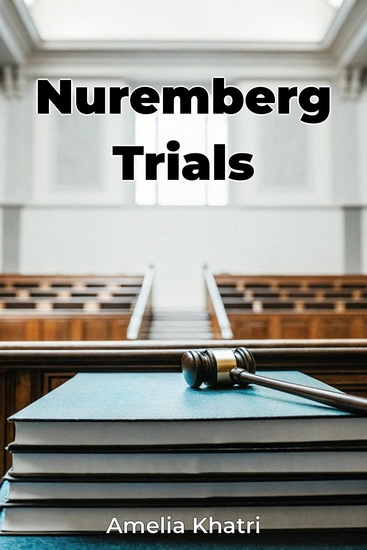
Nuremberg Trials - cover
LER

Nuremberg Trials

Amelia Khatri

Tradutor A AI

Editora: Publifye

  • 0
  • 0
  • 0

Sinopse

Nuremberg Trials explores the landmark legal proceedings that prosecuted Nazi leaders after World War II, focusing on war crimes and crimes against humanity. The book uniquely examines how these trials shaped international law and the pursuit of international justice, addressing unprecedented legal and political challenges.

 
One key insight is the establishment of individual criminal responsibility under international law, a concept still relevant today. The trials served as a turning point in the commitment to prevent genocide, even amidst debates about fairness and selectivity.

 
The book progresses by first establishing the historical context, including the rise of Nazism and the Holocaust. It then analyzes the legal framework, indictments, evidence, and defense arguments presented during the trials. Through trial transcripts and newly translated documents, the book offers fresh insights into the defendants' experiences and the judgments rendered.

 
Ultimately, it evaluates the trials’ long-term impact on human rights and international accountability, demonstrating how the Nuremberg Trials continue to influence contemporary discussions of international law.
Disponível desde: 17/02/2025.
Comprimento de impressão: 70 páginas.


Outros livros que poderiam interessá-lo

  • Economic Theories and Policies - Understanding Key Economic Systems and Strategies (4 in 1) - cover

    Economic Theories and Policies -...

    Arlo Holders

    • 0
    • 0
    • 0
    Take a look at this book bundle! It contains the following books: 
      - Mercantilism Explained: Mercantilism, a dominant economic theory from the 16th to the 18th century, played a pivotal role in shaping the economic and political landscape of early modern Europe. Rooted in the belief that a nation's wealth and power were measured by its stockpile of precious metals, particularly gold and silver, mercantilism emphasized the importance of maintaining a favorable balance of trade. Nations sought to maximize exports while minimizing imports, often employing protectionist policies to achieve this goal. This approach reflected the belief that global wealth was finite, creating fierce competition among nations to secure the largest share of resources and economic advantage. 
      - The Neoliberal Revolution: Neoliberalism is a term widely used to describe a set of economic policies and ideas that emphasize the importance of free markets, deregulation, privatization, and limited government intervention. Emerging in the mid-20th century, neoliberalism represented a distinct shift away from the welfare state and Keynesian economics, which had dominated Western economies in the post-World War II era. 
      - The Venture Capital Playbook: Venture capitalists, typically investors or firms, provide capital in exchange for equity ownership in the company. This investment is usually made in industries that are considered innovative or disruptive, such as technology, healthcare, and biotechnology. 
      - Venture Capital Explained: The venture capital industry is an essential component of the startup ecosystem, providing financial backing to companies that may not yet be profitable but have strong potential. Many of the world’s most successful companies, including Amazon, Google, and Facebook, received early funding from venture capital firms. 
     
    Ver livro
  • On Memory and Reminiscence - cover

    On Memory and Reminiscence

    Aristotle

    • 0
    • 0
    • 0
    In his work On Memory and Reminiscence, Aristotle explores the nature of memory and how it works. He differentiates between two types of memory: active and passive. Active memory is when we actively recall something, while passive memory is when we remember something without consciously trying to do so. Aristotle also discusses the role of reminiscence in our lives, arguing that it helps us to understand the world and ourselves better. Read in English, unabridged.
    Ver livro
  • The Twilight of the Idols - cover

    The Twilight of the Idols

    Friedrich Nietzsche

    • 0
    • 0
    • 0
    In this book, Nietzsche examines and critiques many of the prominent ideas and figures of his time, including morality, religion, and philosophy itself. Nietzsche argues that traditional moral concepts, such as good and evil, are based on outdated and irrational beliefs that hinder the individual's pursuit of a fulfilling life. He also criticizes Christianity and its values, claiming that they are hostile to life and undermine individual freedom. Furthermore, Nietzsche criticizes the philosophical traditions of the past, including Platonism and Kantianism, for their limitations and inability to provide a meaningful framework for life. Instead, Nietzsche proposes a new philosophy, which he calls "the philosophy of the future," that embraces life's complexity and encourages the individual to create their own values. Read in English, unabridged.
    Ver livro
  • The Art of War - cover

    The Art of War

    Sun Tzu

    • 0
    • 0
    • 0
    "The supreme art of war is to subdue the enemy without fighting."
    
    Written over two thousand years ago, Sun Tzu's insights remain as sharp and relevant today as they were in ancient China. The Art of War is not merely a book about military maneuvers; it is a profound philosophical study of human nature and the mechanics of conflict. Across thirteen concise chapters, Sun Tzu teaches the importance of intelligence, the value of flexibility, and the necessity of knowing both yourself and your opponent. It is a guide to achieving victory through the path of least resistance, emphasizing that the most successful "warrior" is the one who understands how to outmaneuver the competition before the first blow is even struck.
    
    The Five Essentials for Victory: Sun Tzu identifies five critical factors that determine the outcome of any engagement: The Moral Law (Purpose), Heaven (Timing), Earth (Terrain), Command (Leadership), and Method (Organization). By mastering these variables, a leader can predict the outcome of a conflict with startling accuracy.
    
    Victory Through Deception and Adaptability: "All warfare is based on deception." Sun Tzu argues that a successful strategist must be like water—shapeless, flowing around obstacles, and striking only where the enemy is weak. This focus on psychological warfare and environmental awareness makes the text a masterclass in high-stakes decision-making.
    
    Why It Is a Global Icon: The Art of War has transcended its origins to become a universal manual for survival and success. Whether you are navigating a corporate merger, coaching a sports team, or seeking personal discipline, Sun Tzu's aphorisms provide a framework for clear thinking under pressure. It is the ultimate toolkit for anyone who wishes to turn obstacles into opportunities.
    
    Master the mind of the strategist. Purchase "The Art of War" today.
    Ver livro
  • Thanatology - The Study of Death - cover

    Thanatology - The Study of Death

    Mike Crawford

    • 0
    • 0
    • 0
    Thanatology, the study of death and the processes surrounding it, has deep historical roots. While the formal discipline emerged in the 20th century, human fascination with death dates back to ancient times. Early civilizations developed complex rituals, beliefs, and philosophies surrounding death, shaping the way societies understood and coped with mortality. Over time, thanatology evolved from religious and philosophical inquiries to a multidisciplinary field incorporating medical, psychological, and sociological perspectives. 
    In ancient societies, death was often viewed through a spiritual or mythological lens. Egyptian, Greek, and Hindu traditions conceptualized the afterlife in elaborate ways, influencing burial practices and rituals. The Egyptians, for instance, believed in the preservation of the body for the soul’s journey in the afterlife, leading to the practice of mummification. Similarly, Greek philosophy—particularly the works of Plato—explored the soul’s immortality and the nature of existence beyond death. These early interpretations laid the groundwork for later philosophical and religious discussions on mortality. 
    The Middle Ages saw the dominance of religious perspectives on death, with Christianity, Islam, and Buddhism offering moral and theological frameworks for understanding mortality. Death was often seen as a transition rather than an end, shaping attitudes toward dying and burial practices. The Black Death in the 14th century significantly influenced perceptions of death, leading to a greater emphasis on the fragility of life and the afterlife. Art, literature, and religious texts from this period reflect a deep engagement with the themes of death and salvation.
    Ver livro
  • Diadochi The: The History of Alexander the Great’s Successors and the Wars that Divided His Empire - cover

    Diadochi The: The History of...

    Editors Charles River

    • 0
    • 0
    • 0
    On his deathbed, some ancient historians claimed that when he was pressed to name a successor, Alexander the Great muttered that his empire should go “to the strongest”. Other sources claim that he passed his signet ring to his general Perdiccas, thereby naming him successor, but whatever his choices were or may have been, they were ignored. Alexander’s generals, all of them with the loyalty of their own corps at their backs, would tear each other apart in a vicious internal struggle that lasted almost half a century before four factions emerged victorious: Macedonia, the Seleucid Empire in the east, the Kingdom of Pergamon in Asia Minor, and the Ptolemaic dynasty in Egypt. During the course of these wars, Alexander’s only heir, the posthumously born Alexander IV, was murdered, extinguishing his bloodline for ever. 
    Although it was an incredibly important period in world history, it is sometimes as confusing as it is frustrating for historians because the allegiances of the generals changed constantly and historical sources are often biased in some regards and utterly lacking in others. Although none of these men were able to replicate Alexander the Great’s territorial success, a few carved out sizable empires and were able to establish long-lasting political dynasties. Ptolemy I brought Egypt back to a central position of power in the region, and Seleucus I built a strong empire on the ruins of ancient Babylonia, but other generals, such as Perdiccas, were killed early on in the fighting and slipped into relative obscurity. Some of the Macedonian generals had a significant impact on the region during their lifetimes, but they left no heirs to carry on their political memories. 
    This audiobook chronicles how Alexander’s legendary conquests shaped the next several centuries, and how the successor generals carved out various empires.
    Ver livro