¡Acompáñanos a viajar por el mundo de los libros!
Añadir este libro a la estantería
Grey
Escribe un nuevo comentario Default profile 50px
Grey
Suscríbete para leer el libro completo o lee las primeras páginas gratis.
All characters reduced
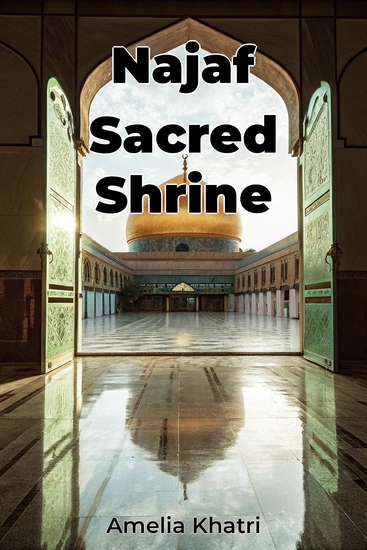
Najaf Sacred Shrine - cover

Najaf Sacred Shrine

Amelia Khatri

Traductor A AI

Editorial: Publifye

  • 0
  • 0
  • 0

Sinopsis

"Najaf Sacred Shrine" explores the historical and religious significance of Najaf, Iraq, a city central to Shia Islam, focusing on the Imam Ali Shrine. The book traces Najaf's evolution from an ancient burial site to a prominent center of Shia scholarship and pilgrimage. It emphasizes the shrine's dual role as a physical structure and a symbol of Shia identity, challenging simplistic views of religious sites. The book details the architectural and artistic elements of the Imam Ali Shrine, exploring their symbolic meanings within Shia theology. It also examines religious practices, such as pilgrimage and mourning rituals, associated with the shrine, highlighting Najaf's enduring impact on Shia thought. The study uses diverse sources, including historical chronicles and architectural surveys, to provide a comprehensive understanding of Najaf's place in Islamic History. The book progresses chronologically, from Najaf's origins through its development and its current role as a vital center for Shia Muslims, offering a nuanced perspective on Najaf's importance.
Disponible desde: 14/02/2025.
Longitud de impresión: 51 páginas.

Otros libros que te pueden interesar

  • Eternal Myths The: Unveiling the Legends of Ancient Greece and Rome - Exploring the Gods Heroes and Legends That Shaped Western Civilization - cover

    Eternal Myths The: Unveiling the...

    Michael K. Kelly

    • 0
    • 0
    • 0
    The Eternal Myths: Unveiling the Legends of Ancient Greece and Rome is an immersive journey into the captivating world of Greek and Roman mythology. Through detailed retellings of legendary stories, this audiobook explores the origins, symbolism, and lasting impact of these myths on literature, art, and modern culture. From the mighty gods of Mount Olympus to the heroic exploits of Hercules, Achilles, and Aeneas, these stories transcend time, shaping the way we understand power, fate, and human nature. Engaging and informative, this audiobook is a must-listen for mythology enthusiasts, history lovers, and those curious about the ancient world.
    Ver libro
  • The Life Worth Living - Disability Pain and Morality - cover

    The Life Worth Living -...

    Joel Michael Reynolds

    • 0
    • 0
    • 0
    More than 2,000 years ago, Aristotle said: "let there be a law that no deformed child shall live." This idea is alive and well today. During the past century, Supreme Court Justice Oliver Wendell Holmes Jr. argued that the United States can forcibly sterilize intellectually disabled women and philosopher Peter Singer argued for the right of parents to euthanize certain cognitively disabled infants. The Life Worth Living explores how and why such arguments persist by investigating the exclusion of and discrimination against disabled people across the history of Western moral philosophy. 


    Joel Michael Reynolds argues that this history demonstrates a fundamental mischaracterization of the meaning of disability, thanks to the conflation of lived experiences of disability with those of pain and suffering. Building on decades of activism and scholarship in the field, Reynolds shows how longstanding views of disability are misguided and unjust, and he lays out a vision of what an anti-ableist moral future requires. 


    The Life Worth Living is the first sustained examination of disability through the lens of the history of moral philosophy and phenomenology, and it demonstrates how lived experiences of disability demand a far richer account of human flourishing, embodiment, community, and politics in philosophical inquiry and beyond.
    Ver libro
  • Roman Architecture - Building the Empire's Legacy - cover

    Roman Architecture - Building...

    Rogan Fish

    • 0
    • 0
    • 0
    Roman architecture emerged as a distinctive style that blended elements from earlier civilizations, primarily Greek and Etruscan influences. As Rome expanded from a small settlement into a powerful empire, its architectural identity evolved, incorporating new techniques and materials that allowed for grander and more functional structures. The early foundations of Roman architecture set the stage for innovations that would shape the empire’s urban landscape for centuries. 
    One of the most significant influences on Roman architecture came from the Etruscans, a civilization that dominated central Italy before Rome’s rise. The Etruscans were skilled builders who introduced techniques such as the use of the arch and vault, both of which would later become hallmarks of Roman engineering. Etruscan temples, with their high podiums and deep porches, also served as models for early Roman religious structures. Another major influence was Greek architecture, which Romans admired and adapted to suit their needs. The Greeks provided inspiration in the use of columns, decorative friezes, and symmetrical design, elements that were later integrated into Roman temples, public buildings, and monuments. 
    Roman architectural development was also shaped by advancements in building materials and construction techniques. The early Romans initially built using wood and mudbrick, but as they refined their skills, they transitioned to more durable materials like stone and concrete. The introduction of concrete was a groundbreaking innovation, allowing for stronger and more flexible structures. Unlike the Greeks, who relied heavily on marble, the Romans preferred concrete for its affordability and adaptability, enabling them to construct larger and more complex buildings, such as amphitheaters, aqueducts, and domes.
    Ver libro
  • Decoding Jung's Metaphysics - The Archetypal Semantics of an Experiential Universe - cover

    Decoding Jung's Metaphysics -...

    Bernardo Kastrup

    • 0
    • 0
    • 0
    More than an insightful psychologist, Carl Gustav Jung was the twentieth century's greatest articulator of the primacy of mind in nature, a view whose origins vanish behind the mists of time. Underlying Jung's extraordinary body of work, and providing a foundation for it, there is a broad and sophisticated system of metaphysical thought. This system, however, is only implied in Jung's writings, so as to shield his scientific persona from accusations of philosophical speculation. The present book scrutinizes Jung's work to distil and reveal that extraordinary, hidden metaphysical treasure: for Jung, mind and world are one and the same entity; reality is fundamentally experiential, not material; the psyche builds and maintains its body, not the other way around; and the ultimate meaning of our sacrificial lives is to serve God by providing a reflecting mirror to God's own instinctive mentation. Embodied in this compact volume is a journey of discovery through Jungian thoughtscapes never before revealed with the depth, force, and scholarly rigor you are about to encounter.
    Ver libro
  • Tao Te Ching - cover

    Tao Te Ching

    Lao Tzu

    • 0
    • 0
    • 0
    The Tao Te Ching is a Taoist philosophical treatise. Lao Tzu, a great Ancient Chinese philosopher and teacher, is considered to be the author of this book. We owe this book to an unnamed guardian who kept safe the far western borders of a country, Zhou in the fifth century BC. The legend says that exhausted from misunderstanding Teacher with a tired heart went on his last journey – to die in a dessert. The guardian recognized great Lao Tzu, called him by name and, nobody knows how, persuaded the wise man to tell a world about Dao and De. "When you said Dao, you said nothing", the teacher replied. And you were wrong: five thousand words, that contains this book, have been existing for two and a half thousand years...
    Ver libro
  • Bend or Break: From Empires to Algorithms - Lessons from History on How to Make Today’s Societies More Resilient - cover

    Bend or Break: From Empires to...

    Boyson Sante

    • 0
    • 0
    • 0
    Why do some societies crumble under pressure while others rise stronger? 
    What can the past teach us about surviving the shocks of the future? 
    And how can humanity adapt in the age of AI? 
    From the fall of empires to the dawn of algorithms, "Bend or Break" reveals the hidden patterns that determine whether societies endure or collapse. Boyson Sante takes readers across centuries of upheaval—wars, migrations, pandemics, financial crashes—to uncover the forces that shape resilience. At the heart of the book lies the Adaptation Equation, a framework showing how accountable institutions, trustworthy information, and shared progress make the difference between renewal and ruin.
    Ver libro