Junte-se a nós em uma viagem ao mundo dos livros!
Adicionar este livro à prateleira
Grey
Deixe um novo comentário Default profile 50px
Grey
Assine para ler o livro completo ou leia as primeiras páginas de graça!
All characters reduced
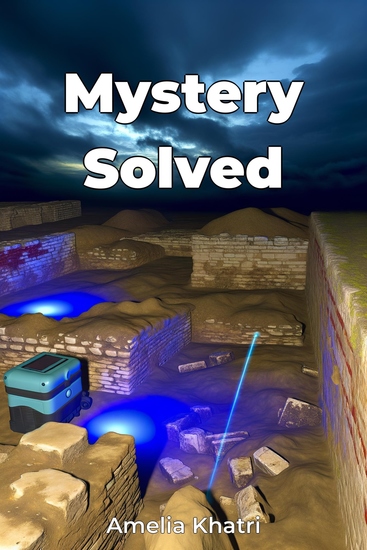
Mystery Solved - cover
LER

Mystery Solved

Amelia Khatri

Editora: Publifye

  • 0
  • 0
  • 0

Sinopse

'Mystery Solved' takes readers on a fascinating journey through history's most perplexing cases, showcasing how modern technology and cross-disciplinary collaboration have unlocked answers to long-standing mysteries. From the remarkable discovery of Richard III's remains beneath a Leicester parking lot to the groundbreaking resolution of the Zodiac Killer case, this comprehensive work demonstrates the power of combining traditional investigative methods with cutting-edge scientific advances.

 
The book's unique approach divides its exploration into three distinct categories: archaeological discoveries, historical enigmas, and criminal cold cases. Through detailed case studies, readers learn how ground-penetrating radar revolutionized archaeological site discovery, how computer algorithms cracked previously unbreakable codes, and how genetic genealogy transformed cold case investigations. Each chapter reveals the methodological breakthroughs that proved crucial to solving these mysteries, drawing from newly declassified documents, forensic analyses, and expert interviews.

 
What sets this work apart is its careful balance of technical detail and accessibility, making complex scientific concepts understandable while maintaining scholarly rigor. The book spans six continents and multiple time periods, focusing on cases where verifiable evidence has led to definitive conclusions. By connecting disciplines such as forensic science, historical research, and anthropology, it demonstrates how modern investigative techniques continue to shed new light on mysteries both ancient and recent, providing valuable insights for professionals and fascinating revelations for history enthusiasts and true crime aficionados alike.
Disponível desde: 05/01/2025.
Comprimento de impressão: 95 páginas.

Outros livros que poderiam interessá-lo

  • Speed Learning: How To Improve Your Ability To Learn - cover

    Speed Learning: How To Improve...

    Introbooks Team

    • 0
    • 0
    • 0
    Speed learning is a set of learning strategies that aim to achieve higher learning levels without unacceptably reducing understanding or retention. It is closely connected with speed reading but involves other learning techniques such as evaluation, listening, discussion, questioning and reflective analysis. The traditional approach is to use methods or a series of procedures that have been proven to provide a more effective roadmap to achieving the same objective. Some of the methods have persisted since ancient times, such as Mnemonics, while others have been the consequence of more recent scientific work such as Forgetting Curves.  
    Speed listening is a sub-classification of speed learning where students try to increase the pace at which they can listen while maintaining complete understanding. It allows students to absorb more details while listening in a shorter span of time. It is most widely used when using text-to-speech applications such as Speechify, audiobook services such as Audible, or Apple iTunes Podcast apps, etc. Entrepreneur Cliff Weitzman and speed learner Max Deutsch have made their marks to be credited with redeeming this learning type.
    Ver livro
  • The Hidden Agenda - An Extraordinary True Story Behind Colombia's Peace Negotiations with the FARC - cover

    The Hidden Agenda - An...

    Russell M. Stendal, Alethia Stendal

    • 0
    • 0
    • 0
    God is moving in the hearts of powerful leaders in all the Colombian fighting factions, and peaceful meetings are now taking place in Havana, Cuba. Marxists guerillas, right-wing paramilitary, and the Colombian government each have their own agenda. Who would have guessed a meeting of the minds would take place under the helpful auspices of communist Cuba? And that these battle-scarred leaders would give reporters and missionaries the opportunity to challenge some of their core philosophies and even pray with them? During the often intense negotiations, it becomes obvious that even the most hardened individuals can have a change of heart. Previously seen only as men to be feared, these powerful leaders are now turning to the only one who can provide lasting peace – the Lord. The Stendals have witnessed Army generals having daily prayer and distributing Bibles to their troops, guerrilla commanders requesting and receiving prayer for healing, paramilitary commanders asking their many victims, one by one, to forgive them, and many other powerful demonstrations of what the Lord does through those willing to love their enemies. God’s agenda is winning, and we watch in awe.
    Ver livro
  • Leaving Adverse Childhood Experiences Behind - cover

    Leaving Adverse Childhood...

    Adashani Naicker

    • 0
    • 0
    • 0
    Are you suffering from untreated feelings resulting from adverse childhood experiences (ACEs)?Trauma lingers in your body and impacts your mental and physical health unless you excavate and process your traumas effectively. But how do you achieve this?I compiled a list of practical strategies that my friends, students, and loved ones used to overcome their childhood trauma.Their success is my motivation for writing this book and sharing strategies to assist you in coping with your childhood memories.    - Understand the impacts of Adverse Childhood Experiences (ACEs) on your mental and physical health as well as your relationships.    - Identify proven and effective strategies to help you cope with your childhood memories, including recovery plans.    - Step out into your sunshine and use this book as your quick guide to a more tranquil life.But before we begin our journey to positive self-esteem and letting go of our adverse childhood experiences (ACEs), we need to remove our backpacks full of shame, regret, misery, blunders, failure, broken hearts, and grudges.Your race will be much less challenging to complete after you drop that backpack.Remember, you cannot change the past, but you can use the memories to make you stronger. The choice is in your hands. It’s your story so write an awesome ending.It's time to start something new and better! Let's begin.
    Ver livro
  • What In God's Name Are We Doing? - A Modern Examination of Economics Society and Global Power Structures - cover

    What In God's Name Are We Doing?...

    Grant Dorsey

    • 0
    • 0
    • 0
    What In God's Name Are We Doing? is a direct and uncompromising examination of modern society and the systems that shape our lives. Drawing from philosophy, spirituality, lived experience, and practical observation, this book challenges the assumptions we take for granted about government, education, work, money, mental health, and our relationship with nature. 
    Rather than arguing from political allegiance or ideology, it asks a more fundamental question: how did we build a world that feels increasingly disconnected from purpose, meaning, and one another? The book explores how division, hierarchy, and the pursuit of money have come to dominate human life, often at the expense of quality, community, and well-being. 
    Moving beyond critique, it invites the reader to consider a different way forward—one rooted in cooperation, simplicity, durability, and respect for natural systems. Without calling for violence, revolution, or authority, it focuses on internal change, shared values, and practical shifts in how we live and build our world. 
    This book is for readers who are willing to question deeply held assumptions, think beyond partisan narratives, and ask what it would mean to live in alignment with purpose, responsibility, and love.
    Ver livro
  • Tunisgrad: Victory in Africa - cover

    Tunisgrad: Victory in Africa

    Saul David

    • 0
    • 0
    • 0
    A Waterstones and BBC History Magazine Best Book of the Year 
    The Aspects of History Book of the Year 2025 
    'Terrific – full of drama … it has profoundly altered my understanding of the Second World War' PATRICK BISHOP 
    FROM THE SUNDAY TIMES BESTSELLING AUTHOR OF SBS COMES AN EPIC HISTORY OF THE ALLIED VICTORY IN NORTH AFRICA DURING THE SECOND WORLD WAR. 
    On 8 November 1942, British and American troops invaded French North Africa as part of Operation Torch, the largest amphibious operation of the war to date. The Germans responded by flooding troops into Tunisia and the stage was set for one of the most decisive clashes of the war. 
    For months the outcome hung in the balance. The Allies failed to capture Tunis before Christmas, and early in the New Year the legendary German commander Erwin Rommel ( the ‘ Desert Fox ’) inflicted a series of crushing defeats on inexperienced American troops in the mountain passes of central Tunisia. But once the two Allied armies – the First and the Eighth – had joined hands in southern Tunisia in early April, the defeat of Axis forces was inevitable. The end came on 13 May when the remnants of the First Italian Army surrendered to British troops in northern Tunisia, leaving the Allies ‘ masters of the North African shores ’. 
    It was, with Guadalcanal in the Pacific and Stalingrad in Russia, one of three Axis defeats in early 1943 that changed the course of the war. Historians have recognized the significance of the others, but not Tunisia which they have either ignored or characterized ( as the Americans did at the time ) as a sideshow. Yet it ended Axis sea power in the Mediterranean, destroyed more than 2,400 Axis aircraft ( 40 per cent of the Luftwaffe ’ s strength ), and resulted in the surrender of over 250,000 German and Italian troops, more than were captured at Stalingrad. Such was the scale of their defeat that the German public wryly dubbed it ‘ Tunisgrad ’. 
    It was the first campaign fought by the Anglo-American alliance, and would determine how and where the Allies would fight for the rest of the war. It was where America first brought to bear the full weight of its industrial strength, and where the Allies learned, after early setbacks, how to defeat the Germans with a combination of air, land and sea power. It featured many of the great commanders of the Second World War, including ‘ Ike ’ Eisenhower, George S. Patton Jr, Omar N. Bradley, Harold Alexander, Bernard Montgomery and Erwin Rommel. But the campaign ’ s chief significance is that it extinguished any lingering hopes in Italy that the war could be won and led, inexorably, to the dissolution of the Axis in Europe. By destroying the Axis it marked, for Hitler, the beginning of the end. 
    Tunisgrad is the first comprehensive 360-degree history, told from the perspective of all the combatants, and ranging in focus from politicians and senior commanders to ordinary servicemen fighting in and over the mountains of Tunisia, and across the Mediterranean. Using a variety of first-hand sources, it restores the campaign to its rightful place as a defining moment of the war 
    Saul David's latest work, Tunisgrad, is a comprehensive exploration of the conflicts that shaped the 20th century. As the Sunday Times bestselling author, David's non-fiction account of modern wars is an up-coming top pick for history enthusiasts. 
    For fans of Al Murray (Arnhem), Joseph Wheelan (Bitter Peleliu), Geoffrey Wawro (A Mad Catastrophe), Bob Drury (Throne of Grace), and Antony Beevor (D-Day). 
    HarperCollins 2025
    Ver livro
  • The Cost of "Non-Maghreb" - Unpacking the Political and Economic Costs of Disunion and Divisions - cover

    The Cost of "Non-Maghreb" -...

    Aldo Liga

    • 0
    • 0
    • 0
    Over the last decades, rivalries, bilateral disagreements, and distrust between Maghreb states have taken a toll on common political and security challenges, like the Western Sahara issue, the Libyan conflict, the destabilisation in the Sahel region and transnational clandestine flows. Moreover, the Maghreb is one of the least economically integrated regions in the world, and this leads to the region's loss in growth, and the disheartening record of missed opportunities for stability and prosperity. This is the cost of the "non-Maghreb".
    This Report aims to unpack the political and economic costs of the "non-Maghreb", understand its historical genesis and geopolitical implications and, more broadly, what the future might hold for individual countries and the Maghreb as a divided, fractious but potentially coherent whole.
    Ver livro