Junte-se a nós em uma viagem ao mundo dos livros!
Adicionar este livro à prateleira
Grey
Deixe um novo comentário Default profile 50px
Grey
Assine para ler o livro completo ou leia as primeiras páginas de graça!
All characters reduced
Medieval Time - cover
LER

Medieval Time

Amelia Khatri

Tradutor A AI

Editora: Publifye

  • 0
  • 0
  • 0

Sinopse

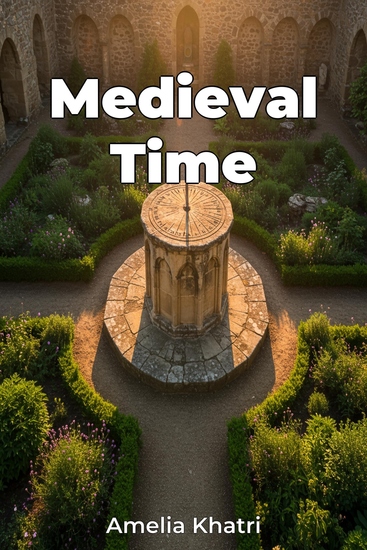
Medieval Time explores how Europeans in the Middle Ages measured and organized time, revealing the surprising influence of calendars on trade, governance, and religious life. Early medieval timekeeping was fragmented, with local calendars tied to agricultural cycles or saints' days. Intriguingly, the need for synchronized timekeeping grew with the rise of the Church and expanding trade networks, pushing for standardized calendars that could coordinate everything from religious festivals to market days. The book examines the move towards standardized calendars and its impact on medieval society.

 
We learn how the Church played a vital role in promoting the Julian calendar and reforming timekeeping to align with religious events like Easter. The book progresses chronologically, beginning with diverse early systems, then analyzing standardization efforts by monastic orders and rulers. It concludes by assessing the lasting impact of medieval timekeeping on our modern understanding of time.
Disponível desde: 04/03/2025.
Comprimento de impressão: 68 páginas.

Outros livros que poderiam interessá-lo

  • Empowered Energy Healing Bundle 2 in 1 Bundle - Energy Medicine Guide for Women and Energy Medicine Solution - cover

    Empowered Energy Healing Bundle...

    Christine Driegen, Natasha Barrs

    • 0
    • 0
    • 0
    Empowered Energy Healing Bundle, 2 in 1 Bundle: Energy Medicine Guide for Women and Energy Medicine Solution 
    Dive into the ADHD Empowerment Bundle, a transformative 2-in-1 audiobook that provides specialized insights, guidance, and tools for men and women navigating ADHD. 
    In Men with ADHD: Understanding, Thriving, and Shaping Your Unique Path, discover strategies designed to help men embrace their ADHD, build resilience, and thrive by recognizing and leveraging their unique strengths. This guide empowers men to take charge of their journey and shape a fulfilling, purposeful path. 
    The ADHD Guide for Women: Strategies for Self-Discovery, Resilience, and Triumph provides a supportive roadmap for women with ADHD. Filled with powerful strategies for self-discovery and resilience, this guide helps women unlock their potential, overcome challenges, and soar in every aspect of life. 
    Whether you're looking to better understand ADHD or seeking specific, gender-focused tools, this bundle is your essential companion for personal growth and empowerment. 
    Perfect for: 
    Individuals seeking insights and strategies for managing ADHD 
    Men and women looking for tailored guidance for personal growth with ADHD 
    Listeners eager to explore unique ADHD challenges and strengths.
    Ver livro
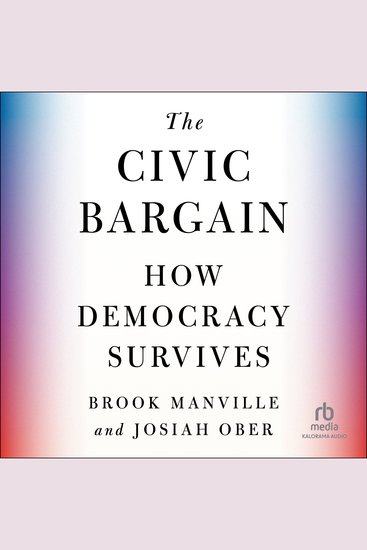
  • The Civic Bargain - How Democracy Survives - cover

    The Civic Bargain - How...

    Brook Manville, Josiah Ober

    • 0
    • 0
    • 0
    A powerful case for democracy and how it can adapt and survive—if we want it to 


    Is democracy in trouble, perhaps even dying? Pundits say so, and polls show that most Americans believe that their country's system of governance is being "tested" or is "under attack." But is the future of democracy necessarily so dire? In The Civic Bargain, Brook Manville and Josiah Ober push back against the prevailing pessimism about the fate of democracy around the world. Instead of an epitaph for democracy, they offer a guide for democratic renewal, calling on citizens to recommit to a "civic bargain" with one another to guarantee civic rights of freedom, equality, and dignity. That bargain also requires them to fulfill the duties of democratic citizenship: governing themselves with no "boss" except one another, embracing compromise, treating each other as civic friends, and investing in civic education for each rising generation. 


    Manville and Ober trace the long progression toward self-government through four key moments in democracy's history: Classical Athens, Republican Rome, Great Britain's constitutional monarchy, and America's founding. Comparing what worked and what failed in each case, they draw out lessons for how modern democracies can survive and thrive.
    Ver livro
  • Get Over Your Fear of Public Speaking - Meditation & Hypnosis - cover

    Get Over Your Fear of Public...

    Joel Thielke

    • 0
    • 0
    • 0
    Stop public speaking anxiety it its tracks and speak with skill and ease with this hypnosis and guided meditation program!Benefits of the program include:- Less anxiety and more calm when speaking in front of people- Boosted confidence and self-esteem- Laser focus- Increased memory- Increased peace and calming energy- Deep relaxation for your body and mind- More natural energy throughout your dayMotivational Hypnotherapy's Joel Thielke is a world-renowned hypnotherapist and author who has helped millions of people worldwide. This powerful hypnosis program is designed specifically to help you get over your anxiety and fear surrounding public speaking speaking, and give you the confidence and ease to talk in front of crowds.This is the perfect program for listeners of any age, no matter your level of hypnosis experience. We recommend listening to this audiobook for 21 days in a row to get the most out of your listening experience. Listen to the induction track, and if you fall asleep, that's okay.
    Ver livro
  • The Eclogues and Georgics - cover

    The Eclogues and Georgics

    Virgil

    • 0
    • 0
    • 0
    Though it is for the sparkling epic, Aeneid, that the Roman poet Virgil is best known, it was these two poems, The Eclogues and Georgics, which first established his reputation.  Cast in the tradition of pastoral poetry, The Eclogues were written between 41 BCE and 37 BCE when Virgil (Publius Vergilius Maro, to give him his full name) was in his thirties. The Eclogues (the word means ‘Selections’ in Greek) contain 10 poems, a combination of dialogues and monologues. They drew on the ‘bucolic’ (rural) style of the ancient Greek poet Theocritus (c 300BCE-c 260 BCE), but Virgil weaves many references to contemporary Roman events. Though The Eclogues have perhaps existed in the shadow of Georgics, they have been highly regarded and studied by academics and poets down the centuries. They are presented here in the 20th century translation by the British poet R. C. Trevelyan, and read in multi-voice format as they were originally written, with clearly delineated characters bringing the content to life with verve and temperament. 
    Though also pastoral in nature, Georgics is very different in style. Published in 29 BCE, the main subject is agriculture (the title reflects the Greek word ‘georgika’, agricultural things), and vigorously promotes traditional means of farming. Again, Virgil weaves into his verse cultural and political themes. Cast in four Books, the dynamic expression draws on numerous Classical, mythical and contemporary references, while explaining the best methods for ploughing, animal husbandry, observing weather patterns, the life of bees and the like. Increasingly, the rise and fall of man’s endeavours can be reflected in the vicissitudes of agricultural life. The 20th century translation of Georgics used on this recording is by the highly respected translator of Latin poetry, Smith Palmer Bovie. It is read by Jamie Parker. Closer study of both works while listening is possible through the complete texts that come with the recording. 
     
    PLEASE NOTE: When you purchase this title, the accompanying PDF will be available in your Audible Library along with the audio.
    Ver livro
  • Prasna Upanishad - cover

    Prasna Upanishad

    Unknown

    • 0
    • 0
    • 0
    The word Upanishad (upa-ni-shad) consists of, "Upa" means "near;" "ni" means "down;" "shad" means "to sit." Thus, Upanishad is to sit down near the teacher to discuss, learn, practice, and experience. There are some 200 or more Upanishads. Some are lost and are only known about because of being referenced in other Upanishads. Most of the Upanishads were kept secret for centuries, only passed on to others orally in the form of Shloka (a category of verse line developed from the Vedic Anustubh meter).Prasna-Upanishad is one the 11 principal Upanishads dating from 6th BCE to the begning of the Common Era.  Prasana means question in Sanskrit. This Upanisahad contains six questions posed by six pupils to Pipplalda and answers to them by Pipplada. The 11 principal Upanishads to which Sankara appeals in his great commentary on the Vedanta-Surtras are: Chandogya, Talavakara or Kena, Aitareya, Kaushitaki, Vajasaneyi or Isha, Katha, Mundaka, Taittirtiyaka or Taittiriya, Brihadaranyaka, Svetasvatara, and Prasna. They are also called the 11 classical Upanishads or the fundamental Upanishads of the Vedanta Philosophy. The Upanishadic literature is not a religious scripture and is free from dogma and doctrines. It is not a part of any religion but is a philosophy for all times and for all. German philosopher Arthur Schopenhauer, impressed by the Upanishads, called the texts "the production of the highest human wisdom".  Summary by Jothi
    Ver livro
  • Herodotus' Histories Vol 2 - cover

    Herodotus' Histories Vol 2

    Herodotus

    • 0
    • 0
    • 0
    The Histories of Herodotus of Halicarnassus is considered the first work of history in Western literature. Written about 440 BC, the Histories tell the story of the war between the Persian Empire and the Greek city-states in the 5th century BC. Herodotus traveled extensively around the ancient world, conducting interviews and collecting stories for his book. The rise of the Persian Empire is chronicled, and the causes for the conflict with Greece. Herodotus treats the conflict as an ideological one, frequently contrasting the absolute power of the Persian king with the democratic government of the Greeks. (Summary adapted from Wikipedia.)
    Ver livro