Join us on a literary world trip!
Add this book to bookshelf
Grey
Write a new comment Default profile 50px
Grey
Subscribe to read the full book or read the first pages for free!
All characters reduced
Lost Religious Cities - cover

Lost Religious Cities

Amelia Khatri

Translator A AI

Publisher: Publifye

  • 0
  • 0
  • 0

Summary

Lost Religious Cities explores the fascinating histories of urban centers defined by religious significance, now abandoned and rediscovered through archaeology. The book delves into how the architecture and urban planning of these cities reflected their belief systems, offering insights into ancient religious life. It examines the socio-political dynamics and environmental factors that contributed to their decline, revealing the precarious nature of even the most powerful religious communities.

 
The book progresses chronologically and geographically, starting with early examples in the Near East and Anatolia, then moving to the Mediterranean world and Asia. Each section focuses on the unique characteristics of these sites, their religious practices, and the reasons for their abandonment.

 
By studying these forgotten cities, we gain invaluable insights into the complex interplay between religious belief, social organization, and environmental influences, providing lessons applicable to contemporary issues.
Available since: 02/14/2025.
Print length: 71 pages.

Other books that might interest you

  • General Douglas MacArthur and Admiral Chester W Nimitz: The Lives and Careers of America’s Commanders-in-Chief in the Pacific Theater during World War II - cover

    General Douglas MacArthur and...

    Editors Charles River

    • 0
    • 0
    • 0
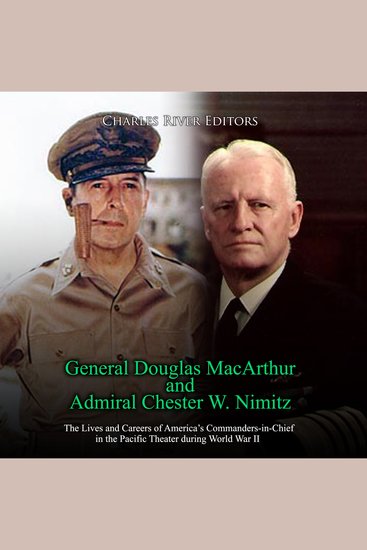
    Despite fighting in North Africa and the Atlantic, the United States still had the resources and manpower to fight the Japanese in the Pacific. Though the Japanese had crippled the American fleet at Pearl Harbor, its distance from Japan made an invasion of Pearl Harbor impossible, and Japan had not severely damaged important infrastructure. Thus, the United States was able to quickly rebuild a fleet, still stationed at Pearl Harbor right in the heart of the Pacific. This forward location allowed the United States to immediately push deeply into the Pacific theater. 
    The Americans would eventually push the Japanese back across the Pacific, and one of the most instrumental leaders in the effort was Admiral Chester W. Nimitz, who commanded the U.S. Pacific Fleet and helped coordinate joint operations with the legendary General Douglas MacArthur, the Supreme Commander, Southwest Pacific Area. 
    Today, Nimitz’s name doesn’t ring as many bells as his counterpart’s, because of all the military men America produced during the 19th and 20th centuries, it’s hard to find one as important, successful, and controversial as General MacArthur. The son of a Civil War veteran, MacArthur rose to become the most instrumental commander in the Pacific Theater during World War II. His legendary return to the Philippines in 1944 made good on one of the war’s most famous vows, and it was MacArthur who fittingly oversaw the occupation and reconstruction of Japan following the war. 
    Given his long and celebrated career, MacArthur was the obvious choice to lead the newly created United Nations’ troops during the Korean War, but his arguments over war strategy and policy eventually led to his controversial firing by President Harry Truman in 1951. After that, in his own words, he “faded away,” living out his remaining days on the top floor of the Waldorf Hotel until his death in 1964. 
    Show book
  • Getting in Touch With Our Interior Greatness - cover

    Getting in Touch With Our...

    Guy Finley

    • 0
    • 0
    • 0
    In this provocative dialogue, Finley guides us in how to better cope with our own sense of being overwhelmed by unbidden occurrences and the conditions of life. He points out that what we are truly seeking is a higher understanding of our relationship to Divine Source.
    Show book
  • Praxis Core - Master Praxis Core Prep! Unlock powerful audio lessons for top-tier test results - cover

    Praxis Core - Master Praxis Core...

    Archer Faraday

    • 0
    • 0
    • 0
    Title: Praxis Core: Praxis Core Academic Skills For Educators 
    ⭐⭐ Simplified Guide & Explanations Included ⭐⭐ 
    Are you looking to advance your career and solidify your knowledge by successfully passing the Praxis Core Academic Skills for Educators Exam? 
    Seeking a comprehensive guide that provides all necessary elements to pass the Praxis Core Exam? 
    Your search ends here! 
    This guide serves as your definitive companion for deepening your understanding, applying your skills, and engaging in hands-on exercises. With this, you're geared for success. 
    Updated for the Praxis Core Exam Structure. 
    Key features of this enriched guide: 
    - Profound insights about the Praxis Core Certification 
    - Detailed explanation of the Praxis Core Academic Skills for Educators 
    - Fruitful strategies for exam preparation and tackling 
    Our guide distinguishes itself through comprehensive coverage, which is essential for your exam victory. Concepts aren't merely skimmed; they are delved into with precision. 
    Please note that this guide is not affiliated with any official Praxis entity and is purely an independent resource for your benefit. 
    Designed with a clear structure and easy-to-understand language, our Praxis Core Exam Guide ensures smooth transitions between topics. Say goodbye to dense jargon and welcome clear, precise, and technically accurate content. 
    So, why wait? Click the BUY NOW button, secure your guide, and begin your journey to Praxis Core Exam success!
    Show book
  • Tolkien For Beginners - cover

    Tolkien For Beginners

    Louis Markos

    • 0
    • 0
    • 0
    Tolkien For Beginners will introduce the reader to the multilayered depth and breadth of Tolkien’s tales of Middle-earth, what critics, following Tolkien’s lead, refer to collectively as his legendarium. J.R.R. Tolkien sweeps us away to a distant time and place that is at the same time, our own time and place. He takes us to a world where difficult choices must be made and are made, where character is defined by those choices, and where redemption is possible though not always embraced. The Lord of the Rings taps a deep root in the human psyche. There is much death, destruction, and defeat in Tolkien’s world, but there is even more friendship, courage, and hope. What one remembers when one finishes reading The Lord of the Rings is not the vice of the villains, as strong and as well drawn as it is, but the virtue that empowers the heroes to resist it, even at the cost of their own lives.  It will be the goal of Tolkien For Beginners to introduce the reader to the multilayered depth and breadth of Tolkien’s tales of Middle-earth. To do justice to the full dimensions of that legendarium, author Louis Markos will speak in two voices: that of the storyteller who loves the stories he tells and that of the critic who seeks to identify and explicate key themes from those stories. In his telling and analysis, he will treat the legendarium both as a collection of secondary-world myths with their own integrity and as a reflection of Tolkien’s Catholic worldview.
    Show book
  • Death Ray The: The History and Conspiracy Theories Surrounding Nikola Tesla’s Futuristic Weapon - cover

    Death Ray The: The History and...

    Charles River Editors

    • 0
    • 0
    • 0
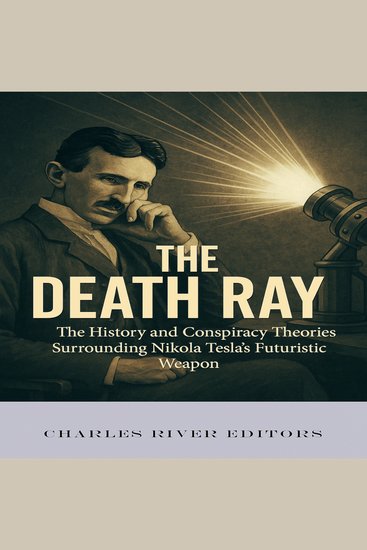
    Nikola Tesla was one of history’s greatest scientists, and though he is best known for his pioneering work with electricity, the fact that he is mostly remembered solely for that actually does a disservice to his legacy. Born a Serb in the Austrian Empire, Tesla came to the United States and worked in a laboratory for none other than the Wizard of Menlo Park, Thomas Edison. 
    Having established AC as an electrical supply system, Tesla became a global celebrity, and his devices and inventions fascinated people. Tesla tinkered with everything from X-rays to wireless communications and even attempted a primitive form of the radio. While Tesla was not able to successfully execute the devices and concepts he foresaw, his forward thinking in fields like wireless communication certainly proved prescient, and his futuristic devices and his later reputation for eccentricity helped create the “mad scientist” image that still remains a pop culture fixture. Tesla seemed to have come to grips with this aspect of his legacy late in life, noting, “The scientific man does not aim at an immediate result. He does not expect that his advanced ideas will be readily taken up." 
    During World War I, in December 1915, Tesla gave an interview to The New York Times in which he claimed he was working on something entirely new, a weapon that would use electrical power to instantly destroy a distant target. He explained that this weapon was “so far developed that great destructive effects can be produced at any point on the globe, determined beforehand and with great accuracy.” Tesla called this new weapon the “Teleforce,” and he would continue working on this project for the rest of his life, but he consistently refused to give details of its operation. Many people believed it was impractical, but with Tesla, it was never possible to be entirely certain.
    Show book
  • Direct Perception is Freedom - Bombay (Mumbai) 1971 - Public Talk 2 - cover

    Direct Perception is Freedom -...

    Jiddu Krishnamurti

    • 0
    • 0
    • 0
    ". Direct perception is freedom - 10 February 1971 
    • Can the mind living in this world ever be free, not only superficially but 
    profoundly, at the very root of its existence? 
    • ‘Freedom from’ is an abstraction, but freedom in observing ‘what is’ and going 
    beyond it is actual freedom. 
    How do I observe greed? Do I observe it as an outsider looking in or do I observe it without the observer? 
    Without the mind being free you cannot live in order. 
    Q: Three years have passed; I have no energy to be aware of my reactions. Q: Can we seek God through observation?"
    Show book