Junte-se a nós em uma viagem ao mundo dos livros!
Adicionar este livro à prateleira
Grey
Deixe um novo comentário Default profile 50px
Grey
Assine para ler o livro completo ou leia as primeiras páginas de graça!
All characters reduced
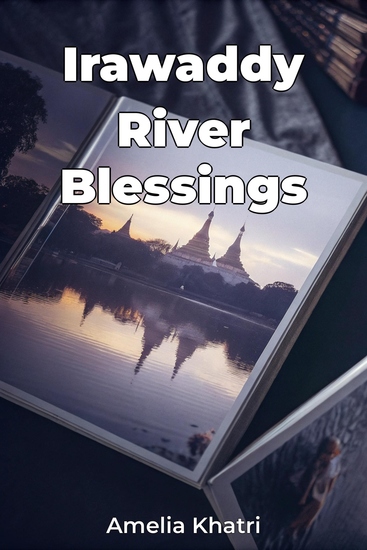
Irawaddy River Blessings - cover
LER

Irawaddy River Blessings

Amelia Khatri

Tradutor A AI

Editora: Publifye

  • 0
  • 0
  • 0

Sinopse

Irawaddy River Blessings explores the profound spiritual significance of the Irawaddy River in Myanmar, revealing its role as a sacred entity deeply intertwined with Burmese culture and Buddhist rituals. The book examines how the river functions not merely as a geographical feature, but as a vital source of cultural identity and spiritual symbolism for the people of Myanmar. Discover how the Irawaddy is used in purification ceremonies by monks and devotees, highlighting the unique connection between religious practices and the natural world. 

 
The book progresses by initially highlighting the geographical importance of the Irawaddy, then delves into the river's connection to Buddhist rituals and its symbolic representation in Burmese folklore and art. Ultimately, the book addresses contemporary challenges, such as environmental degradation, and their implications for the river's sacred status. 

 
By examining the Irawaddy River through the lens of sacred geography, the book offers a unique perspective on the interdisciplinary connections between religion, history, and environmental studies, making it a valuable resource for understanding Myanmar's cultural heritage and environmental issues.
Disponível desde: 14/02/2025.
Comprimento de impressão: 57 páginas.
Outros livros que poderiam interessá-lo

  • Queering the Runes - Reclaiming Ancestral Wisdom in Rune Magic and Mythology - cover

    Queering the Runes - Reclaiming...

    Siri Vincent Plouff

    • 0
    • 0
    • 0
    Queering the Runes is a contemporary, inclusive, and forward-thinking approach to the runes that focuses on finding queer experience, life, and joy in the Elder Futhark. Siri comes to the runes as a queer, nonbinary reader, and presents a path for reclaiming the ancestral wisdom and mystery of the runes in a way that can provide insight and understanding of their sacred nature for masculine, feminine, and nongendered aspects of self. Written as a love letter to the runes, the gods, and the people who follow the Nordic path, Queering the Runes presents an alternative approach to the runes—one that creates a gentle container for those who want to follow this heathen path. Based on the author’s personal gnosis, as well as deep academic research on runes and Nordic culture, this book explores the root culture of the runes, both in terms of myth and of lived, real folkloric experience, and paves the way for understanding how to work with runes disencumbered from patriarchy and white supremacy.   Siri Vincent Plouff presents the traditional meanings of the runes, then helps the reader to queer the runes in their own way. Included are the lore associated with each rune, exercises to apply them to modern life, activities to engage with the runes (layouts, castings, and galdr), and advice on how to use the runes for divination. Throughout, the author provides journal prompts meant to help the reader channel the energy of specific runes, to get to know their energy, as well as to use the runes to help them move forward in a journey of self-discovery.  Queering the Runes seeks to blow open perceptions of the runes, exploring them as active, living symbols available to all, as well as the inherent connection with ancestral magic that comes with rune work.
    Ver livro
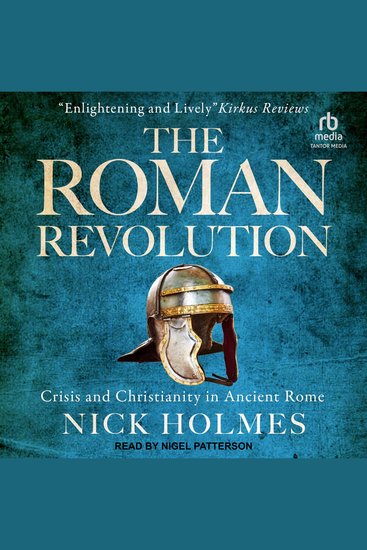
  • The Roman Revolution - Crisis and Christianity in Ancient Rome - cover

    The Roman Revolution - Crisis...

    Nick Holmes

    • 0
    • 0
    • 0
    It was a time of revolution. The Roman Revolution describes the little known "crisis of the third century", and how it led to a revolutionary new Roman Empire. Long before the more famous collapse of the Western Roman Empire in the fifth century, in the years between AD 235-275, barbarian invasions, civil war, and plague devastated ancient Rome. Out of this ordeal came new leaders, new government, new armies, and a new vision of what it was to be Roman. Best remembered today is the rapid rise of Christianity in this period, as Rome's pagan gods were rejected, and the emperor Constantine converted to this new religion. Less well remembered is the plethora of other changes that conspired to provide an environment well suited to a religious revolution. 


    Drawing on the latest research, Nick Holmes looks for new answers to old questions. He charts the rise of the Roman Republic and the classical Roman Empire, examining the roles played by sheer good luck and the benign climate. Focusing on the reigns of the critically important but under-researched emperors in the third century, such as Aurelian, Diocletian, and Constantine, he vividly brings to life how Rome just escaped catastrophe in the third century, and embarked on a journey that would take it into a brave new world—one which provided the foundations for modern Europe and America.
    Ver livro
  • The Brama Samhita - Brama's Prayers To Govinda - cover

    The Brama Samhita - Brama's...

    Bhaktisiddhanta Sarasvati Thakura

    • 0
    • 0
    • 0
    Lord Brahma saw Krsna directly and composed a prayer based on his realizations – a striking prayer by one who has seen the truth. 
      
    Krsna revealed himself to Brama, along with his spiritual planets. Overwhelmed by this transcendental revelation, Brama spoke these words glorifying Krsna. Brama’s awe and love permeate the text and reveal the workings of the cosmic creation. 
      
    The Brama Samhita teaches that transcendence, truth, and ultimate reality can be apprehended only by the mercy of the supreme transcendent entity, the Absolute Truth Himself, and that perception of ultimate reality is a function not of speculative reason but of direct spiritual cognition through divine revelation. This collection is taken from the fifth chapter of the Hymns of Brama, and includes verses 1 to 29.. There were 100 chapters in the Brama Samhita. This 5th chapter of the Brama Samhita was discovered by Lord Chaitanya. The other chapters have not yet been revealed. 
     
    The Brama-samhita clearly describes Brahman. Kṛṣṇa is the Supreme Brahman because of His unlimited knowledge, unlimited potencies, unlimited strength, unlimited influence, unlimited beauty, and unlimited renunciation. Ultimately, therefore, the word Brahman can be applied to Kṛṣṇa only.  
      
    Because the impersonal Brahman is the effulgence emanating as rays of Kṛṣṇa’s transcendental body, Kṛṣṇa is the Parabrahman. Everything rests on Brahman, but Brahman rests upon Kṛṣṇa. The material elements are accepted as the inferior energy of Kṛṣṇa. By their interaction, the cosmic manifestation takes place, rests on Kṛṣṇa, and after dissolution again enters into the body of Kṛṣṇa as His subtle energy. Kṛṣṇa is therefore the cause of both manifestation and dissolution. 
     
    Translator and commentator Bhaktisiddhanta Sarasvati was a Gaudīya Vaisnava Hindu guru, ācārya, and revivalist in early 20th century India. 
    Ver livro
  • A Rare Recording of Marcus Garvey - cover

    A Rare Recording of Marcus Garvey

    Marcus Garvey

    • 0
    • 0
    • 0
    Marcus Garvey (August 17, 1887 - June 10, 1940) was a charismatic Jamaican-born political leader, publisher, journalist, entrepreneur, and orator. He organized the Universal Negro Improvement Association and African Communities League (UNIA-ACL) and acted as its President-General. In 1916 he moved to New York City where his prominence grew. By 1919 he was considered to be the “Black Moses,” and he claimed a following of over 2 million people. This recording is from a speech he gave in the 1920s.
    Ver livro
  • Literature for the People - How The Pioneering Macmillan Brothers Built a Publishing Powerhouse - cover

    Literature for the People - How...

    Sarah Harkness

    • 0
    • 0
    • 0
    Read by the author, Sarah Harkness.From an impoverished childhood in the Scottish highlands to Victorian London, this is the inspiring story of brothers Daniel and Alexander Macmillan who built a publishing empire - and brought Alice in Wonderland to the world. Their remarkable achievements are revealed in this entertaining, superbly researched biography.Daniel and Alexander arrived in London in the 1830s at a crucial moment of social change. These two idealistic brothers, working-class sons of a Scottish crofter, went on to set up a publishing house that spread radical ideas on equality, science and education across the world. They also brought authors like Lewis Carroll, Thomas Hardy and Charles Kingsley, and poets like Matthew Arnold and Christina Rossetti, to a mass audience. No longer would books be just for the upper classes.In Literature for the People Sarah Harkness brings to life these two warm-hearted men. Daniel was driven by the knowledge that he was living on borrowed time, his body was ravaged by tuberculosis. Alexander took on responsibility for the company as well as Daniel’s family and turned a small business into an international powerhouse. He cultivated the literary greats of the time, weathered controversy and tragedy, and fostered a dynasty that would include future prime minister Harold Macmillan.Including fascinating insights about the great, the good and the sometimes wayward writers of the Victorian era, with feuds, friendships and passionate debate, this vibrant book is bursting with all the energy of that exciting period in history.
    Ver livro
  • Black Narratives of Slavery - A Very Short Introduction - cover

    Black Narratives of Slavery - A...

    Robert Patterson

    • 0
    • 0
    • 0
    This Very Short Introduction brings together a wide range of narratives of slavery across a broad historical period to understand how Black people—enslaved and not-enslaved—have experienced and imagined slavery. It also investigates how slavery's long reach and afterlife has continued to shape Black life in the twenty-first century. By giving attention to the narratives produced during the last two hundred plus years, this volume examines American chattel slavery as a specific historical period that legally ended in 1865, and yet recognizes its impacts, effects, and significance as extending into the twenty-first century. Slave narratives tie the life of slavery its abolition with its afterlife and the reconfigurations that followed—Black Codes, Jim Crow segregation, and many other forms of disenfranchisement.Robert J. Patterson examines so-called "traditional" slave narratives alongside writings from non-enslaved Black people in the nineteenth century, the imaginative works of twentieth century fiction, and twenty-first century cinema to create a compelling and informative introduction to the long historical arc of slavery woven into the cultural and political fabric of America.
    Ver livro