¡Acompáñanos a viajar por el mundo de los libros!
Añadir este libro a la estantería
Grey
Escribe un nuevo comentario Default profile 50px
Grey
Suscríbete para leer el libro completo o lee las primeras páginas gratis.
All characters reduced
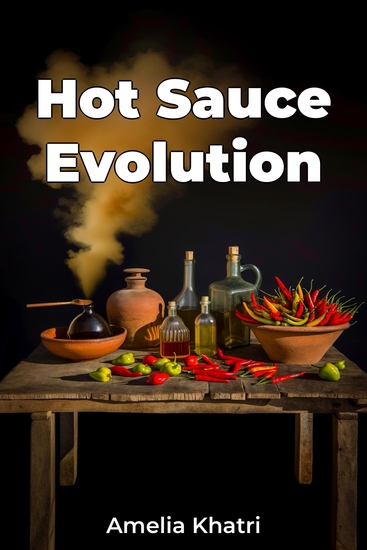
Hot Sauce Evolution - cover

Hot Sauce Evolution

Amelia Khatri

Editorial: Publifye

  • 0
  • 0
  • 0

Sinopsis

"Hot Sauce Evolution" presents a fascinating journey through time, exploring how chili-based condiments transformed from basic food preservatives into a global culinary phenomenon. The book masterfully weaves together three compelling narratives: the scientific development of heat measurement through the Scoville Scale, the historical trade routes that globalized chilies, and the rich cultural significance of regional hot sauce variations across different societies.

 
Beginning with the domestication of wild chilies in 6000 BCE by indigenous Mesoamerican peoples, the narrative tracks how capsaicin-rich fruits became integral to both sustenance and medicine. The story takes a dramatic turn during the Spanish colonization period, when maritime trade networks carried chilies across continents, fundamentally reshaping cooking practices from Asia to Europe.

 
The book reveals how hot sauce development mirrors human migration patterns, offering a unique lens through which to view cultural exchange and culinary evolution. Structured in three comprehensive sections, the work progresses from the scientific foundations of capsaicin to the geographical spread of chilies, before culminating in an analysis of modern hot sauce culture.

 
Drawing from archaeological findings, colonial trade documents, and contemporary market data, the book presents its material in an accessible academic style that appeals to both casual readers and food history enthusiasts. This approach makes complex concepts digestible while maintaining scholarly integrity, offering valuable insights into how a simple condiment has shaped agricultural practices, preservation techniques, and international trade relationships throughout history.
Disponible desde: 11/01/2025.
Longitud de impresión: 93 páginas.

Otros libros que te pueden interesar

  • Connecting Scotland's History - A Scottish History Timeline Linked into 2000 Years of World History - cover

    Connecting Scotland's History -...

    Anna Groundwater

    • 0
    • 0
    • 0
    What was happening elsewhere in the world when Robert the Bruce was outlawed and Mary Queen of Scots lost her head? When Genghis Khan was on the warpath and Ivan the Terrible was the Russian czar, what was happening in Scotland? Find the answers to these questions in 2,000 years of Scottish history presented alongside what was happening in the rest of the world.
    By placing events in Scotland in relation to those elsewhere, we can see what is different or distinctive about Scotland's experience. Simultaneously we can also see where movements in Scottish history were part of wider cultural or political change in Europe and beyond. John Knox's fiery sermons of the 1560s were connected into a wider Protestant Reformation, but they also represented a singularly Scottish version of a European phenomenon.
    Connecting Scotland's History also gives us a history of 'many Scotlands'. We see the hybrid nature of a country where multiple peoples have come together in a distinctively Scottish mixture. From the Gaels, Picts and Norse people to more recent influxes from England, Ireland, continental Europe and beyond, Scotland's history tells us of internal connections as well as connections between Scotland and the wider world.
    Ver libro
  • Start of the French Revolution The: The History and Legacy of the Seminal Events that Began the Uprising in France - cover

    Start of the French Revolution...

    Editors Charles River

    • 0
    • 0
    • 0
    As one of the seminal social revolutions in human history, the French Revolution holds a unique legacy, especially in the West. The early years of the Revolution were fueled by Enlightenment ideals, seeking the social overthrow of the caste system that gave the royalty and aristocracy decisive advantages over the lower classes. But history remembers the French Revolution in a starkly different way, as the same leaders who sought a more democratic system while out of power devolved into establishing an incredibly repressive tyranny of their own once they acquired it.  
    	The French Revolution was a turbulent period that lasted several years, and one of the most famous events of the entire revolution came near the beginning with the Tennis Court Oath. By July of 1788, King Louis XVI agreed to call the Estates-General, a large, traditional legislative body, for the first time since 1614. The country's finances, already quite tenuous, reached a crisis stage in August 1788 as France faced bankruptcy.  
    	In the spring of 1789, Louis XVI summoned the Estates-General. They were to convene at Versailles on April 27, but did not do so until May 5. Late elections continued into the summer as conditions around the country delayed many elections. At the same time, bread prices reached an all-time high, leading to riots throughout the country, particularly in Paris. During the formal ritual that welcomed the Estates-General on May 4, 1789, in a precursor of things to come in the following months, the Third Estate refused to kneel before the king. The deputies of the Third Estate came before the king, walking two at a time, and bowed before Louis XVI and Marie Antoinette. Not surprisingly, those witnessing the parade of the Estates-General had hoped for reform but came to expect that the Estates-General would serve as a tool of the administration. Instead, the start of the French Revolution would soon follow.
    Ver libro
  • Ancient Empires - A History of Etruscans and Phoenicians - cover

    Ancient Empires - A History of...

    Kelly Mass

    • 0
    • 0
    • 0
    This bundle consists of 3 short books, which are about the following subjects: 
    Subject 1: Nineveh was an age-old Assyrian city in Upper Mesopotamia, near Mosul in modern-day northern Iraq. It was the capital and biggest city of the Neo-Assyrian Empire, and the world's biggest city for some decades, and is on the eastern bank of the Tigris River. It's now a prevalent name for the portion of Mosul that's on the Tigris' eastern bank, and it is also the name of the nation's Nineveh Governorate. 
    It was the world's largest city for about fifty years till it was sacked by a union of its previous subject tribes, including but not limited to the Babylonians, Medes, Persians, Scythians, and Cimmerians, in the year 612 BC, following a severe period of civil dispute in Assyria.  
    Subject 2: The term "Phoenicians" describes the people living in Phoenicia, a sometimes-forgotten civilization that was age-old and remarkable. Let's check out the tradition, the history, and the specifics of Phoenicia. 
    Phoenicia was a thalassocratic (a state with mostly maritime worlds) society that thrived in the eastern Mediterranean's Levant area, mainly in modern-day Lebanon. It was fixated the coast of Lebanon, with some seaside parts of modern-day Syria and Galilee included for good procedure, varying as far north as Arwad and as far south as Acre and perhaps Gaza. 
    Subject 3: At its peak, the Etruscan society of age-old Italy covered circa what's now Tuscany, western Umbria, and northern Lazio, and areas of what's now the Po Valley, Emilia-Romagna, south-eastern Lombardy, southern Veneto, and small parts of Campania. 
    The first proof of an Etruscan society might be traced back to around 900 BC.
    Ver libro
  • The Science of Confident Public Speaking - Mastering Presence Persuasion and Performance - cover

    The Science of Confident Public...

    Nathaniel Hart

    • 0
    • 0
    • 0
    The fear of public speaking is a common experience, affecting individuals across diverse professions and backgrounds. This book recognizes that fear and provides a comprehensive approach to understanding and overcoming it. It bridges the gap between the neuroscience of anxiety and the practical application of techniques for building confidence and delivering effective presentations.  
    We'll explore the neurological underpinnings of public speaking anxiety, examining the role of the amygdala, the brain’s fear center, and how our cognitive processes contribute to the amplification of anxiety.  
    You'll learn how cognitive distortions and negative self-talk can perpetuate a cycle of fear, and we'll equip you with strategies to challenge and reframe these unhelpful thought patterns.  
    But this book is not just about understanding the problem; it’s about finding solutions. We will delve into the remarkable power of neuroplasticity, the brain’s ability to rewire itself, and demonstrate how consistent practice and positive reinforcement can transform your response to public speaking.  
    We'll introduce you to a range of techniques, including mindfulness, visualization, breathwork, and cognitive behavioral therapy (CBT), all designed to help you manage stress, cultivate self-compassion, and build unwavering self-efficacy.  
    Furthermore, this book will guide you through the mechanics of effective communication, covering everything from crafting compelling narratives and mastering vocal delivery to employing powerful body language and engaging your audience.  
    Throughout the book, you'll find practical exercises, real-world examples, and case studies to help you integrate these techniques into your daily life and build lasting confidence.  
    Prepare to embark on a transformative journey, one that will not only improve your public speaking abilities but also empower you to become a more confident, clear, and charismatic communicator in all aspects of your life.
    Ver libro
  • The South China Sea - What Everyone Needs to Know - cover

    The South China Sea - What...

    William Hurst

    • 0
    • 0
    • 0
    The South China Sea is well known as a hotspot of geopolitical tensions. But it is more than just that. It has been a critical node and nexus of trade, strategic rivalries, and the exchange of cultures and ideas for at least a millennium.The South China Sea: What Everyone Needs to Know® unpacks the complex and textured history of this region and offers incisive and thorough, yet accessible and balanced, analysis of current issues and potential futures. 
     
    Why do small islands (and even reefs and atolls) matter so much? How and why do different players stake their claims? What is the environmental impact of all this? What are the prospects for conflict, or cooperation? Whatever one's particular area of concern, this volume delivers what's needed to understand the issues beyond the headlines, especially the troubled and multifaceted history and politics behind them.
    Ver libro
  • Meno - cover

    Meno

    Plato

    • 0
    • 0
    • 0
    Meno is a Platonic dialogue which addresses the question of whether virtue can be taught, and examines the concept of anamnesis. Through Socrates' questioning of Meno's slave, the dialogue suggests that knowledge is innate, with Socrates suggesting that all learning occurs through recollection of our prior knowledge rather than through instruction. Read in English, unabridged.
    Ver libro