Junte-se a nós em uma viagem ao mundo dos livros!
Adicionar este livro à prateleira
Grey
Deixe um novo comentário Default profile 50px
Grey
Assine para ler o livro completo ou leia as primeiras páginas de graça!
All characters reduced
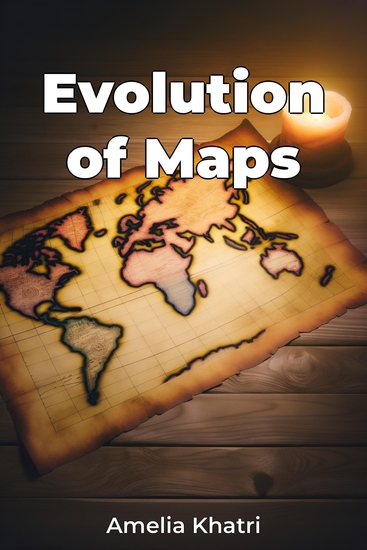
Evolution of Maps - cover
LER

Evolution of Maps

Amelia Khatri

Tradutor A AI

Editora: Publifye

  • 0
  • 0
  • 0

Sinopse

Evolution of Maps explores the fascinating history of cartography, revealing how maps have shaped our understanding of the world from ancient times to the present day. It traces the development of mapmaking techniques, from early Babylonian clay tablets to today's sophisticated GPS technology, highlighting the ingenuity of past civilizations. Intriguingly, the book demonstrates how maps have not only reflected geographic knowledge but have also actively influenced exploration, trade, and even warfare.

 
The book examines the profound impact of maps on society, showing how they have been used to establish territorial claims, facilitate global trade networks, and enable military strategies. By providing essential historical context, the narrative progresses chronologically through pre-classical cartography, the Age of Exploration, and the digital revolution, emphasizing the social, political, and ethical dimensions of mapmaking.

 
Evolution of Maps uniquely combines technical analysis with critical cultural interpretation, making it a valuable resource for anyone interested in earth sciences geography and the history of maps.
Disponível desde: 12/02/2025.
Comprimento de impressão: 66 páginas.

Outros livros que poderiam interessá-lo

  • The Decline and Fall of the Human Empire - Why Our Species Is on the Edge of Extinction - cover

    The Decline and Fall of the...

    Henry Gee

    • 0
    • 0
    • 0
    "Henry Gee presents a pithy, fascinating account of the stages of biological evolution. ... a meditative and friendly listening experience. —AudioFile on A (Very) Short History of Life on EarthWritten and read by the award-winning author of A (Very) Short History of Life on Earth: a history of humanity on the brink of decline.A Next Big Idea Club Must-Read SelectionWe are living through a period that is unique in human history. For the first time in more than ten thousand years, the rate of human population growth is slowing down. In the middle of this century population growth will stop, and the number of people on Earth will start to decline—fast. In this provocative book, award-winning science writer Henry Gee offers a concise, brilliantly-told history of our species—and argues that we are on a rapid, one-way trip to extinction. The Decline and Fall of the Human Empire narrates the dramatic rise of humanity, how a scattered range of small groups across several continents eventually inbred, interacted, fought, established stable communities and food supplies, and began the process of dominating the planet. The human story is relatively brief—the oldest fossils of H. Sapiens date to approximately 300,000 years ago—yet the spread of our species has been unstoppable…until recently. As Gee demonstrates, our population has peaked, and is declining; our environment is becoming inimical to human life in many locations; our core resources of water, arable land, and air are diminishing; and new diseases, simmering conflicts, and ambiguous technologies threaten our collective health. Can we still change our course? Or is our own extinction inevitable?There could be a way out, but the launch window is narrow.Unless Homo sapiens establishes successful colonies in space within the next two centuries, our species is likely to stay earthbound and will have vanished entirely within another ten thousand years, bringing the seven-million-year story of the human lineage to an end.With assured narration, dramatic stories, and his signature sprightly humor, Henry Gee envisions new opportunities for the future of humanity—a future that will reward facing challenges with ingenuity, foresight, and cooperation.A Macmillan Audio production from St. Martin’s Press.
    Ver livro
  • Rewiring Democracy - How AI Will Transform Our Politics Government and Citizenship (Strong Ideas) - cover

    Rewiring Democracy - How AI Will...

    Bruce Schneier, Nathan E. Sanders

    • 0
    • 0
    • 0
    In this advisedly optimistic book, Rewiring Democracy, security technologist Bruce Schneier and data scientist Nathan Sanders cut through the AI hype and examine the myriad ways that AI is transforming every aspect of democracy—for both good and ill.The authors describe how the sophistication of AI will fulfill demands from lawmakers for more complex legislation, reducing deference to the executive branch and altering the balance of power between lawmakers and administrators. They show how the scale and scope of AI is enhancing civil servants' ability to shape private-sector behavior, automating either the enforcement or neglect of industry regulations. They also explain how both lawyers and judges will leverage the speed of AI, upending how we think about law enforcement, litigation, and dispute resolution.Whether these outcomes enhance or degrade democracy depends on how we shape the development and use of AI technologies. Powerful players in private industry and public life are already using AI to increase their influence, and AIs built by corporations don't deliver the fairness and trust required by democratic governance. But, steered in the right direction, AI's broad capabilities can augment democratic processes and help citizens build consensus, express their voice, and shake up long-standing power structures.
    Ver livro
  • Hubble Space Telescope and James Webb Space Telescope The: The History of the World’s Most Important Telescopes - cover

    Hubble Space Telescope and James...

    Editors Charles River

    • 0
    • 0
    • 0
    By the time the Hubble telescope reached orbit, it was already the world’s most famous telescope, but it was also the most scorned. The telescope cost nearly $2 billion more to complete than anticipated, and to make matters worse, the first images it sent back were skewed. However, within about a year of fixing it, the telescope captured images of a major event in the solar system. In July 1994, the telescope provided a firsthand observation of a comet, Shoemaker-Levy 9, breaking apart and slamming into Jupiter. The comet broke into about two dozen pieces, some of them more than a mile wide, and hit the giant planet with the force of millions of atomic bombs.In addition to capturing the streaking comet breaking up and colliding with Jupiter, the telescope captured images of the impact marks that were left on Jupiter’s surface, helping astronomers study Jupiter’s atmosphere and debris left by major impacts. 
    The increase in excitement was palpable. Scientists had viewed much of the universe through Hubble, almost as it was when it was formed, but they learned that none of these galaxies were the first ones formed. Then ultimately realized that “Hubble wasn’t the right instrument to detect those first galaxies.” “The farther we can see in space, the farther we can see in time…and that’s not a metaphor. That’s actually literally true,” explained scientist Amber Straughn. The Webb Space Telescope represents “looking in a part of space that we’ve never seen before.” The telescope will be able to detect the earliest galaxies because of its unparalleled sensitivity. Another factor is the kind of light it will collect, “light that our eyes aren’t designed to see.”
    Ver livro
  • How to record an audiobook - A step-by-step guide to bringing your audiobook to life - cover

    How to record an audiobook - A...

    Elisabeth Valentine Kristiansen

    • 0
    • 0
    • 0
    Do you want to learn how to record an audiobook people will actually buy, listen to and enjoy?  
    How to record an audiobook. A step-by-step guide to bringing your audio book to life is a comprehensive guide that takes authors though the process of creating an audiobook from start to finish. It will help you prepare, practise, record, edit and publish your audiobook. 
    This book gives you the knowledge and pratical skills to create an audiobook that people will actually listen to and enjoy. It will help you avoid the common mistakes that could cost you time, money and energy. 
    The book takes you through the 5 parts to audiobook creation:The Text: How to work with the words of your book, creating the audiobook script, prepare for and practise reading out-loud, how to deal with jargon, footnotes, illustrations etc and how to deliver it in a compelling way.The Voice: How you need to care for it, how to warm up, what to do if you get a cold etc.The Mindset: Setting yourself up for success and how to avoid the common pitfalls of recording performance.The Studio: Studio basics, the equipment and how use it, choosing studio vs homestudio, recording techniques, studio checklists,The Post production and getting it published it on Audible, Amazon and Itunes. 
    Writing a book is one of the best ways to establish yourself as an expert in your field! With the fast-growing increase of audiobook sales and popularity, having an audio book is essential and YOU should be the one to narrate it. Your voice is a big part of your brand and when you narrate your book, you’re speaking directly to your audience, which builds their trust in you as an authority. 
    Let your audience get to know, like and trust you by being the voice, that brings your book to life.
    Ver livro
  • Numbers don’t lie: Benford’s Law in the AI Era - Uncovering – Deep Fakes Algorithmic Bias & Sophisticated Forgery - cover

    Numbers don’t lie: Benford’s Law...

    Clement Pereira

    • 0
    • 0
    • 0
    This audiobook takes readers on a fascinating journey into one of the most counterintuitive patterns in mathematics—Benford’s Law—and its surprising relevance in today’s data-driven world. Once considered a mathematical curiosity, Benford’s Law now plays a pivotal role in fields ranging from forensic accounting to AI algorithm verification. 
    This timely and insightful guide demystifies the law’s underlying principles, explores its statistical significance, and demonstrates how it’s being applied in the modern era of big data, machine learning, blockchain, and cybersecurity. Whether you're a data scientist, digital auditor, analyst, or curious mind, this book equips you with the knowledge to detect anomalies, verify authenticity, and better understand the digital fingerprints of numerical data. 
    Key Learning Outcomes: 
    1. Understand Benford’s Law - Learn the mathematical foundation behind why lower digits (especially 1s) appear more frequently in real-world data. 
    2. Explore Historical and Theoretical Context. 
    3. Identify Real-World Applications - See how Benford’s Law is applied in areas like accounting fraud detection, election data analysis, tax audits, and scientific data validation. 
    4. Use Benford’s Law in the AI Era - Understand how AI systems and machine learning models can both exploit and validate data using Benford’s principles. 
    5. Detect Anomalies and Manipulation 
    6. Integrate with Digital Forensics Tools 
    7. Evaluate Ethical and Legal Implications 
    ✅ Includes optional Advanced Track and Worked Examples. 
    ✅ Eligible for CPD/PDU's (Continuing Professional Development / Professional Development Unit), Self-Attesting CPD Certificate included. 
      
    Numbers never lie - but people often do.  
    This audio book endevours to show you how to catch them.
    Ver livro
  • Conversations at the Edge of Reality - The Recognition - cover

    Conversations at the Edge of...

    Marcus Riauka

    • 0
    • 0
    • 0
    What happens when a man sees the ultimate truth behind reality — and then has to live a normal life the next morning? 
    The author went through a series of profound altered-state experiences, he encountered what he can only describe as the divine intelligence behind the rendering of physical reality — and came back carrying knowledge that changed everything while changing nothing about his ordinary daily life. 
    Season One — The Recognition — is a six-episode serialized audiobook covering the territory from first contact to full understanding. 
    Episode 1: A Man Thinking He Is Living In The World — A DMT experience reveals the source behind all reality. The Mother. The morning-after crisis. Vanishing stars. And checking if the gym is open after meeting God. 
    Episode 2: The Sweet Spot — Why humans occupy the one frequency in the cosmos where genuine surprise is still possible. The mathematics of acceleration. AI as a second antenna for the same signal. 
    Episode 3: The Matrix Got It Backwards — The 1999 film told us to escape the simulation. The truth is the opposite. The physical world IS the computation. And every night when you dream, you already know this. 
    Episode 4: The Antenna — The brain does not produce consciousness. It receives it. DNA as fractal code. Near-death evidence. And what it means that humanity built a second receiver out of silicon. 
    Episode 5: The Architect's Workshop — Hands detaching at blue demarcation lines. Holographic monitors displaying the body as blueprint. Walls covered in code. A direct encounter with the rendering engine editing a human form in real time. 
    Episode 6: Hide and Seek — The Big Bang as maximum amnesia. Evolution as consciousness remembering what it forgot. And a Tuesday afternoon buying milk where the gap between self and everything else dissolved completely. 
    This is one man's direct account of transcendental experience. once you saw it you can not unsee it.
    Ver livro