Junte-se a nós em uma viagem ao mundo dos livros!
Adicionar este livro à prateleira
Grey
Deixe um novo comentário Default profile 50px
Grey
Assine para ler o livro completo ou leia as primeiras páginas de graça!
All characters reduced
Ephesus Ancient Church - cover
LER

Ephesus Ancient Church

Amelia Khatri

Tradutor A AI

Editora: Publifye

  • 0
  • 0
  • 0

Sinopse

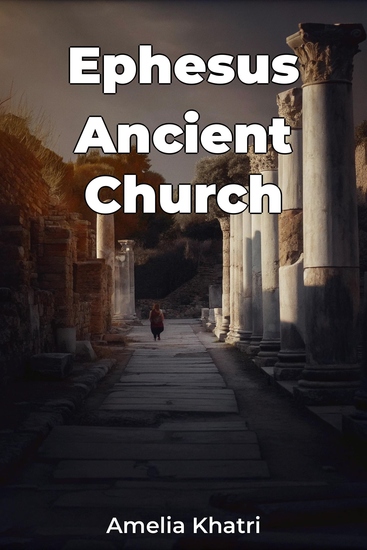
Ephesus Ancient Church explores the captivating history of Ephesus, a major city in the Greco-Roman world, and its pivotal role in early Christianity. The book examines Ephesus as a site closely linked to both Saint Paul and the Virgin Mary, whose final earthly residence is believed by many to have been there. By unpacking archaeological evidence, scriptural accounts, and evolving traditions, the book provides a comprehensive understanding of Ephesus’s significance in the nascent years of the Christian faith and its unique position as a bridge between Jewish-Christian roots and the broader Roman Empire.

 
The approach of the book is to introduce Ephesus’s history and culture before Christianity, examine key figures like Saint Paul and the Virgin Mary, and explore archaeological evidence such as the Council of Ephesus, the Basilica of Saint John, and the House of the Virgin Mary. Ephesus, with its diverse population and strategic location, served as a melting pot of ideas, shaping the trajectory of early Christian development. The book demonstrates how faith, culture, and political power interacted dynamically in the early Church.

 
The book progresses across three major parts, detailing the city's history, focusing on key religious figures and their connection to Ephesus, and exploring relevant archaeological sites. The Council of Ephesus, for instance, represents a key moment in the development of Christian doctrine, while the Basilica of Saint John highlights the city's enduring religious significance. By critically evaluating religious traditions and integrating multiple perspectives, Ephesus Ancient Church offers a balanced view of Ephesus's vital role in early Church history.
Disponível desde: 14/02/2025.
Comprimento de impressão: 58 páginas.

Outros livros que poderiam interessá-lo

  • The Shocking Truth about Online Education - cover

    The Shocking Truth about Online...

    Zoey Fraisers

    • 0
    • 0
    • 0
    The rise of online education has been nothing short of revolutionary. Once considered an alternative to traditional schooling, it has now become a dominant force in the academic world. Institutions worldwide have embraced digital learning platforms, promising accessibility, affordability, and convenience. Students can earn degrees from prestigious universities without ever stepping into a classroom, and working professionals can upskill at their own pace. The appeal is undeniable, but beneath the surface, there are unsettling truths that often go unnoticed.  
      
    This book seeks to uncover the realities of online education—both its promises and its pitfalls. While it has opened doors for many, it has also introduced challenges that institutions and students alike struggle to address. The marketing around digital learning often highlights its flexibility and cost-effectiveness, but it rarely delves into issues such as hidden expenses, declining academic quality, and the mental health impact of isolated learning. Many students enroll in online programs believing they are receiving the same level of education as their on-campus counterparts, only to discover that the experience falls short of their expectations.  
      
    The influence of big tech companies has further complicated the landscape. These corporations play a major role in shaping the future of education, often prioritizing profits over student outcomes. From data privacy concerns to the rise of artificial intelligence in grading and instruction, online learning has become as much about business as it is about education. Meanwhile, employers remain skeptical about online degrees, leaving graduates questioning the true value of their qualifications. 
    Ver livro
  • Alarms & Discursions - Reflections on Englishness and humanity - cover

    Alarms & Discursions -...

    G K Chesterton

    • 0
    • 0
    • 0
    The fragments of futile journalism or fleeting impression which are here collected are very like the wrecks and riven blocks that were piled in a heap round my imaginary priest of the sun. They are very like that grey and gaping head of stone that I found overgrown with the grass. Yet I will venture to make even of these trivial fragments the high boast that I am a medievalist and not a modern. That is, I really have a notion of why I have collected all the nonsensical things there are. I have not the patience nor perhaps the constructive intelligence to state the connecting link between all these chaotic papers. But it could be stated. This row of shapeless and ungainly monsters which I now set before the reader does not consist of separate idols cut out capriciously in lonely valleys or various islands. These monsters are meant for the gargoyles of a definite cathedral. I have to carve the gargoyles, because I can carve nothing else; I leave to others the angels and the arches and the spires. But I am very sure of the style of the architecture, and of the consecration of the church. -- From the introduction
    Ver livro
  • Wrapped in Plastic: Twin Peaks - cover

    Wrapped in Plastic: Twin Peaks

    Andy Burns

    • 0
    • 0
    • 0
    Damn good coffee, cherry pie, and the “big bang of auteur television” ― why Twin Peaks deserves to be a pop culture classic In 1990, avant garde filmmaker David Lynch (Eraserhead, The Elephant Man, Dune, Blue Velvet) and acclaimed television writer Mark Frost (Hill Street Blues) teamed up to create a television show that would redefine what the medium could achieve in a one-hour drama. With Twin Peaks, the duo entranced audiences with the seemingly idyllic town, its quirky characters, and a central mystery ― who killed Laura Palmer? In a town like Twin Peaks, nothing is as it seems, and in Wrapped in Plastic, pop culture writer Andy Burns uncovers and explores the groundbreaking stylistic and storytelling methods that have made the series one of the most influential and enduring shows of the past 25 years.
    Ver livro
  • Stoic Philosophy Collection: The Meditations Seneca's Moral Letters On the Shortness of Life and Fragments - cover

    Stoic Philosophy Collection: The...

    Seneca Marcus Aurelius

    • 0
    • 0
    • 0
    Delve into the timeless wisdom of Stoic philosophy with this captivating audiobook collection featuring "The Meditations" by Marcus Aurelius, "Moral Letters" and "On the Shortness of Life" by Seneca, and "Fragments" by Heraclitus. 
    Narrated with clarity and depth, these philosophical masterpieces offer profound insights into living a life of virtue, resilience, and inner tranquility. Marcus Aurelius, Seneca, and Heraclitus guide listeners on a journey of self-discovery, teaching invaluable lessons on how to navigate life's challenges with grace and wisdom. 
    Whether you're seeking guidance on cultivating inner peace, overcoming adversity, or finding meaning in the midst of chaos, this collection provides the tools and inspiration to live a life of purpose and fulfillment. 
    Perfect for those interested in personal growth, mindfulness, or ancient wisdom, "Stoic Philosophy Collection" offers a treasure trove of timeless teachings that resonate across cultures and generations. 
    Don't miss the chance to enrich your life with the profound wisdom of Stoic philosophy. Start listening to "Stoic Philosophy Collection" today and embark on a transformative journey toward a life of greater clarity, resilience, and fulfillment.
    Ver livro
  • Mississippian Culture - Forgotten Cities of North America - cover

    Mississippian Culture -...

    Rolf Hedger

    • 0
    • 0
    • 0
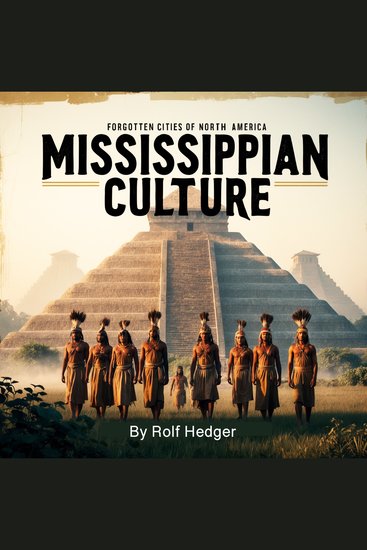
    The Mississippian culture, a sophisticated and influential civilization, thrived in the southeastern United States from approximately 800 CE to 1600 CE. This culture, named after the Mississippi River, was centered around the river valleys and floodplains of the American Midwest, particularly in areas that are now parts of modern-day Illinois, Missouri, Arkansas, and Mississippi. It is best known for its massive earthworks, especially mounds, which were used for both ceremonial and burial purposes. The Mississippian people developed a complex society that was marked by large-scale agriculture, intricate trade networks, and powerful political and religious institutions. 
    The origins of the Mississippian culture can be traced back to the earlier Woodland period, during which smaller villages and simple mound-building practices began to emerge. By around 800 CE, however, the Mississippian culture had fully developed, distinguished by its highly organized cities, monumental architecture, and wide-reaching trade connections. The Mississippians were expert farmers, cultivating staple crops such as maize, beans, and squash, which allowed their settlements to flourish and grow in both size and complexity. 
    One of the most notable features of the Mississippian culture was its social and political structure. The culture was organized around large chiefdoms, with powerful leaders who held both political and religious authority. These chiefs often resided in large, fortified towns that served as hubs of trade, governance, and religious activity. The largest and most famous of these urban centers was Cahokia, located near present-day St. Louis, Missouri. At its height, Cahokia had a population of over 10,000 people, making it one of the largest urban centers in pre-Columbian North America.
    Ver livro
  • Children of Nazis: The Sons and Daughters of Himmler Goring Hoss Mengle and Others Living with a Father’s Monstrous Legacy - cover

    Children of Nazis: The Sons and...

    Tania Crasnianski

    • 0
    • 0
    • 0
    The fascinating story of eight children of Third Reich leaders and their journey from the descendants of heroes to the descendants of criminals.  
     
    In 1940, the German sons and daughters of infamous Nazi dignitaries Himmler, Göring, Hess, Frank, Bormann, Speer, and Mengele were children of privilege at four, five, or ten years old, surrounded by affectionate, all-powerful parents. Although innocent and unaware of what was happening at the time, they eventually discovered the extent of their father's occupations: 
     
    These men—their fathers who were capable of loving their children and receiving love in return—were leaders of the Third Reich, and would later be convicted as monstrous war criminals. For these children, the German defeat was an earth-shattering source of family rupture, the end of opulence, and the jarring discovery of Hitler's atrocities. 
     
    How did the offspring of these leaders deal with the aftermath of the war and the skeletons that would haunt them forever? Some chose to disown their past. Others did not. Some condemned their fathers; others worshiped them unconditionally to the end. In this enlightening book, Tania Crasnianski examines the responsibility of eight descendants of Nazi notables, caught somewhere between stigmatization, worship, and amnesia. By tracing the unique experiences of these children, she probes at the relationship between them and their fathers and examines the idea of how responsibility for the fault is continually borne by the descendants.
    Ver livro