Junte-se a nós em uma viagem ao mundo dos livros!
Adicionar este livro à prateleira
Grey
Deixe um novo comentário Default profile 50px
Grey
Assine para ler o livro completo ou leia as primeiras páginas de graça!
All characters reduced
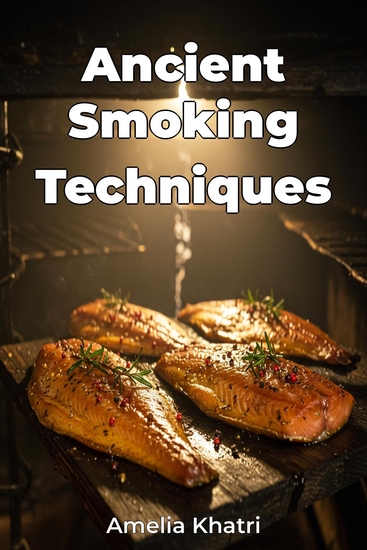
Ancient Smoking Techniques - cover
LER

Ancient Smoking Techniques

Amelia Khatri

Tradutor A AI

Editora: Publifye

  • 0
  • 0
  • 0

Sinopse

Ancient Smoking Techniques explores the long history of food smoking, revealing its evolution as both a means of food preservation and a culinary art form. The book highlights how ancient cultures ingeniously used smoking to preserve food surpluses, a practice that was critical for survival. Early techniques demonstrate a sophisticated understanding of wood selection, where different woods imparted unique flavor profiles, and of flavor infusions through herbs and spices. 

 
The book examines traditional smokehouses around the world, from North American pit smokers to European chimney systems, illustrating how various cultures adapted smoking methods to their environments and available resources. It also delves into the chemical composition of smoke and its interaction with food, emphasizing the science behind this ancient practice.

 
Progressing from the origins of smoking to the nuances of wood selection and flavor infusions, Ancient Smoking Techniques offers a comprehensive view of the historical roots of modern smoking methods. By blending historical analysis with practical knowledge, the book empowers readers to understand and appreciate the rich heritage of smoked foods.
Disponível desde: 18/02/2025.
Comprimento de impressão: 79 páginas.

Outros livros que poderiam interessá-lo

  • Ecce Homo - cover

    Ecce Homo

    Friedrich Nietzsche

    • 0
    • 0
    • 0
    What could have happened to me?... How did I soar to such heights, above the rabble sitting by the well?
     
    Ecce Homo is Nietzsche's compelling autobiography, written in 1888, just weeks before he succumbed to madness. Nietzsche's last great work, a fascinating and bizarre text, traces the development of his own philosophy and the thinkers who influenced him along the way.
     
    Both shocking and revealing, Ecce Homo is a window into the mind of one of Germany's most acclaimed philosophers.
    Ver livro
  • Learn English for Beginners with Paul Noble: English Made Easy with Your 1 million-best-selling Personal Language Coach - cover

    Learn English for Beginners with...

    Paul Noble

    • 0
    • 0
    • 0
    Whatever your experience of learning English, this is the course that will help you improve your abilities using a method that you've never encountered before, with million-bestselling language coach Paul Noble. 
    Native-speaking British and US language experts will help you to improve your existing listening skills and knowledge of how English is spoken as you progress through the course. 
    You will encounter English as it's really spoken and so will be able to take your English from simply being okay to knowing things that only the natives say. An essential downloadable booklet is included to use as a reference and guide as you work through the course. Get your booklet here: http://collinsdictionary.com/resources#english. 
    Paul Noble spent years devising his own unique methods of learning and teaching languages which cut out the memorisation, the stress and the sense of going nowhere. He began using his method to teach in his Language Institute and, thousands of students later, he prides himself on never having had a student fail. 
    HarperCollins 2023
    Ver livro
  • Unmasking the Klansman - The Double Life of Asa and Forrest Carter - cover

    Unmasking the Klansman - The...

    Dan T. Carter

    • 0
    • 0
    • 0
    Unmasking the Klansman may read like a work of fiction but is actually a biography of Asa Carter, one of the South's most notorious white supremacists (and secret Klansman). In the early 1960s Carter became a secret adviser to George Wallace and wrote the Alabama governor's infamous 1963 inauguration speech vowing "segregation now, segregation tomorrow, segregation forever." When Carter disappeared from Alabama in 1972, few knew that he had assumed a new identity in Abilene, Texas, masquerading as a Cherokee American novelist. Using the name "Forrest" Carter, he published three successful Western novels, including The Rebel Outlaw, which Clint Eastwood made into a movie. His last book, The Education of Little Tree (a fake biography of his supposed Indian childhood) posthumously became a number one bestseller in 1991. 


    Author Dan T. Carter uncovered "Forrest" Carter's true identity while researching his biography of Georgia Wallace and in a New York Times op-ed he exposed Carter's deception. Although the difficulties of uncovering the full story of the secretive Carter initially led him to abandon the project, in 2018 he gained access to more than two hundred interviews by the late Anniston newsman, Fred Burger. These recordings and his two decades of exhaustive research finally brought Asa Carter's story into focus. Unmasking the Klansman is the result.
    Ver livro
  • French Cinema - A Very Short Introduction - cover

    French Cinema - A Very Short...

    Dudley Andrew

    • 0
    • 0
    • 0
    It is often claimed that the French invented cinema. Dominating the production and distribution of cinema until WWI, when they were supplanted by Hollywood, the French cinema industry encompassed all genres, from popular entertainment to avant-garde practice. 


    This Very Short Introduction opens up French cinema through focusing on some of its most notable works, using the lens of the New Wave decade (1958-1968) that changed cinema worldwide. Exploring the entire French cinematic oeuvre, Dudley Andrew teases out distinguishing themes, tendencies, and lineages, to bring what is most crucial about French Cinema into alignment. He discusses how style has shaped the look of female stars and film form alike, analyzing the "made up" aesthetic of many films, and the paradoxical penchant for French cinema to cruelly unmask surface beauty in quests for authenticity. Discussing how French cinema as a whole pits strong-willed characters against auteurs with high-minded ideas of film art, funded by French cinema's close rapport to literature, painting, and music, Dudley considers how the New Wave emerged from these struggles, becoming an emblem of ambition for cinema that persists today. He goes on to show how the values promulgated by the New Wave directors brought the three decades that preceded it into focus, and explores the deep resonance of those values today.
    Ver livro
  • The Storm of Steel - Original 1929 Translation of the Storm of Steel - cover

    The Storm of Steel - Original...

    Ernst Jünger, Basil Creighton

    • 0
    • 0
    • 0
    Storm of Steel is a gripping memoir of World War I, written by Ernst Jünger, a German officer who served on the Western Front from 1914 to 1918. Jünger recounts his experiences in vivid and unflinching detail, from the horrors of trench warfare and gas attacks, to the camaraderie and courage of his fellow soldiers. Jünger does not shy away from the brutality and ugliness of war, but he also reveals its moments of beauty and heroism. Storm of Steel is a classic of war literature, praised for its honesty and realism, as well as its literary style and power. This audiobook is based on the original 1929 translation by Basil Creighton, which preserves Jünger’s distinctive voice and tone. Listen to Storm of Steel and immerse yourself in one of the most remarkable accounts of the First World War ever written. the text is brought to life by 3 time Emmy award winner Stephen Houk in his first audiobook narration.
    Ver livro
  • Laboratories of Terror - The Final Act of Stalin's Great Purge in Soviet Ukraine - cover

    Laboratories of Terror - The...

    Marc-Stephan Junge, Lynne Viola

    • 0
    • 0
    • 0
    Laboratories of Terror explores the final chapter of Stalin's Great Terror in Soviet Ukraine. 


    When the Communist Party Central Committee and the Council of People's Commissars of the USSR halted mass operations in repression in November 1938, large numbers of mainly Communist purge victims whose cases remained incomplete were released. At the same time, hundreds of NKVD operatives who had carried out the Great Terror were scapegoated and arrested. 


    Drawing on materials from the largely closed archives of the Soviet security police, this collection of essays by an international team of researchers illuminates the previously opaque world of the NKVD perpetrator. It uncovers the mechanics and logistics of the terror at the local level by examining the criminal files of a series of mid-level NKVD operatives from across Ukraine. The result offers new perspectives on both Stalin's central role in the architecture of the terror and NKVD perpetrators' agency in implementing one of the most horrific episodes of twentieth-century mass violence.
    Ver livro