Junte-se a nós em uma viagem ao mundo dos livros!
Adicionar este livro à prateleira
Grey
Deixe um novo comentário Default profile 50px
Grey
Assine para ler o livro completo ou leia as primeiras páginas de graça!
All characters reduced
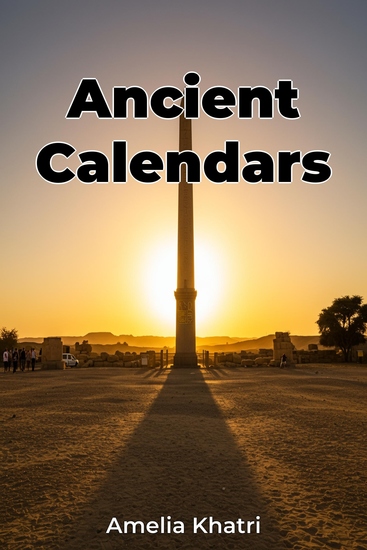
Ancient Calendars - cover
LER

Ancient Calendars

Amelia Khatri

Tradutor A AI

Editora: Publifye

  • 0
  • 0
  • 0

Sinopse

Ancient Calendars explores how early civilizations tracked time, revealing remarkable ingenuity and providing insights into their societies. These ancient systems weren't just about measuring days; they deeply influenced agriculture, religion, and social structures. For instance, the Egyptian solar calendar dictated planting seasons, while the Mayan calendar intertwined with cosmology and prophecy. The book navigates this historical, social, and scientific context, requiring no specialized knowledge. It progresses from basic timekeeping concepts to detailed examinations of calendars like the Roman one, which eventually evolved into our Gregorian calendar. By understanding these calendrical systems, we gain a deeper appreciation for the intellectual capabilities and worldviews of past civilizations. This book uniquely examines ancient calendars from technical, cultural, and religious perspectives. It highlights how these systems reflect a civilization's relationship with the cosmos and continue to inform our understanding of cultural identity and historical change.
Disponível desde: 04/03/2025.
Comprimento de impressão: 58 páginas.
Outros livros que poderiam interessá-lo

  • Theogony and Works and Days - cover

    Theogony and Works and Days

    Hesiod

    • 0
    • 0
    • 0
    Theogony & Works and Days by Hesiod are foundational texts of ancient Greek literature, offering a powerful blend of myth, morality, and early philosophical thought. 
    In Theogony, Hesiod presents the first systematic account of Greek mythology, tracing the origins of the cosmos and the genealogy of the gods—from Chaos and Gaia to Zeus and the Olympian order. Through vivid storytelling and poetic structure, the poem explores themes of power, succession, and divine justice, shaping the mythological framework that influenced Western literature for millennia. 
    Works and Days shifts from cosmic myth to human life, combining practical instruction with moral reflection. Addressed to Hesiod’s brother Perses, the poem offers guidance on labor, agriculture, justice, and proper conduct, while weaving in myths such as Pandora and the Ages of Man. It stands as one of the earliest surviving works of ethical and didactic literature. 
    Together, these works reveal how the ancient Greeks understood the universe, the gods, and humanity’s place between divine order and mortal struggle. This audiobook brings Hesiod’s enduring poetry to life for modern listeners, preserving the wisdom and imagination of one of antiquity’s earliest voices.
    Ver livro
  • Byzantium and Constantinople: The History of the Ancient Greek City that Became the Byzantine Empire’s Capital - cover

    Byzantium and Constantinople:...

    Editors Charles River

    • 0
    • 0
    • 0
    Due to the importance of the Roman Empire and the offshoot Byzantine Empire, it’s often forgotten that Constantinople wasn’t chosen at random; in fact, the city already existed, and it lent its name to the empire that was subsequently centered there. Byzantium, known originally as Byzantion, was an ancient Greek city centuries before it became known as Constantinople, and the etymology of Byzantion/Byzantium is still unknown. It has been suggested that Byzantion is of Thracian origin and may be derived from the Thracian personal name Byzas, which means “he-goat.” Ancient Greek legend refers to King Byzas as the leader of the Megaran colonists and the founder of the city, but the earliest name for a city on the site is “Lygos,” which likely corresponds to an earlier Thracian settlement described by Pliny the Elder in his seminal work, Natural History: “On leaving the Dardanelles we come to the Bay of Casthenes, ...and the promontory of the Golden Horn, on which is the town of Byzantium, a free state, formerly called Lygos; it is 711 miles from Durazzo.” 
    Pliny went on to explain that Lygos was a Thracian settlement founded between the 13th and 11th centuries BCE. The site, however, was probably abandoned well before Megara founded Byzantion around 657 BCE across from Chalcedon on the Asiatic side of the Bosphorus. The city was briefly renamed Augusta Antonina in the early 3rd century CE by the Emperor Septimius Severus, who razed the city to the ground in 196 CE for supporting a rival contender in the civil war and had it rebuilt in honor of his son and successor, Marcus Aurelius Antoninus, known as Caracalla. This new name appears to have been quickly forgotten and abandoned, with the city reverting to Byzantium after the assassination of Caracalla in 217 CE, and that’s how it would be known when Constantine fatefully moved the seat of power there over a century later.
    Ver livro
  • William Wilberforce - Take up the Fight - cover

    William Wilberforce - Take up...

    Janet Benge, Geoff Benge

    • 0
    • 0
    • 0
    For two hundred years, British slave ships plied in the Middle Passage, taking African men, women, and children to their doom. Ending slavery in the mighty British Empire seemed like an impossible dream, but once William Wilberforce resolved to represent the abolitionists in Parliament, he would fight to the bitter end - for nearly half a century - to achieve that goal. Together with a community of dynamic reformers, Wilberforce struggled to rid his nation of evil and to give dignity and freedom to all people - slave and slave trader, poor and powerful. His example continues to inspire others to use their gifts and influence to do good against the odds.
    Ver livro
  • In Her Own Words - The Political Speeches of Kamala Harris - cover

    In Her Own Words - The Political...

    Davis Truman

    • 0
    • 0
    • 0
    This book delves into Kamala Harris's powerful and nuanced speeches and offers an in-depth analysis of her use of language. A meticulous examination reveals how Harris's choice of words and pronouns, such as "we" and "I," is deliberately crafted to connect with her audience, balance personal authority with collective identity, and foster a sense of unity and shared purpose. 
    Kamala Harris presents herself as relatable and empathetic, aligning her experiences and emotions with her audience. Highlighting the importance of careful attention to language, this book underscores how understanding and analyzing the use of pronouns and vocabulary in political speeches can enhance our appreciation of rhetorical strategies. It also serves as a guide to utilizing these techniques effectively and safeguarding ourselves from manipulation, providing valuable insights into the art of persuasion and the intricate craft of political communication.
    Ver livro
  • Every Weapon I Had - A Vietnam Vet's Long Road to the Medal of Honor - cover

    Every Weapon I Had - A Vietnam...

    Paris Davis

    • 0
    • 0
    • 0
    The story of a Green Beret commander's heroism during the Vietnam War, and the long fight to recognize his bravery.When Col. Paris Davis was selected to lead one of the Green Beret A-teams organizing resistance to Communist incursions into South Vietnam, his commanding officer warned him that some of his soldiers would resent his authority. This was no surprise; there were only a handful of Black officers in the Special Forces. Davis quickly won the respect of his soldiers, and would soon fight beside him as bullets snapped past and mortars exploded overhead.On June 18th, Davis led a group of inexperienced locals and Special Forces soldiers in an attack on a Viet Cong base in Bong Son. They were met by a superior enemy force, and Davis led the charge in a grueling firefight. He was seriously wounded, but he disobeyed a direct order to retreat until he dragged three injured Green Berets off the battlefield to safety.Every Weapon I Had is an inspiring tale of valor and sacrifice, set against the backdrop of major escalations in both the Vietnam War and the Civil Rights movement. It is also a story of deferred honor and delayed recognition; Davis earned the Silver Star and Purple Heart for his actions, but his nomination for the Congressional Medal of Honor was repeatedly “lost.” No official reason has ever been given for this oversight, but those who fought to correct it believe that it was motivated by racial prejudice. Davis was finally awarded the Medal in 2023, 58 years after the battle.A Macmillan Audio production from St. Martin’s Press.
    Ver livro
  • Commander in Chief - Partisanship Nationalism and the Reconstruction of Congressional War Powers - cover

    Commander in Chief -...

    Casey B. K. Dominguez

    • 0
    • 0
    • 0
    The constitutional balance of war powers has shifted from Congress to the president over time. Today, presidents broadly define their constitutional authority as commander in chief. In the nineteenth century, however, Congress was the institution that claimed and defended expansive war powers authority. This discrepancy raises important questions: How, specifically, did Congress define the boundaries between presidential and congressional war powers in the early republic? Did that definition change? 


    Casey Dominguez's Commander in Chief systematically analyzes the authority that members of Congress ascribe to the president as commander in chief and the boundaries they put around that authority. 


    Dominguez shows that for more than a century members of Congress defined the commander in chief's authority narrowly. But in a wave of nationalism during the Spanish-American War, members of Congress began to argue that Congress owed deference to the commander in chief. They also tended to argue that a president of their own party should have broad war powers, while the powers of a president in the other party should be defined narrowly. Together, these two dynamics suggest that the conditions for presidentially dominated modern constitutional war powers were set at the turn of the twentieth century, far earlier than is often acknowledged.
    Ver livro