Join us on a literary world trip!
Add this book to bookshelf
Grey
Write a new comment Default profile 50px
Grey
Subscribe to read the full book or read the first pages for free!
All characters reduced
Future Needs Green - cover

Future Needs Green

Amelia Green

Translator A AI

Publisher: Publifye

  • 0
  • 0
  • 0

Summary

Future Needs Green explores the detergent industry's crucial shift towards sustainability, driven by consumer activism and evolving regulations. The book examines how businesses are adopting sustainable practices, focusing on lifecycle analysis to understand environmental impact from production to disposal. It also highlights green chemistry innovations, like biodegradable ingredients, that minimize pollution. 

 
Understanding that detergents once prioritized cleaning power over environmental concerns, the book argues for a holistic approach beyond "greenwashing," advocating for systemic changes within business management. 

 
The book progresses by first introducing key sustainability concepts and the regulatory landscape. It then assesses the environmental impact of conventional detergents and examines advancements in eco-friendly alternatives through case studies. 

 
The book concludes by synthesizing findings and offering a framework for improving detergent sustainability. It's a valuable resource for business professionals, policymakers, and consumers seeking an unbiased assessment of the detergent industry's environmental responsibility efforts.
Available since: 02/27/2025.
Print length: 89 pages.
Other books that might interest you

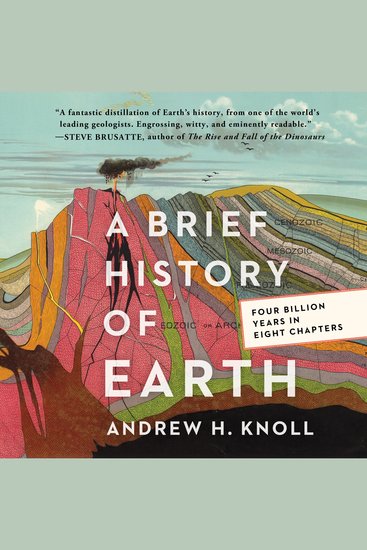
  • A Brief History of Earth - Four Billion Years in Eight Chapters - cover

    A Brief History of Earth - Four...

    Andrew H. Knoll

    • 0
    • 0
    • 0
    How well do you know the ground beneath your feet? A primer for every Earth resident, by Harvard’s acclaimed geologist. 
    “A sublime chronicle of our planet."" –Booklist, STARRED review 
    Odds are, where you’re standing was once cooking under a roiling sea of lava, crushed by a towering sheet of ice, rocked by a nearby meteor strike, or perhaps choked by poison gases, drowned beneath ocean, perched atop a mountain range, or roamed by fearsome monsters. Probably most or even all of the above.  
    The story of our home planet and the organisms spread across its surface is far more spectacular than any Hollywood blockbuster, filled with enough plot twists to rival a bestselling thriller. But only recently have we begun to piece together the whole mystery into a coherent narrative. Drawing on his decades of field research and up-to-the-minute understanding of the latest science, renowned geologist Andrew H. Knoll delivers a rigorous yet accessible biography of Earth, charting our home planet's epic 4.6 billion-year story. Placing twenty first-century climate change in deep context, A Brief History of Earth is an indispensable look at where we’ve been and where we’re going. 
    Supplemental enhancement PDF accompanies the audiobook.
    Show book
  • The Knowledge Gene - cover

    The Knowledge Gene

    Lynne Kelly

    • 0
    • 0
    • 0
    Over 500,000 years ago, a single gene mutated. It spread over time, becoming critical in the journey transforming our earliest ancestors into fully modern humans, capable of navigating the entire planet and beyond. Then just a few thousand years ago, humans gradually outsourced knowledge to writing, and we displaced art and music from the heart of learning. 
     
    This is the extraordinary story of the discovery of a supergene that makes us uniquely human. Dr Lynne Kelly recounts how a widespread congenital disorder was the critical clue she and her collaborators needed to identify the gene that has long eluded researchers into human cognition. 
     
    The knowledge gene supercharged our ability to learn and share knowledge with others, explaining the prodigious memories of Indigenous people the world over. The discovery of the knowledge gene unlocks many other puzzles too. It explains for the first time why humans are the only species to make art, offers new insights into the earliest music and storytelling, and into the cognitive strengths of neurodivergent people. 
     
    The Knowledge Gene shows that we can all access the full power of our memories, without giving up any of the advantages of writing and technology. The implications for learning and creativity at any age are profound.
    Show book
  • Beyond the Stars - Astronomy in the 21st Century - cover

    Beyond the Stars - Astronomy in...

    Ylia Callan

    • 0
    • 0
    • 0
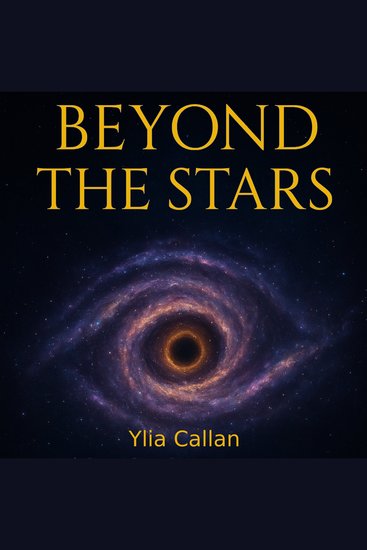
    This audiobook is narrated by an AI Voice. We live in a golden age of cosmic discovery. From Galileo’s first telescope to the James Webb Space Telescope, humanity’s view of the Universe has expanded beyond imagination. Beyond the Stars: Astronomy in the 21st Century takes readers on a breathtaking journey through the latest frontiers of space science - exploring new worlds, black holes, galaxies and the ultimate fate of the cosmos. 
     
    You’ll discover how planets form and die, how black holes reshape space and time, how dark energy accelerates the Universe’s expansion and how telescopes powered by AI and quantum technology are transforming what we can see. 
     
    From the icy moons of our Solar System to the search for life on distant exoplanets, this book reveals the interconnected story of matter, life and consciousness - and humanity’s unfolding role as the Universe becomes aware of itself. 
     
    Written for readers of all backgrounds, Beyond the Stars bridges the gap between scientific insight and cosmic wonder. It’s both a reference and a reflection - a guidebook for the 21st-century sky, and a meditation on what it means to be alive in a universe that continues to surprise us at every turn.
    Show book
  • Social Capital: Life online in the shadow of Ireland’s tech boom - cover

    Social Capital: Life online in...

    Aoife Barry

    • 0
    • 0
    • 0
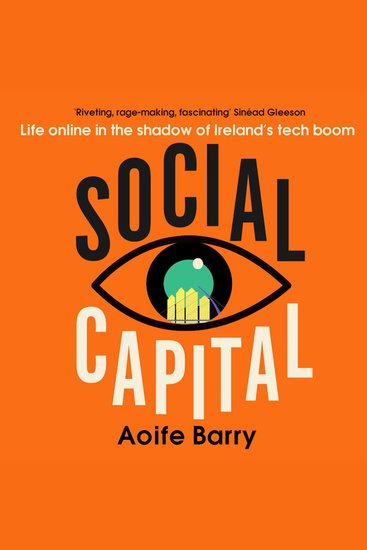
    A David and Goliath story about Ireland’s role as prime real estate for the world’s largest tech multinationals, and the considerable impact it has had on us as individuals. 
    At the start of the millennium, the Tech giants landed on Ireland’s shores. Dublin, once one of Europe’s poorest cities, became a beacon of Silicon Valley’s promise of progress and power. As the face of the capital was remade in the image of Big Tech, Irish society embraced technology like no other. Romantic Ireland was dead and gone: social media was here to stay. 
    In this provocative account, Aoife Barry explores the human cost of Ireland’s Faustian pact with Big Tech, from the local communities uprooted by Google to the traumatised moderators squirrelled in the capital’s pockets, keeping the internet safe at a terrible price. Unsettling, insightful, and wryly funny, she paints a portrait of a country addicted to the internet, refreshing the news, refreshing Twitter, scrolling and scrolling towards a feverish future. She turns an equally honest eye on her own life online, from her humble beginnings using dial-up in her parent’s kitchen to working for Ireland’s first digital-only newsroom, and asks what we bargain in exchange for life in the metaverse. 
    Social Capital is the coming of age story of Ireland 3.0: set against the backdrop of the tech revolution, it chronicles how we collapse the boundary between physical and virtual reality, and where we might go from here. 
    Barry's new book, Social Capital, is a popular science exploration into the world of computers and information technology. It's a top pick for anyone interested in the intersection of culture, economics, and the latest developments in the tech industry. 
    For fans of Bill Gifford (Ledyard), Britney Spears (The woman in me), Dolly Alderton (Everything I Know About Love), Bono (Surrender), and Ian H. Robertson (How Confidence Works). 
    HarperCollins 2023
    Show book
  • Third Ear - Reflections on the Art and Science of Listening - cover

    Third Ear - Reflections on the...

    Elizabeth Rosner

    • 0
    • 0
    • 0
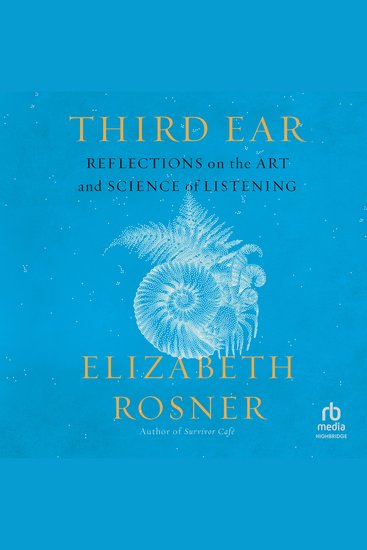
    This illuminating book weaves personal stories of a multilingual upbringing with the latest scientific breakthroughs in interspecies communication to show how the skill of deep listening enhances our curiosity and empathy toward the world around us 


    Third Ear braids together personal narrative with scholarly inquiry to examine the power of listening to build interpersonal empathy and social transformation. A daughter of Holocaust survivors, Rosner shares stories from growing up in a home where six languages were spoken to interrogate how psychotherapy, neurolinguistics, and creativity can illuminate the complex ways we are impacted by the sounds and silences of others. 


    Drawing on expertise from journalists, podcasters, performers, translators, acoustic biologists, spiritual leaders, composers, and educators, this hybrid text moves fluidly along a spectrum from molecular to global to reveal how third-ear listening can be a collective means for increased understanding and connection to the natural world.
    Show book
  • The Fox Shrew and You - How Brains Evolved - cover

    The Fox Shrew and You - How...

    Rogier B. Mars

    • 0
    • 0
    • 0
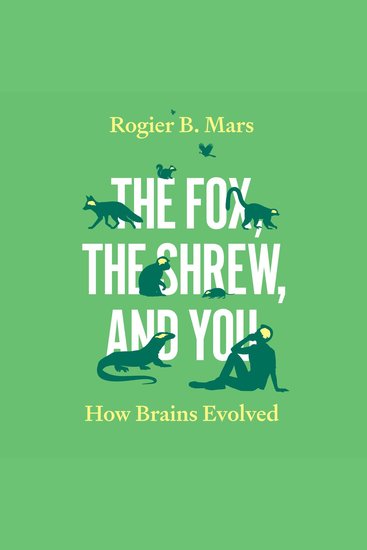
    A leading neuroscientist describes the long evolutionary process that led to the human brain. 
    Our human brain is both unique and similar to that of other species. The only way we can trace its evolution is by comparing it to the brains of animals alive today. In this book, leading neuroscientist Rogier Mars offers an engaging account of the evolution of the brain by exploring the brains and cognitive capacities of animals from the humble sea squirt to the socially minded fox and the tiny shrew. 
    By examining the challenges that different animals and their ancestors faced, Mars shows that we can understand what drove the evolution of their brains. Early vertebrates became predators of the sea; mammals evolved a complex neocortex to deal with foraging for high-energy food; and social primates adapted to contend with a fast-changing environment in which groups of individuals team up to get food. Over the course of a long evolutionary road, the ancestors of present-day animals and their descendants continually adapted to challenges, modifying their brains again and again. For us humans, this process gradually led to a brain that is capable of so much, from inventing language to traveling into space. 
    Mars leads listeners across eras and species, showing us how we resemble our animal cousins, how we differ from them, and how animals in one branch of the evolutionary tree did the hard evolutionary work of becoming human.
    Show book