¡Acompáñanos a viajar por el mundo de los libros!
Añadir este libro a la estantería
Grey
Escribe un nuevo comentario Default profile 50px
Grey
Suscríbete para leer el libro completo o lee las primeras páginas gratis.
All characters reduced
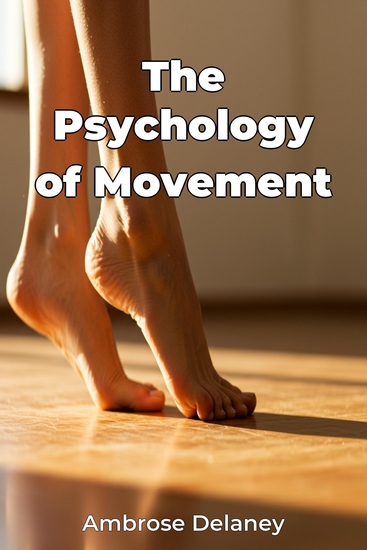
The Psychology of Movement - cover

The Psychology of Movement

Ambrose Delaney

Traductor A AI

Editorial: Publifye

  • 0
  • 0
  • 0

Sinopsis

"The Psychology of Movement" explores the powerful connection between physical movement, emotions, and self-expression. It reveals how dance and movement-based practices can profoundly impact our emotional well-being, confidence, and body image. The book emphasizes the embodied nature of emotion, suggesting that our feelings are not just mental states but are deeply intertwined with our physical selves.

 
Beginning with the historical context of dance, the book progresses to explore how movement shapes our cognitive and emotional processes. It examines how specific movements correlate with different emotions, offering insights into using dance as a language for expressing complex feelings.

 
Furthermore, it investigates the role of dance in fostering body positivity and enhancing self-esteem, ultimately demonstrating how movement can be integrated into various settings to promote emotional health and well-being.
Disponible desde: 24/02/2025.
Longitud de impresión: 86 páginas.


Otros libros que te pueden interesar

  • How to Be a Patriotic Christian - Love of Country as Love of Neighbor - cover

    How to Be a Patriotic Christian...

    Richard J. Mouw

    • 0
    • 0
    • 0
    What does it mean to love our country?
    Some Christians see loyalty to America as central to our faith and identity. Other Christians are skeptical that our nation warrants such devotion or attachment. But Richard Mouw encourages Christians to have a healthy sense of national peoplehood that promotes civic kinship and responsible citizenship. He navigates between Christian nationalism on one hand and cynicism about country on the other to avoid the perils of both idolatry and disengagement.
    Mouw grapples with sticky questions such as how to honor national holidays in church and the place of protests in forging a more perfect union. Placing love of country in the context of Christian love of neighbor, he sees patriotism as an expression of our heavenly citizenship and a call to help our country be a place where all people can thrive in peace.
    Mouw's winsome and wise reflections direct our patriotic affections toward the civic good of others within our churches and in our communities. This guide helps us travel together on a shared national journey toward liberty and justice for all.
    Ver libro
  • Fur Trade in North America The: The History and Legacy of the Competition and Conflicts over Furs - cover

    Fur Trade in North America The:...

    Editors Charles River

    • 0
    • 0
    • 0
    Though the importance of hats is easy to overlook, it was deadly serious in more ways than one, impacting the beavers and birds used to make fashionable hats, the environment of the region, and the people fighting over the resources. Beaver hats put the Dutch, British, and French in conflict, and later the Americans and Canadians. Plumed women’s hats were considerably less important historically, but they had a huge ecological impact. The beaver is a crucial species that once had an immense impact on the environment around it, while the short era concerning the plume trade for women’s hats drove a number of bird species to near-extinction. Indeed, several species have never recovered their numbers. The end product was fashionable men’s and women’s hats, sold primarily in Europe and the United States, but from raw materials to finished products, these hats linked tribal peoples, traders, hunters, trappers, merchants, and soldiers. Whether it crossed their minds or not, countless men and women in London and Paris were linked to the North American wilderness and all the violence it entailed. 
    The fur trade had its tensions, but for many years, traders and natives worked out their own systems, times, and traditions, allowing many different groups to interact and even compete without issues that led to war. Though native groups sometimes found themselves in conflicts based on long-standing rivalries or relations with the Europeans, most of the fur traders, the trappers, the Indians, and Hudson’s Bay Company officials lived peaceably. The great amount of distance from one another in this land of millions of miles likely helped to alleviate tensions. When a new vision for the Hudson’s Bay Company came about, one where settlers, not itinerants, would be responsible for the colony, the rules changed.
    Ver libro
  • The Gender Penalty - cover

    The Gender Penalty

    Anneli Blundell

    • 0
    • 0
    • 0
    * Feeling undervalued, overlooked or ignored at work?* Want practical strategies to get ahead?* Want to succeed as a woman without changing who you are?Work is a game originally developed by men, for men. Though the players have changed, the rules to succeed have not. When today’s talented women play like men, they often get punished for not being ‘ladylike’, and when they play like women, they can get punished for not being ‘leaderlike’. Welcome to the gender penalties that sideline women from the game of work.The Gender Penalty is a playbook for navigating career success in a male-dominated environment. If you want to stand out without stepping on toes, get what you want without compromising who you are, and make your mark without becoming someone you’re not, this book is for you.The gender penalties covered are:    Confidence – being seen as arrogant    Communication – being interrupted, talked over or ignored    Boasting – being expected to be humble    Strength – being seen as aggressive    Motherhood – being seen as uncommitted to workPacked with easy-to-follow practical strategies, insights, case studies and stories, (and a bunch of bonus resources) this book will help you not only overcome the gender penalties on the field, but also change the game of work for good – for yourself and other women.
    Ver libro
  • Violence - A Very Short Introduction - cover

    Violence - A Very Short...

    Philip Dwyer

    • 0
    • 0
    • 0
    Violence is part and parcel of human history and of human nature. It is one of our most distinctive traits, the one thing that all cultures and societies, across time, share in common. It has defined not only the ways in which individuals relate to each other, but also how collective entities and states have interacted with each other over the millennia. All societies are violent and all individuals have the capacity for violence. However, not all societies and not all individuals are equally violent, and nor does violence exist with the same intensity across cultures. 


    This Very Short Introduction examines the more visible, physical acts of violence—interpersonal, gendered, collective, religious, sexual, criminal, and political—in the modern world. It explores how violence in the pre-modern world was different from the modern world, and what is significant about those differences. It also discusses what violence is by examining understandings of the ideas, values, and cultural practices embedded in an act of violence, and considering acts of violence as the outcome of a process dependent on the cultural context in which they take place. Along the way Dwyer considers some core questions, asking whether violence is always 'bad', and if there are any limits to human violence? And, are we becoming more or less violent?
    Ver libro
  • Social and Environmental Issues - The Hidden Truths About Society's Impact and Change (5 in 1) - cover

    Social and Environmental Issues...

    Zoey Fraisers

    • 0
    • 0
    • 0
    In today’s rapidly changing world, social and environmental challenges have become more pressing than ever. This insightful book uncovers the shocking truths about the critical issues affecting our society and the planet, offering a closer look at five pivotal topics that often go unnoticed or misunderstood. 
    Delve into the truth behind economic inequality, exploring the factors that perpetuate wealth gaps and their far-reaching consequences on communities and economies worldwide. Learn about the urgent need for environmental conservation, and discover why our planet’s future is hanging in the balance, despite widespread awareness and efforts. 
    This book contains these titles: 
    - The Shocking Truth About Economic Inequality  
    - The Shocking Truth About Environmental Conservation  
    - The Shocking Truth About Animal Rights  
    - The Shocking Truth About Corporate Influence  
    - The Shocking Truth About Consumerism  
    Examine the animal rights movement and uncover the shocking realities surrounding animal exploitation, factory farming, and the ethical dilemmas we face in our treatment of animals. Explore the overwhelming influence of corporations and how their practices shape our world in ways that often go against public interest, driving a wedge between profit and the well-being of society. 
    Finally, uncover the dark side of consumerism—how overconsumption, waste, and the culture of constant buying have led to environmental degradation, social inequality, and personal dissatisfaction. 
    Packed with critical insights, research-backed evidence, and powerful truths, **Social and Environmental Issues** equips you with the knowledge to understand the forces shaping our world and how we can work together to create meaningful change.
    Ver libro
  • Self-Reliance - cover

    Self-Reliance

    Ralph Waldo Emerson

    • 0
    • 0
    • 0
    "Self-Reliance" is an 1841 essay written by American transcendentalist philosopher and essayist Ralph Waldo Emerson. It contains the most thorough statement of one of Emerson's recurrent themes: the need for each individual to avoid conformity and false consistency, and follow his own instincts and ideas. It is the source of one of Emerson's most famous quotations: "A foolish consistency is the hobgoblin of little minds, adored by little statesmen and philosophers and divines. 
    Emerson focuses on seemingly insignificant details explaining how life is "learning and forgetting and learning again".
    Ver libro