¡Acompáñanos a viajar por el mundo de los libros!
Añadir este libro a la estantería
Grey
Escribe un nuevo comentario Default profile 50px
Grey
Suscríbete para leer el libro completo o lee las primeras páginas gratis.
All characters reduced
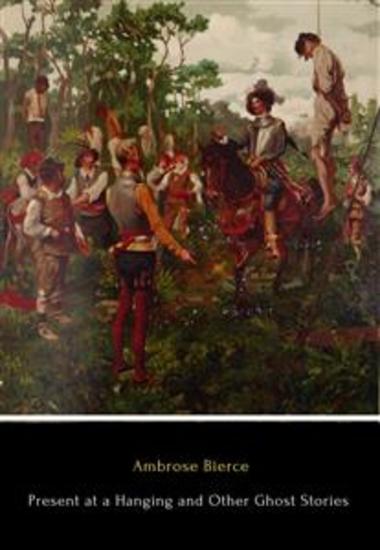
Present at a Hanging and Other Ghost Stories - cover

Present at a Hanging and Other Ghost Stories

Ambrose Bierce

Editorial: Carousel Books

  • 0
  • 0
  • 0

Sinopsis

Present at a Hanging and Other Ghost Stories is a classic collection of Ambrose Bierce (An Occurrence at Owl Creek Bridge) horror stories that contains the following titles: The Spook House, Present at a Hanging, and A Cold Greeting, among many others.
Disponible desde: 19/01/2024.

Otros libros que te pueden interesar

  • Arctic Sea - A Dan Lenson Novel - cover

    Arctic Sea - A Dan Lenson Novel

    David Poyer

    • 0
    • 0
    • 0
    In the aftermath of a world war with China, Admiral Dan Lenson is assigned to set up a US Navy base on the rugged North Slope of Alaska, in response to Russian seabed claims that reach nearly to the US coast. Yet the current administration seems oddly reluctant to confront Russian aggression. At the same time, the International Criminal Court is accusing Dan of a war crime. Back in Washington, Blair Titus is running Jim Yangerhans’s campaign for president, while Dan’s daughter Nan battles disease in a radiation-soaked Midwest. But when Moscow plans to test the Apocalyps, a nuclear-powered citykiller torpedo, in the Arctic Sea, Dan is sucked into a perilous covert mission. Will a barely victorious America survive dangerous new threats… both from without and within?
    Ver libro
  • Daughters of the Vicar - cover

    Daughters of the Vicar

    D H Lawrence

    • 0
    • 0
    • 0
    ‘Daughters of the Vicar’ was written by D H Lawrence in 1911. It was the eleventh of his sixty-seven short stories, all of which will be published individually in audio book format by the Blackthorn Press. Lawrence is at his best in this story, taken from the scenes of his childhood and based on characters he knew intimately. The main themes of the story are the class system which dominated society at the time and the pressures put on the young lovers who have to overcome it and the position of women in society who have nothing to offer but their bodies. For the sake of security and position one daughter makes a loveless marriage whilst the other daughter gives all that up for love.
    Ver libro
  • Christmas Formula - From their pens to your ears genius in every story - cover

    Christmas Formula - From their...

    Stella Benson

    • 0
    • 0
    • 0
    Stella Benson was born on the 6th January 1892 in Easthope, Shropshire to parents who were landed gentry. 
    Her early years involved frequent household moves which was difficult for the child as she suffered from ill-health.  Some of her early education was spent at schools in Germany and Switzerland and by 10 she had developed a lifelong habit of keeping a diary. 
    In the following years her parents separated, and she rarely saw her father. When she did, he encouraged to pause her writing until she had further experience and could better make sense of the world.  When he died, she learned he had been an alcoholic. 
    A winter spent in the West Indies provided material for her first novel ‘I Pose’ published the following year in 1915. 
    During the War years she became involved in the women's suffrage movement and dedicated time outside of writing to support the troops and help the poor. 
    In 1918 she decided to travel spending much time in California, where she also tutored at the University of California, and continued to write.  In China she met her future husband and after marrying in London, journeyed with him to his various Custom postings through Nanning, Beihai, and Hong Kong and the Far East. 
    The works continued to flow novels, short stories, travel essays all helped to build a deserved and burgeoning reputation. 
    Although her works are now in the forgotten and neglected department her writing style, characters, and narratives more than capably demonstrate her obvious talents.   
    Stella Benson died of pneumonia on the 7th December 1933, at Hạ Long in the Vietnamese province of Tonkin.  She was 40.
    Ver libro
  • Twenty-Six Men and a Girl - From their pens to your ears genius in every story - cover

    Twenty-Six Men and a Girl - From...

    Maxim Gorky

    • 0
    • 0
    • 0
    Alexei Maximovich Peshkov was born on 28th March 1868, in Nizhny Novgorod, Russia. 
    Better known as Maxim Gorky he was orphaned at 11 and ran away from home at 12.  At 19 he had already attempted suicide and thereafter travelled, by foot, across the Russian Empire for 5 years. 
    His first book ‘Essays & Stories’ in 1898 was a sensation and so began a long career as an author of short stories, novels and plays.  Gorky saw writing as a moral and political act that would help to change the unjust world around him.  He was an ardent early advocate of the emerging Marxist movement and publicly opposed the Tsarist regime leading several times to his arrest.  
    In 1904 he began his own theatre but the censor banned every play and Gorky was forced to abandon the project. 
    But Gorky was a financially successful author, editor, and playwright and gave monies to political parties as well as for civil rights and social reform.  The brutal shooting of workers, which set in motion the Revolution of 1905, pushed Gorky more decisively toward radical solutions.  
    In 1906 he went to the United States to raise funds for the Bolsheviks. Those experiences including a scandal over travelling with his lover and not his wife deepened his contempt for the ‘bourgeois soul.’ 
    Gorky now moved to Capri in Italy, both for health reasons and to escape the increasingly repressive times in Russia.  
    An amnesty for the 300th anniversary of the Romanov dynasty saw him return to Russia in 1914. His politics remained close to the Bolshevik cause.  But soon, after the 1918 revolution, his essays referred to Lenin as a tyrant for his senseless arrests and repression.  He was soon appealing to the outside world for food aid after the catastrophic crop failure. 
    In October 1921 Gorky returned to Italy, now in Fascist hands, and settled in Sorrento until 1932.  His health worsened with the onset of tuberculosis. 
    He wrote several successful books there but now decided to find an understanding with the communist regime. Stalin invited him home and his return was hailed as a major propaganda victory.  He was decorated with the Order of Lenin, and a province, a park, and various streets re-named in his honour. 
    But he had his faults too.  In 1933, Gorky co-edited a book on the White Sea-Baltic Canal and denied even a single prisoner died during its construction, but thousands had. As well, knowing that some Nazis were homosexual, a phrase was attributed to him that said ‘exterminate all homosexuals and fascism will vanish’.  Although he was himself was quoting another he was decidedly homophobic. 
    With the increase of Stalinist repression in 1935 Gorky was placed under unannounced house arrest. 
    Maxim Gorky died on the 18th June 1936 from pneumonia.  He was 68. 
    Stalin and Molotov were among those who carried Gorky's urn of ashes at his funeral.
    Ver libro
  • Wintry Peacock - cover

    Wintry Peacock

    D H Lawrence

    • 0
    • 0
    • 0
    'Wintry Peacock' is, on the surface, a tale of misdirected love or even irresponsible love, the relationship between the wife and the peacock being the most strange but it is the conspiracy of the two men in the story to prevent the truth coming out about the husband's love child that is most disturbing. The innocent are punished and the guilty get away with their sins and the author goes laughing down the hill at the end of the story.
    Ver libro
  • A Chameleon - From their pens to your ears genius in every story - cover

    A Chameleon - From their pens to...

    Anton Chekhov

    • 0
    • 0
    • 0
    Anton Pavlovich Chekhov was born on 29th January 1860 in Taganrog, on the south coast of Russia.  
    His family life was difficult; his father was strict and over-bearing but his mother was a passionate story-teller, a subject Chekhov warmed to. As he later said; ‘our talents we got from our father, but our soul from our mother’.  
    At school Chekhov was distinctly average. At 16 his father mis-managed his finances and was declared bankrupt. His family fled to Moscow. Chekhov remained and eked out a living by various means, including writing and selling short sketches to newspapers, to finish his schooling. That completed and with a scholarship to Moscow University obtained he rejoined his family. 
    He was able to help support them by selling satirical sketches and vignettes of Russian lifestyles and gradually obtained further commissions. In 1884, he qualified as a physician and, although it earned him little, he often treated the poor for free, he was fond of saying ‘Medicine is my lawful wife, and literature is my mistress.’ 
    His own health was now an issue as he began to cough up blood, a symptom of tuberculosis.  Despite this his writing success enabled him to move the family into more comfortable accommodation.  
    Chekhov wrote over 500 short stories which included many, many classics including ‘The Kiss’ and ‘The Lady with a Dog’.  His collection ‘At Dusk’ won him the coveted Pushkin Prize when was only 26.  
    He was also a major playwright beginning with the huge success of ‘Ivanov’ in 1887.   
    In 1892 Chekhov bought a country estate north of Moscow. Here his medical skills and money helped the peasants tackle outbreaks of cholera and bouts of famine. He also built three schools, a fire station and a clinic.  It left him with less time for writing but the interactions with real people gained him detailed knowledge about the peasantry and their living conditions for his stories.  
    His most famous work, ‘The Seagull’ was received disastrously at its premiere in St Petersburg. It was later restaged in Moscow to highlight its psychological aspects and was a huge success. It led to ‘Uncle Vanya’, ‘The Three Sisters’ and ‘The Cherry Orchard’.  
    Chekhov suffered a major lung hemorrhage in 1897 while visiting Moscow. A formal diagnosis confirmed tuberculosis and the doctors ordered changes to his lifestyle.  
    Despite a dread of weddings the elusive literary bachelor quietly married the actress Olga Knipper, whom he had met at rehearsals for ‘The Seagull’, on 25th May 1901. 
    By May 1904 with his tuberculosis worsening and death imminent he set off for the German town of Badenweiler writing cheerful, witty letters to his family and assuring them his health was improving.  
    On 15th July 1904 Anton Chekhov died at Badenweiler.  He was 44.
    Ver libro