¡Acompáñanos a viajar por el mundo de los libros!
Añadir este libro a la estantería
Grey
Escribe un nuevo comentario Default profile 50px
Grey
Suscríbete para leer el libro completo o lee las primeras páginas gratis.
All characters reduced
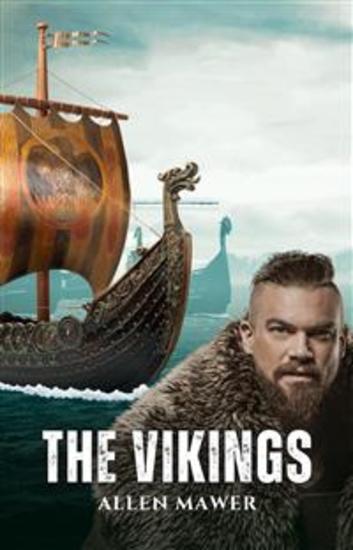
The Vikings - cover

The Vikings

Allen Mawer

Editorial: Cervantes Digital

  • 0
  • 0
  • 0

Sinopsis

"The Vikings" by A. Mawer is a captivating exploration of one of history's most legendary civilizations. With meticulous detail and vivid prose, Mawer paints a compelling portrait of the fearless Norse warriors who roamed the seas and conquered distant lands. From the icy fjords of Scandinavia to the shores of distant shores, readers are transported back in time to an era of epic voyages, fierce battles, and legendary sagas.

Through Mawer's expert storytelling, readers are immersed in the rich tapestry of Viking culture, from their intricate ships and weaponry to their complex social structures and religious beliefs. With each page, the reader is drawn deeper into the world of the Vikings, experiencing firsthand the thrill of discovery and the adrenaline of battle.

But "The Vikings" is more than just a chronicle of conquest—it's a journey into the hearts and minds of these enigmatic warriors. Mawer delves into the motivations and aspirations of the Viking people, shedding light on their customs, traditions, and values. As the story unfolds, readers come to understand the complex interplay of power, honor, and loyalty that drove these fierce warriors to achieve greatness.

With its gripping narrative and rich historical detail, "The Vikings" is a must-read for anyone fascinated by the tumultuous era of the Norsemen. Whether you're a history buff or simply love a good adventure story, A. Mawer's masterpiece will transport you to a world of epic deeds and legendary heroes, where the spirit of the Vikings lives on.
Disponible desde: 20/03/2024.

Otros libros que te pueden interesar

  • Soundseeing Rome - audioguide Rome - cover

    Soundseeing Rome - audioguide Rome

    Sander Hamburger, : Wendy Caris

    • 0
    • 0
    • 0
     SoundSeeing Rome 
    Experience Rome with your personal audio guide. Experience ancient Rome with your personal SoundSeeing audioguide. SoundSeeing gives you extensive information about this centuries-old monumental city's 15 greatest places of interest. Listen to the exciting and authoritative description of the attractions on your MP3 or CD player. You are presented with a fascinating explanation complete with sound effects and music. The stories provide you with detailed cultural, historical, and architectural information. You can listen to SoundSeeing Rome at your own pace, whenever you like. So listen and let yourself be carried away by this unique listening guide to Rome. You can listen to the SoundSeeing high points, listed below, while you are at each location.
    Ver libro
  • Endangered Eating - America's Vanishing Foods - cover

    Endangered Eating - America's...

    Sarah Lohman

    • 0
    • 0
    • 0
    Apples, a common New England crop, have been called the United States' most endangered food. The iconic Texas Longhorn cattle is categorized at critical risk for extinction. Unique date palms, found nowhere else on the planet, grow in California’s Coachella Valley, but the family farms that caretake them are shutting down. Apples, cattle, dates?these are foods that carry significant cultural weight. But they’re disappearing. In Endangered Eating, culinary historian Sarah Lohman draws inspiration from the Ark of Taste, a list compiled by Slow Food International that catalogues important regional foods. She travels the country learning about the distinct ingredients at risk of being lost: in Hawaii, she learns the stories behind heirloom sugarcane; in the Navajo Nation, she assists in the traditional butchering of a Navajo Churro ram; in the Upper Midwest, she harvests wild rice; in the Pacific Northwest, she spends a day reefnet fishing; on the Gulf Coast, she devours gumbo made with filé powder; in the Lowcountry of South Carolina, she tastes America’s oldest peanut. She learns from those who love these rare ingredients: shepherds, fishers, farmers, scientists, historians, and activists. And she tries her hand at raising these crops and preparing these dishes. Animated by stories yet grounded in research, Endangered Eating gives listeners the tools to support community organizations and producers that work to preserve local culinary traditions and rare, cherished foods.
    Ver libro
  • Learning Life Lessons Through Teaching - cover

    Learning Life Lessons Through...

    Shayla Dowe

    • 0
    • 0
    • 0
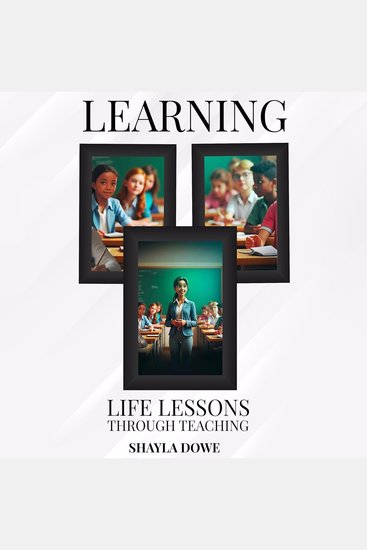
    As a teacher, you pour your heart and soul into guiding the next generation. But who is caring for you? In this vulnerable and inspiring book, educator Shayla Dowe shares hard-won wisdom on the essential qualities that transform good teachers into great ones. From her mother’s quiet strength to the redemptive journey of a struggling student, Dowe’s personal experiences illustrate the power of patience, the rewards of resilience, and the non-negotiable need for self-care. By turns heartwarming and challenging, this book offers a roadmap for nurturing students at their own pace, with kindness and empathy; persevering through setbacks and finding joy in the small victories; and prioritizing your own well-being to avoid burnout and show up as your best self. Teaching is a calling that demands our whole selves. But with Dowe as your guide, you’ll learn to cultivate the essential qualities that allow you to make a lasting impact - not just on your students, but on your own life. Whether you’re a veteran educator or just starting your teaching journey, this book will inspire you to be the transformative force your students need. Prepare to be encouraged, convicted, and empowered to rise to the highest calling of your profession.
    Ver libro
  • Creative Evolution - cover

    Creative Evolution

    Henri Bergson

    • 0
    • 0
    • 0
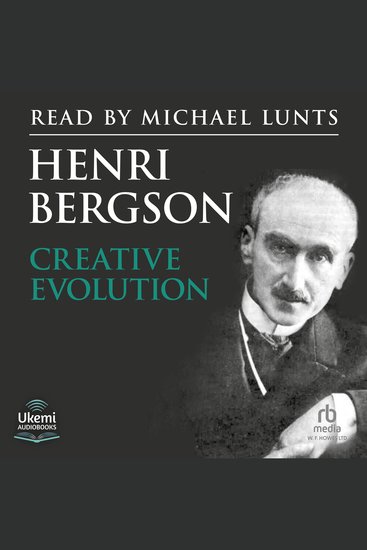
    Henri Bergson’s highly influential book, ‘Creative Evolution’ (‘Evolution Creatrice’, 1907) established a theory of evolution - called ‘Creative Evolution Theory’ - which gained a considerable following in the first half of the 20th Century. It also helped the author to win the Nobel Prize in 1927 for his work investigating the origins of biological information and divergence in the evolutionary process.  
     
    In this work, Bergson seeks an alternative explanation as to how new forms of life emerge compared to those prevailing at the time. This included both the ‘mechanistic’ or deterministic explanations of biological science on the one hand, and on the other the ‘finalist’ or strictly teleological explanation of those who believed in the hand of a ‘Creator’ or God, coordinating life in a divine plan. 
     
    Creative Evolution proposes a third explanation in what Bergson calls élan vital’ or ‘vital impetus’, a force that infuses all matter and drives it forward into an ever-changing and infinite variety of living forms. This appears as a vital impetus that can also be related to humanity’s own creative life force. Bergson’s book builds on his ‘Theory of Time’ as set forth in works such as ‘Matter and Memory’ and ‘Time and Free Will’.  In these works, and in the present volume, Bergson sees continuous ‘duration’ as real time, as opposed to the way in which time is divided up into measured units by the ‘organising’ mind of science. 
     
    Life, as we really experience it, is subject to constant change and our tendency to explain evolutionary change by looking only at ‘ends’ achieved rather than the processes by which they emerge, divorces us from the life force itself.  
     
    Instead, Bergson feels we need to reengage with our instincts as well as with our intelligence in order to understand the evolutionary process, as both co-exist to some extent within us, all forms of life having a common origin in that instinctual, innate knowledge of simpler life forms. Though these may be unconscious or semi-conscious, they are, in Bergson’s view, much more in touch with the ever-changing nature of real time than the analytical and rational knowledge of our species 
     
    As he writes:  “Our thought, in its purely logical form, is incapable of presenting the true nature of life, the full meaning of the evolutionary movement. Created by life, in definite circumstances, to act on definite things, how can it embrace life, of which it is only an emanation or an aspect?”  
     
    It is to attempt an answer to this question that ‘Creative Evolution’ directs its attention.
    Ver libro
  • How Did Life End Up With Us? - The Secrets of Life: From Big Bang to Trump - cover

    How Did Life End Up With Us? -...

    Ss O'Connor

    • 0
    • 0
    • 0
    Why does the gene behave like a hedge fund manager? Why are mutations like a gambling scam? Why does nothing ever become top dog in life and win forever? Humans only arrived after 99.99% of the time there’s been life on earth. So what was here before us? And how did these species, and the evolutionary process that created them, end up with the unpromising creatures that were our ancestors?In this, the first book of The Secrets of Life quartet, SS O’Connor brings his outsider’s, questioning eye to reveal the great forces that lie behind life: from the laws that arose with Big Bang, through to the ‘decisions’ that organisms make to determine their chances.But how did everything come about? And what made some life forms succeed - while others would join the 99.9% of species that appeared, yet went on to become extinct? The story goes right back to our single-celled forebears - the only things that were on the planet for 80% of its existence, and then continues as it lays out the ways that successive transmissions built increasing complexity, and how the resulting species found their synergistic ways of coexisting.  In an easy-going, conversational style, O'Connor explains in lay-man's language how the gene is the great conductor of life’s orchestra, how it helped millions of life forms to refine themselves - yet why it also sees failure, death and extinctions as opportunities rather than disasters.  Last, the book tells the story of the men who unpicked the mysteries, what they meant by fitness and ‘the fittest’, but why they continued to be baffled by organisms that broke the rules by helping each other. Why would some even choose to be sterile when producing the next generation was the overriding compulsion in life? And why would the answer to this question explain why altruism is the proof for the ‘gene-based theory of evolution’ - and why cooperation was to become the strongest force in life?
    Ver libro
  • Sui Dynasty - Reunification and the Grand Canal Legacy - cover

    Sui Dynasty - Reunification and...

    Rolf Hedger

    • 0
    • 0
    • 0
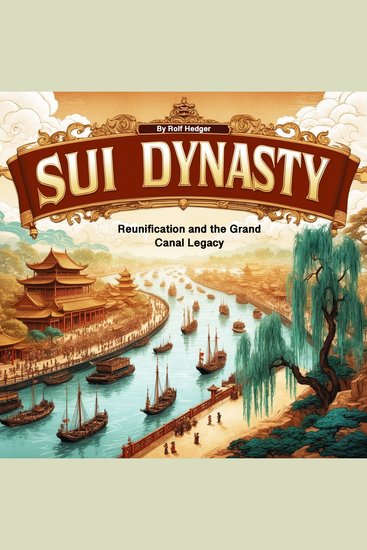
    The period before the rise of the Sui Dynasty was marked by fragmentation and instability, as China remained divided between the Northern and Southern Dynasties. This era, which lasted from the late 4th century to the late 6th century, was characterized by constant warfare, shifting alliances, and a deep cultural divide between the north and south. The fall of this system set the stage for the reunification of China under the Sui Dynasty. 
    The north was ruled by a succession of non-Han Chinese states, often founded by nomadic groups that had migrated into China during the decline of the Western Jin Dynasty. The Northern Wei, established by the Tuoba clan of the Xianbei people, was the most powerful of these states. Over time, the rulers of the Northern Wei adopted Chinese customs, Confucian governance, and Buddhism, which helped stabilize their rule. However, internal struggles, court intrigue, and opposition from powerful aristocratic families led to the dynasty’s division into the Eastern and Western Wei, eventually giving rise to the Northern Qi and Northern Zhou dynasties. 
    In contrast, the Southern Dynasties were ruled by Han Chinese elites who maintained a more traditional Chinese way of life. The Eastern Jin, followed by the Liu Song, Southern Qi, Liang, and Chen dynasties, governed the southern regions, centered around the lower Yangtze River. These dynasties often suffered from weak central control, as powerful noble families exerted significant influence over the government. While the south was culturally rich and economically prosperous, political instability and frequent coups weakened its ability to resist northern invasions.
    Ver libro