Junte-se a nós em uma viagem ao mundo dos livros!
Adicionar este livro à prateleira
Grey
Deixe um novo comentário Default profile 50px
Grey
Assine para ler o livro completo ou leia as primeiras páginas de graça!
All characters reduced
Home Life in Colonial Days - Enriched edition - cover
LER

Home Life in Colonial Days - Enriched edition

Alice Morse Earle

Editora: DigiCat

  • 0
  • 0
  • 0

Sinopse

In "Home Life in Colonial Days," Alice Morse Earle meticulously reconstructs the domestic experiences of American colonists, providing a rich tapestry of daily life during a pivotal era. Through her vivid prose and extensive research, Earle illuminates practices surrounding food, clothing, and social customs, casting a lens on the intersection of history and the intimate sphere of the home. Her work reflects a blend of historical narrative and cultural analysis, emphasizing the significance of domesticity in shaping colonial identity. Furthermore, Earle employs primary sources, such as diaries and letters, to evoke an authentic sense of time and place while exploring the social structures and familial bonds of the era. Alice Morse Earle, an influential historian and author, dedicated her career to illuminating the minutiae of everyday life in early America. Her fascination with the past was rooted in her own experiences as a housewife and mother, coupled with an academic vigor that propelled her to unearth the stories often overshadowed by grander historical events. Earle's background in literature and history enabled her to approach her subjects with empathy and insight, fostering a deep connection between modern readers and the colonial experience. "Home Life in Colonial Days" is highly recommended for readers interested in American history, women's studies, and cultural anthropology. Earle's insightful observations not only enrich our understanding of the past but also invite contemporary reflections on how domestic life shapes societal norms. This book is essential for anyone seeking to comprehend the complexities of colonial American life and its lasting legacy.

In this enriched edition, we have carefully created added value for your reading experience:
- A succinct Introduction situates the work's timeless appeal and themes.
- The Synopsis outlines the central plot, highlighting key developments without spoiling critical twists.
- A detailed Historical Context immerses you in the era's events and influences that shaped the writing.
- A thorough Analysis dissects symbols, motifs, and character arcs to unearth underlying meanings.
- Reflection questions prompt you to engage personally with the work's messages, connecting them to modern life.
- Hand‐picked Memorable Quotes shine a spotlight on moments of literary brilliance.
- Interactive footnotes clarify unusual references, historical allusions, and archaic phrases for an effortless, more informed read.
Disponível desde: 15/08/2022.
Comprimento de impressão: 315 páginas.


Outros livros que poderiam interessá-lo

  • Studies in Pessimism - cover

    Studies in Pessimism

    Arthur Schopenhauer

    • 0
    • 0
    • 0
    "Studies in Pessimism" is a collection of philosophical essays by Arthur Schopenhauer, delving into his views on the nature of human existence, suffering, and the inevitability of pain and adversity in life. Schopenhauer explores the futility of human desires, the limitations of human intellect, and the relentless influence of the will on our actions. He presents a pessimistic outlook on the human condition, arguing that striving for inner peace through the renunciation of desires is the key to mitigating suffering and finding solace in a seemingly indifferent world. Read in English, unabridged.
    Ver livro
  • Technology in Education - Enhancing Learnings Experiences - cover

    Technology in Education -...

    Craig Dames

    • 0
    • 0
    • 0
    Technology has played a crucial role in transforming education, evolving from simple tools like chalk and slates to modern digital platforms that facilitate learning in new and dynamic ways. As society has advanced, so has the need for more innovative teaching methods that enhance students’ understanding, engagement, and accessibility to knowledge. The journey of educational technology is a testament to human creativity and the desire to improve learning experiences across generations. 
    In the early stages of formal education, teaching methods relied heavily on oral instruction, handwritten texts, and rudimentary visual aids. With the invention of the printing press in the 15th century, books became more widely available, revolutionizing how information was shared and retained. This breakthrough allowed for the standardization of curricula and the spread of literacy on a much larger scale. Over time, blackboards and chalk became staple tools in classrooms, offering a way for teachers to visually illustrate lessons. 
    The 20th century marked a significant shift in educational technology. The introduction of radio and television into learning environments allowed educators to reach wider audiences, particularly in remote areas. In the 1960s and 1970s, computers began appearing in schools, though their use was initially limited to basic programming and computational tasks. As the digital revolution progressed, personal computers became more accessible, paving the way for multimedia presentations, digital research, and interactive learning experiences.
    Ver livro
  • Kaale Hath Gorey Hath - cover

    Kaale Hath Gorey Hath

    Balbir Sandha Dadwindi

    • 0
    • 0
    • 0
    Kaale Hath Gorey Hath by Balbir Sandha Dadwindi is a collection of 15 unique chapters portraying the real-life struggles of middle-class and hardworking individuals. Through themes like greed, caste discrimination, and social injustice, the book reflects the emotional and social realities that listeners can deeply relate to.
    Ver livro
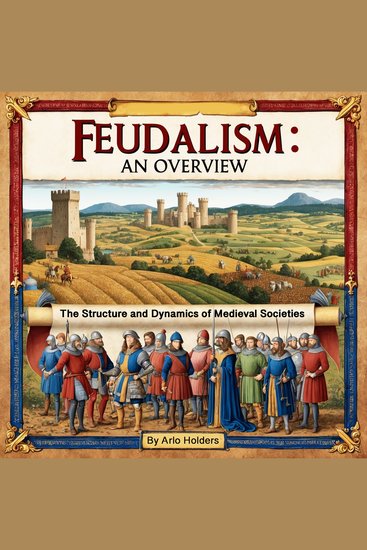
  • Feudalism: An Overview - The Structure and Dynamics of Medieval Societies - cover

    Feudalism: An Overview - The...

    Arlo Holders

    • 0
    • 0
    • 0
    Feudalism is often regarded as one of the defining features of medieval European society, deeply influencing the social, political, and economic structures from the 9th to the 15th century. At its core, feudalism is a system of reciprocal relationships based on land ownership, loyalty, and service. It is a hierarchical structure where power and land are distributed among various levels of society, creating an intricate web of obligations and rights. Understanding the foundations of feudalism requires examining its emergence, the key concepts involved, and its significance in shaping medieval societies. 
    The origins of feudalism can be traced back to the collapse of the Western Roman Empire in the 5th century. With the fall of centralized Roman authority, European territories faced instability and frequent invasions, notably from the Vikings, Magyars, and Muslims. As local rulers sought to protect their lands and people, they established systems of landholding that were based on personal loyalty rather than the centralized control of a king or emperor. This shift marked the beginning of feudalism. The need for defense and local governance led to a system where lords granted land, known as fiefs, to vassals in exchange for military service or other forms of support. The vassals, in turn, would offer protection and land to lower-ranking individuals, establishing a hierarchical pyramid of power. 
    At the heart of feudalism lies the concept of mutual obligations. Lords, who were often nobility or monarchs, provided land to their vassals, who were typically knights or lesser nobles. In return, vassals pledged their loyalty, military service, and counsel to their lords.
    Ver livro
  • Body Safety for Young Children - Empowering Caring Adults - cover

    Body Safety for Young Children -...

    Kimberly King

    • 0
    • 0
    • 0
    Talking about sexual abuse is the key to preventing it. Avoiding talking about body safety and sexual-abuse prevention is what abusers want. Body Safety for Young Children: Empowering Caring Adults gives parents, guardians, caregivers, and teachers the information, resources, tools, and helpful real-life tips to help keep children safe. This book takes the fear out of sexual-abuse prevention and makes it approachable by making a partnership between parents and teachers.  
    Ver livro
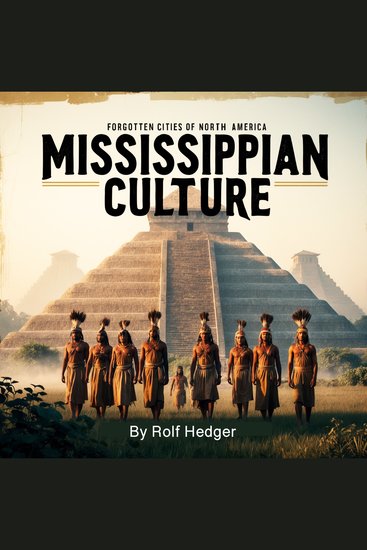
  • Mississippian Culture - Forgotten Cities of North America - cover

    Mississippian Culture -...

    Rolf Hedger

    • 0
    • 0
    • 0
    The Mississippian culture, a sophisticated and influential civilization, thrived in the southeastern United States from approximately 800 CE to 1600 CE. This culture, named after the Mississippi River, was centered around the river valleys and floodplains of the American Midwest, particularly in areas that are now parts of modern-day Illinois, Missouri, Arkansas, and Mississippi. It is best known for its massive earthworks, especially mounds, which were used for both ceremonial and burial purposes. The Mississippian people developed a complex society that was marked by large-scale agriculture, intricate trade networks, and powerful political and religious institutions. 
    The origins of the Mississippian culture can be traced back to the earlier Woodland period, during which smaller villages and simple mound-building practices began to emerge. By around 800 CE, however, the Mississippian culture had fully developed, distinguished by its highly organized cities, monumental architecture, and wide-reaching trade connections. The Mississippians were expert farmers, cultivating staple crops such as maize, beans, and squash, which allowed their settlements to flourish and grow in both size and complexity. 
    One of the most notable features of the Mississippian culture was its social and political structure. The culture was organized around large chiefdoms, with powerful leaders who held both political and religious authority. These chiefs often resided in large, fortified towns that served as hubs of trade, governance, and religious activity. The largest and most famous of these urban centers was Cahokia, located near present-day St. Louis, Missouri. At its height, Cahokia had a population of over 10,000 people, making it one of the largest urban centers in pre-Columbian North America.
    Ver livro