¡Acompáñanos a viajar por el mundo de los libros!
Añadir este libro a la estantería
Grey
Escribe un nuevo comentario Default profile 50px
Grey
Suscríbete para leer el libro completo o lee las primeras páginas gratis.
All characters reduced
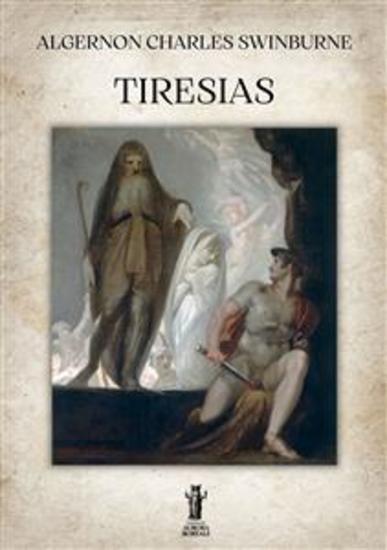
Tiresias - cover

Tiresias

Algernon Charles Swinburne

Editorial: Edizioni Aurora Boreale

  • 0
  • 0
  • 0

Sinopsis

Algernon Charles Swinburne (1837-1909) was a British poet, writer and playwright of the Victorian era. Active in the aesthetic circle, romantic and then decadent, he met Oscar Wilde and other famous intellectuals and artists of the same environment, attending the Pre-Raphaelite Brotherhood and becoming a friend of the poet, artist and initiate Dante Gabriel Rossetti. Eccentric personality, with a strong taste for artistic provocation, inspired by writers such as the Marquis de Sade, Percy Bysshe Shelley and Charles Baudelaire, his poetry was very controversial, due to its themes (sadomasochism, suicide, lesbianism, irreligiosity); his lyrics are also characterized by original versification solutions, by the cult of paganism and the idealized Middle Ages, and of absolute freedom. From 1903 to 1909 he was nominated for the Nobel Prize for Literature. With Alfred Edward Housman, Robert Browning, Alfred Tennyson, Ernest Dowson and William Butler Yeats, he is considered one of the most representative lyric poets of Victorian literature. He died in Putney (London) on April 10, 1909.Swinburne’s literary output is vast and includes poems, plays, songs, novels, short stories and essays on literary criticism. Tiresias, an extraordinary poem with a mythological and initiatory subject, dedicated to the great prophet and blind soothsayer of ancient Greece, was included in 1871 by Swinburne in his book Songs before Sunrise, dedicated to the Italian revolutionary and Freemason Giuseppe Mazzini.
Disponible desde: 14/05/2023.

Otros libros que te pueden interesar

  • Life’s a Mango - cover

    Life’s a Mango

    Jen Compton

    • 0
    • 0
    • 0
    FROM MUNDANE TO MAGIC.A keen awareness of this present moment, and real gratitude for it, will bring you ever closer to the inner joy you long for. In Life's a Mango, Jen Compton applies universal ideas to remind us that there's always a kinder way of dealing with life's situations.The Sioux Indians said that the longest journey we will ever take is from the head to the heart. Jen's book is a travel companion to help you get there – in a soothing, inspiring way.Using parts of the mango as metaphors – the skin, the brown bits, the flesh and the seed – Jen's inspirational poetry sheds a more positive, compassionate light on life. It will make you smile, reflect, and ultimately it will help to bring our the best version of you!Everyone from five-year-olds to centenarians will find guidance, truth and hope here. Open this book at any page and be instantly uplifted by a feel-good message.Now with mandalas to colour and journal pages, this book is a very special edition to your bedside or coffee table collection.
    Ver libro
  • The Letters of Jane Austen - cover

    The Letters of Jane Austen

    Jane Austen

    • 0
    • 0
    • 0
    Jane Austen’s letters afford a unique insight into the daily life of the novelist: intimate and gossipy, observant and informative–they read much like the novels themselves. They bring alive her family and friends, her surroundings and contemporary events, all with a freshness unparalleled in modern biographies. Most importantly, we recognize the unmistakable voice of the author of such novels as Pride and Prejudice and Emma. We see the shift in her writing from witty and amusing descriptions of the social life of town and country, to a thoughtful and constructive tone while writing about the business of literary composition. 
      
    Austen’s personal correspondence has stirred up controversy since her untimely death in 1817 at age 41. The next year her brother Henry Austen wrote in the ‘Biographical Notice of the Author’ included with the publication of her novels Northanger Abbey and Persuasion that she ‘never dispatched a note or a letter unworthy of publication’. Years later, a niece Caroline Austen did not agree, ‘there is nothing in those letters which I have seen that would be acceptable to the public.’ In comparison to her published works, the letters do dwell upon ‘little matters’ of domestic life in the county, but to the patient reader we begin to understand Austen’s life and experiences beyond the minutia and realize through her clever descriptions and acerbic observations how this simple parson’s daughter became the author of novels that are so valued and cherished close to 200 years after their publication. 
      
    The author gained far more status after her death, and her six fulllength novels have rarely been out of print. A significant transition in her posthumous reputation occurred in 1833, when her novels were republished in Richard Bentley's Standard Novels series, illustrated by Ferdinand Pickering, and sold as a set.  
     
    Ver libro
  • Black Milk - cover

    Black Milk

    Vassily Sigarev

    • 0
    • 0
    • 0
    A worm's eye view of post-Communist Russia, from the Siberian-born author of Plasticine.
    A remote railway station in the 'Boundless Motherland'. Stranded there are a young spiv, selling overpriced toasters to the local peasantry, and his heavily pregnant wife. They don't like the place, they don't like the people, and they don't much like each other...
    Vassily Sigarev's play Black Milk, in this English translation by Sasha Dugdale, was first performed at the Royal Court Theatre, London, in 2003.
    Ver libro
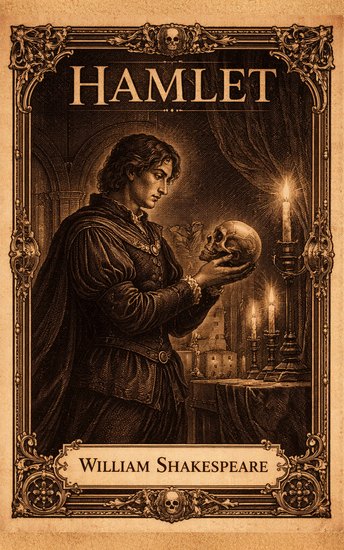
  • Hamlet - cover

    Hamlet

    William Shakespeare

    • 0
    • 0
    • 0
    Hamlet by William Shakespeare is one of the most profound and influential tragedies ever written—a haunting exploration of revenge, madness, mortality, and the complexities of the human soul. Set in the royal court of Denmark, this timeless drama follows Prince Hamlet as he grapples with grief, betrayal, and a moral dilemma that will shape his destiny.
    
    The story begins with the sudden death of Hamlet's father, the King, and the swift remarriage of his mother, Queen Gertrude, to his uncle Claudius. When the ghost of the deceased king appears, revealing that he was murdered by Claudius, Hamlet is thrust into a storm of anguish and uncertainty. Charged with avenging his father's death, he struggles to reconcile his duty with his conscience, questioning not only the truth of the apparition but also the righteousness of revenge itself.
    
    Hamlet's internal conflict lies at the heart of the play. Intelligent, reflective, and deeply sensitive, he wrestles with existential questions about life, death, and the nature of action. His famous soliloquies—most notably the meditation on whether "to be or not to be"—reveal a mind torn between decisive action and paralyzing doubt. As he feigns madness to uncover the truth, the line between performance and reality begins to blur, leading to tragic consequences for those around him.
    
    Shakespeare surrounds Hamlet with richly drawn characters, each contributing to the unfolding tragedy. Ophelia, caught between loyalty and love, becomes a poignant symbol of innocence shattered by corruption. Polonius, Laertes, and Horatio each reflect different responses to honor and loss. Meanwhile, Claudius emerges as a complex antagonist—ambitious and calculating, yet burdened by guilt.
    
    Through poetic language and psychological depth, Hamlet examines themes of betrayal, loyalty, appearance versus reality, moral corruption, and the inevitability of death. The play delves into the fragility of human existence and the struggle to find meaning in a world marked by uncertainty and decay.
    
    Both intimate and epic, philosophical and dramatic, Hamlet continues to resonate with readers and audiences across centuries. Its exploration of conscience, identity, and the consequences of hesitation ensures its place as a cornerstone of world literature—a tragedy that confronts the darkest questions of the human condition with unmatched intensity and artistry.
    Ver libro
  • The Presence of Love - cover

    The Presence of Love

    Samuel Taylor Coleridge

    • 0
    • 0
    • 0
    Samuel Taylor Coleridge was an English poet, literary critic and philosopher who, with his friend William Wordsworth, was a founder of the Romantic Movement in England and a member of the Lake Poets. He wrote the poems The Rime of the Ancient Mariner and Kubla Khan.  His critical work, especially on Shakespeare, was highly influential, and he helped introduce German idealist philosophy to English-speaking culture. He coined many familiar words and phrases, including the celebrated suspension of disbelief. He was a major influence on Emerson, and American transcendentalism.Throughout his adult life, Coleridge suffered from crippling bouts of anxiety and depression; it has been speculated by some that he suffered from bipolar disorder, a condition not identified during his lifetime. Coleridge suffered from poor health that may have stemmed from a bout of rheumatic fever and other childhood illnesses. He was treated for these concerns with laudanum, which fostered a lifelong opium addiction. (Summary from Wikipedia)
    Ver libro
  • Short Sweet Salty - cover

    Short Sweet Salty

    Dheepu Joboy George

    • 0
    • 0
    • 0
    Short, Sweet, Salty is a heartfelt collection of poems that captures the delicate balance of emotions that shape our everyday lives. Through simple yet powerful verses, Dheepu Joboy George explores love, longing, memories, relationships, and the quiet reflections found in ordinary moments. 
    Each poem is a glimpse into the bittersweet experiences that make life meaningful—sometimes tender, sometimes playful, and sometimes deeply moving. With a style that is both relatable and expressive, this collection invites readers to pause, reflect, and rediscover the beauty hidden in small emotions.
    Ver libro