¡Acompáñanos a viajar por el mundo de los libros!
Añadir este libro a la estantería
Grey
Escribe un nuevo comentario Default profile 50px
Grey
Suscríbete para leer el libro completo o lee las primeras páginas gratis.
All characters reduced
The Political Doctrine of Fascism - cover

The Political Doctrine of Fascism

Alfredo Rocco

Editorial: Passerino

  • 0
  • 0
  • 0

Sinopsis

Fascism is a far-right, authoritarian, ultranationalist political ideology and movement, characterized by a dictatorial leader, centralized autocracy, militarism, forcible suppression of opposition, belief in a natural social hierarchy, subordination of individual interests for the perceived good of the nation and race, and strong regimentation of society and the economy. Fascism rose to prominence in early 20th-century Europe. The first fascist movements emerged in Italy during World War I, before spreading to other European countries, most notably Germany. Fascism also had adherents outside of Europe. Opposed to anarchism, democracy, pluralism, liberalism, socialism and Marxism, fascism is placed on the far-right wing within the traditional left–right spectrum.

Alfredo Rocco (9 September 1875 – 28 August 1935) was an Italian politician and jurist. He was Professor of Commercial Law at the University of Urbino (1899–1902) and in Macerata (1902–1905), then Professor of Civil Procedure in Parma, of Business Law in Padua, and later of Economic Legislation at La Sapienza University of Rome, of which he was rector from 1932 to 1935. Rocco, as an economics-minded politician, developed the early concept of the economic and political theory of corporatism, which would later become part of the ideology of the National Fascist Party.
Disponible desde: 10/10/2022.
Otros libros que te pueden interesar

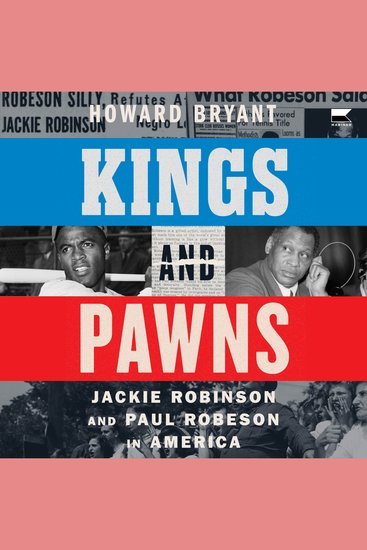
  • Kings and Pawns - Jackie Robinson and Paul Robeson in America - cover

    Kings and Pawns - Jackie...

    Howard Bryant

    • 0
    • 0
    • 0
    “I loved this book.... I looked forward to [it] more than any other in a long time, and Howard Bryant exceeded my great expectations. Kings and Pawns is brilliantly conceived and powerfully written.” — David Maraniss, author of Path Lit by Lightning 
    A path-breaking work of biography of two American giants, Jackie Robinson and Paul Robeson, whose lives would forever be altered by the Cold War, and would explosively intersect before its most notorious weapon, the House Un-American Activities Committee — from one of the best sports and culture writers working today.  
    Kings and Pawns is the untold story of sports and fame, Black America and the promise of integration through the Cold War lens of two transformative events. The first occurred July 18, 1949 in Washington, D.C., when a reluctant Jackie Robinson, the Brooklyn Dodgers baseball star who integrated the game and at the time was the most famous Black man in America, appeared before the House Un-American Activities Committee to discredit Paul Robeson, the legendary athlete, baritone, and actor — himself once the most famous Black man in America. The testimony would be a defining moment in Robinson’s life and contribute heavily to the destruction of Robeson’s iconic reputation in the eyes of America. 
    The second occurred June 12, 1956, in the midst of the last, demagogic roar of McCarthyism, when a battered, defiant Robeson – prohibited from leaving the United States – faced off in a final showdown with HUAC in the same setting Robinson appeared in seven years earlier. These two moments would epitomize the ongoing Black American conflict between patriotism and protest. On the cusp of a nascent civil rights movement, Robinson and Robeson would represent two poles of a people pitted against itself by forces that demanded loyalty without equality in return – one man testifying in conflicted service to and the other in ferocious critique of a country that would ultimately and decisively wound both. 
    In a time of great division, with America in the midst of a new era of retrenchment and Black athletes again chilled into silence advocating for civil rights, the story of these two titans reverberates today within and beyond Black America. From the revival of government overreach to curb civil liberties to the Cold War-era rhetoric of “the enemy within” levied against fellow citizens, Kings and Pawns is a story of a moment that remains hauntingly present.
    Ver libro
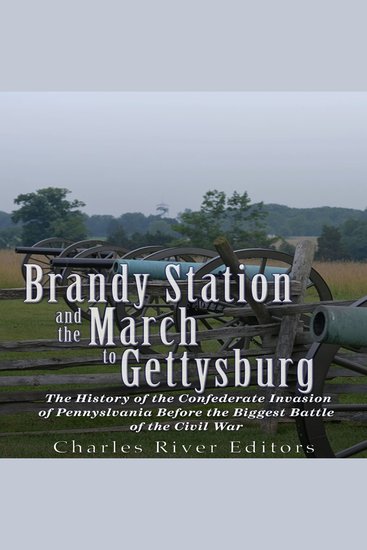
  • Brandy Station and the March to Gettysburg: The History of the Confederate Invasion of Pennsylvania Before the Biggest Battle of the Civil War - cover

    Brandy Station and the March to...

    Editors Charles River

    • 0
    • 0
    • 0
    As Lee’s army moved into Pennsylvania, Stuart’s cavalry screened his movements, thereby engaging in the more traditional cavalry roles, but it’s widely believed that he was still smarting over the results of June 9. As a result, many historians think it likely that he had already planned to remove the negative effect of Brandy Station by duplicating one of his now famous rides around the enemy army, much as he did to McClellan’s Army of the Potomac during the Peninsula Campaign in 1862. This time, however, as Lee began his march north through the Shenandoah Valley in western Virginia, it is highly unlikely that is what he wanted or expected. 
    To complicate matters even more, as Stuart set out on June 25 on what was probably a glory-seeking mission, he was unaware that his intended path was blocked by columns of Union infantry that would invariably force him to veer farther east than he or Lee had anticipated. Ultimately, his decision would prevent him from linking up with Ewell as ordered and deprive Lee of his primary cavalry force as he advanced deeper and deeper into unfamiliar enemy territory. According to Halsey Wigfall (son of Confederate States Senator Louis Wigfall) who was in Stuart’s infantry, “Stuart and his cavalry left [Lee’s] army on June 24 and did not contact [his] army again until the afternoon of July 2, the second day of the [Gettysburg] battle.” 
    As it would turn out, Lee’s army inadvertently stumbled into Union cavalry and then the Union army at Gettysburg on the morning of July 1, 1863, unaware of the force in their front. From July 1-3, Lee’s army tried everything in its power to decisively defeat George Meade’s Union Army of the Potomac, unleashing ferocious assaults that inflicted nearly 50,000 casualties in all. Lee would try and fail to dislodge the Union army with attacks on both of its flanks during the second day and Pickett’s Charge on the third and final day. 
    Ver libro
  • How Much Land Does a Man Need - The Deadly Price of Greed and the Illusion of More - cover

    How Much Land Does a Man Need -...

    Leo Tolstoy, Tim Zengerink

    • 0
    • 0
    • 0
    What’s the cost of always wanting more? 
    In How Much Land Does a Man Need, Leo Tolstoy delivers one of literature’s most powerful parables—a sharp, unforgettable lesson on greed, contentment, and the dangerous illusion of “just a little more.” 
    This modern audiobook adaptation presents the story in clear, accessible language while preserving its original structure, tension, and devastating conclusion. 
    What You’ll Hear in This Modern Translation: 
    •	The gripping journey of a man who sacrifices everything for more land 
    •	A chilling build-up to a final test of ambition—and its irreversible cost 
    •	A timeless reflection on the meaning of true wealth and satisfaction 
    Included in This Edition: 
    This audiobook brings new life to Tolstoy’s classic, making it a compelling listen for today’s audience. It’s short, powerful, and impossible to forget—a perfect story to revisit again and again. 
    Listen today—and discover just how much is too much.
    Ver libro
  • The Duty of Civil Disobedience - cover

    The Duty of Civil Disobedience

    Henry David Thoreau

    • 0
    • 0
    • 0
    The Duty of Civil Disobedience by Henry David Thoreau, narrated by Marcus Locke, is a thought-provoking essay that explores the individual's moral responsibility to resist unjust government actions. Written in 1849, Thoreau's work has become a cornerstone of political philosophy, advocating for peaceful protest and nonviolent resistance to oppressive authority. Thoreau emphasizes the importance of following one's conscience over conforming to laws that violate fundamental human rights. 
    Narrator Marcus Locke brings Thoreau’s powerful message to life, delivering the essay with clarity and conviction. His narration invites listeners to reflect on their role in society and the power of individual action against injustice. Locke’s voice captures the calm yet resolute tone of Thoreau’s work, making this audiobook an engaging and inspiring experience for those interested in civil rights, social justice, and personal activism. 
    This audiobook is perfect for listeners drawn to philosophical works and the history of social movements, as well as anyone seeking inspiration for standing up for their beliefs. The Duty of Civil Disobedience remains a timeless call to action, encouraging peaceful resistance to unjust laws and policies.
    Ver libro
  • Darkest Christmas - December 1942 and a World at War - cover

    Darkest Christmas - December...

    Peter Harmsen

    • 0
    • 0
    • 0
    "This book is of interest to any scholar of World War II, particularly those focused on bridging culture and war. Highly readable, this text is suitable for undergraduate and popular audiences as well. Many should find its analysis to be a refreshing take on the well-trodden field of World War II histories." — Journal of Military HistoryDecember 1942 saw the bloodiest Christmas in the history of mankind. From the islands in the Pacific to the China front, from the trenches in Russia to the battle lines in North Africa, in the skies over Europe and in the depths of the Atlantic, men were killing each other in greater numbers than ever before. The Holocaust continued, and innocent civilians were murdered by the thousands throughout the evil Nazi empire, even as the perpetrators celebrated the birth of Christ.  Millions stationed in far-off lands amid the greatest conflict in human history feared this was their last Christmas in freedom, or their last Christmas alive. At the same time as the slaughter continued unabated, throughout the world there were random acts of kindness, born out of an instinctive feeling of the essential brotherhood of man. These gestures also straddled religious barriers and sometimes included those of non-Christian faiths. Even some Japanese, otherwise embarked on a self-declared crusade against the West, relented for a few precious hours in acknowledgment of the holiday.  At the same time, Christmas 1942 saw the injunction of ‘good will to man’ distorted in ugly and callous ways. At Auschwitz, SS guards played cruel games with their prisoners. In Berlin, the German heart of darkness, Propaganda Minister Joseph Goebbels spent time with his family while still buried in feverish fantasies about the Jewish world conspiracy.  Christmas 1942 saw the entire range of man’s conduct towards his fellow man, reflecting the extremes of behavior, good and bad, that World War II gave rise to. The way the holiday was marked around the world tells a deeper and more universal story of the human condition in extraordinary times.
    Ver libro
  • Classical Greek Thinkers - Philosophical Foundations on Ethics Society and Metaphysics (5 in 1) - cover

    Classical Greek Thinkers -...

    Hector Davidson

    • 0
    • 0
    • 0
    This book contains five titles, which are the following: 
    - Democritus  
    - Diogenes  
    - Empedocles  
    - Epicurus  
    - Socrates  
    Get this discounted deal now!
    Ver libro