Junte-se a nós em uma viagem ao mundo dos livros!
Adicionar este livro à prateleira
Grey
Deixe um novo comentário Default profile 50px
Grey
Assine para ler o livro completo ou leia as primeiras páginas de graça!
All characters reduced
The History of Greek Philosophy - Enriched edition - cover
LER

The History of Greek Philosophy - Enriched edition

Alfred William Benn

Editora: DigiCat

  • 0
  • 0
  • 0

Sinopse

In "The History of Greek Philosophy," Alfred William Benn embarks on an ambitious exploration of the intellectual legacy of ancient Greece, weaving together the thoughts and contributions of philosophers from the pre-Socratic era through to the Hellenistic period. Benn's literary style is characterized by its analytical rigor and contextual depth, as he deftly situates philosophical ideas within the broader tapestry of Greek culture and history. Engaging with primary texts and influential figures such as Socrates, Plato, and Aristotle, Benn presents a narrative that is both comprehensive and accessible, reflecting the evolving nature of philosophical inquiry and its impact on Western thought. Alfred William Benn, a 19th-century English philosopher and historian, was deeply influenced by the intellectual currents of his time, including the rise of empiricism and the scientific method. His academic background and fascination with philosophy equipped him with the tools necessary to rigorously assess the contributions of ancient philosophers while critically examining their relevance in contemporary discourse. Benn's own philosophical inquiries resonate throughout the book, as he strives to elucidate the complexities and nuances of Greek philosophical traditions. This work is highly recommended for scholars and students alike, as it offers a foundational understanding of Greek philosophy's evolution and its enduring influence. Readers seeking to grasp the origins of Western thought will find Benn's exhaustive research and insightful commentary compelling, making this a pivotal addition to any philosophy library.

In this enriched edition, we have carefully created added value for your reading experience:
- Hand‐picked Memorable Quotes shine a spotlight on moments of literary brilliance.
- Interactive footnotes clarify unusual references, historical allusions, and archaic phrases for an effortless, more informed read.
Disponível desde: 11/10/2022.
Comprimento de impressão: 865 páginas.
Outros livros que poderiam interessá-lo

  • The Nowhere Office - Reinventing Work and the Workplace of the Future - cover

    The Nowhere Office - Reinventing...

    Julia Hobsbawm

    • 0
    • 0
    • 0
    What has changed in the workplace? Everything.The traditional office was probably doomed anyway. Then a global shutdown changed everything we thought we knew about work, including where and when it needed to take place. Automation and the Fourth Industrial Revolution have accelerated, and perhaps as much as one third of the world’s permanent workforce will soon become remote. In The Nowhere Office, Julia Hobsbawm offers a strategic and practical guide to navigating this pivotal moment in the history of work and provides lessons for how both employees and employers can adapt.Hobsbawm draws on her extensive networks in business, academia, and entrepreneurship across  generations to offer new ideas about how to handle hybrid working, as well as provides deep insight into how the way we work is being transformed by larger issues such as community, hierarchy, bias, identity, and security. The Nowhere Office describes a unique moment in the history of work which, if understood and handled correctly, can provide a springboard for the biggest transformational change in the workplace for a century: something better, more meaningful, and more workable for everyone.
    Ver livro
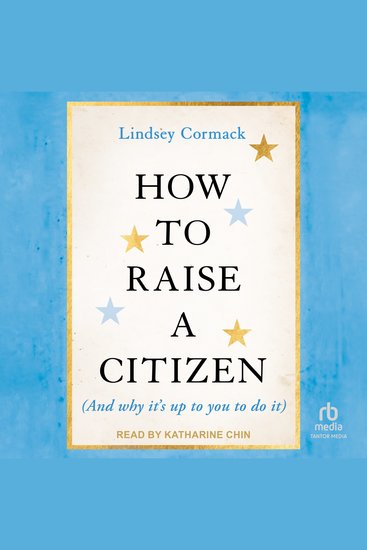
  • How To Raise A Citizen (And Why It's Up to You to Do It) - cover

    How To Raise A Citizen (And Why...

    Lindsey Cormack

    • 0
    • 0
    • 0
    An essential guide to nurturing the next generation of responsible, informed citizens 


    Lindsey Cormack's book, How to Raise a Citizen (And Why It's Up to You to Do It), speaks directly to an America in which civic knowledge is alarmingly sparse and many people dread politics. It's a tool for parents, educators, and anyone eager to fill this gap. In the book, Cormack offers an engaging and practical approach to discussing political issues and the inner workings of the US government with children. She explains why our schools can no longer be the sites of civic education that they used to be and provides parents with strategies and necessary know-how to be able to impart these lessons to their children. From the intricacies of the voting process to the foundational principles of democracy and the significance of key government documents like the Constitution, the author demystifies complex topics with clarity and insight. 


    How to Raise a Citizen is a roadmap to a future where political dialogue and civic engagement are not just encouraged but celebrated in our homes. With actionable advice and easy-to-understand explanations, it empowers listeners to instill a sense of civic responsibility and curiosity in the young minds they influence.
    Ver livro
  • Steppe Nomads The: The History of the Different Nomadic Groups and Their Raids into Europe - cover

    Steppe Nomads The: The History...

    Editors Charles River

    • 0
    • 0
    • 0
    Though history is usually written by the victors, the lack of a particularly strong writing tradition from the Mongols ensured that history was largely written by those who they vanquished. Because of this, their portrayal in the West and the Middle East has been extraordinarily (and in many ways unfairly) negative for centuries, at least until recent revisions to the historical record. The Mongols have long been depicted as wild horse-archers galloping out of the dawn to rape, pillage, murder and enslave, but the Mongol army was a highly sophisticated, minutely organized and incredibly adaptive and innovative institution, as witnessed by the fact that it was successful in conquering enemies who employed completely different weaponry and different styles of fighting, from Chinese armored infantry to Middle Eastern camel cavalry and Western knights and men-at-arms.  
    	Geographically the Tatars descend from several parts of Asia, particularly Central Asia, but the Crimean region has been the nexus of several great power rivalries and numerous conflicts. Yet the Crimean Tatars endured through many of these, aligning themselves with a number of larger powers and developing a reputation as fearsome warriors. Today the Tatars are mainly linked with and live in the Volga region of the Russian Federation. Indeed, Tatarstan is a republic in modern Russia. The “Volga Tatars” are perhaps the best known of the peoples known as Tatars and today number about 5 million people.  
    	Before the Mongols rode across the steppes of Asia and Eastern Europe, the Cumans were a major military and cultural force that monarchs from China to Hungary and from Russia to the Byzantine Empire faced, often losing armies and cities in the process. The Cumans were a tribe of Turkic nomads who rode the steppes looking for plunder and riches, but they rarely stayed long after they got what they wanted. 
    Ver livro
  • Dispossessing the Wilderness - Indian Removal and the Making of the National Parks - cover

    Dispossessing the Wilderness -...

    Mark David Spence

    • 0
    • 0
    • 0
    National parks like Yellowstone, Yosemite, and Glacier preserve some of this country's most cherished wilderness landscapes. While visions of pristine, uninhabited nature led to the creation of these parks, they also inspired policies of Indian removal. By contrasting the native histories of these places with the links between Indian policy developments and preservationist efforts, this work examines the complex origins of the national parks and the troubling consequences of the American wilderness ideal. The first study to place national park history within the context of the early reservation era, it details the ways that national parks developed into one of the most important arenas of contention between native peoples and non-Indians in the twentieth century.
    Ver livro
  • Indochina Hand - Tales of a CIA Case Officer - cover

    Indochina Hand - Tales of a CIA...

    Barry Michael Broman

    • 0
    • 0
    • 0
    Barry Broman joined the CIA in 1971 straight out of the Marine Corps, choosing a career in intelligence largely because he wanted to spend his working life in Southeast Asia. Over the next thirty years, he had the privilege of working with brave men and women who were prepared to put their lives on the line in support of the free world during the Cold War, and he enjoyed the life of adventure he had been seeking since childhood. 


    This book brings together tales from his career as a CIA case officer during the Cold War, giving fascinating insights into handling double agents, working in denied areas, assessing and recruiting Soviet targets, flying with Air America, acting to discredit Soviet agents with Moscow, and what happened when a case officer sets a "scavenger hunt" around Bangkok for fellow spies—and at least one active target. 


    A selection of stories told in engaging style proving that often the truth is more unbelievable than fiction.
    Ver livro
  • From Underground Railroad to Rebel Refuge - Canada and the Civil War - cover

    From Underground Railroad to...

    Brian Martin

    • 0
    • 0
    • 0
    Filled with engaging stories and astonishing facts, From Underground Railroad to Rebel Refuge examines the role of Canadians in the American Civil War
    		 
    Despite all we know about the Civil War, its causes, battles, characters, issues, impacts, and legacy, few books have explored Canada’s role in the bloody conflict that claimed more than 600,000 lives.
    		 
    A surprising 20,000 Canadians went south to take up arms on both sides of the conflict, while thousands of enslaved people, draft dodgers, deserters, recruiters, plotters, and spies fled northward to take shelter in the attic that is Canada. Though many escaped slavery and found safety through the Underground Railroad, they were later joined by KKK members wanted for murder. Confederate President Jefferson Davis along with several of his emissaries and generals found refuge on Canadian soil, and many plantation owners moved north of the border.
    		 
    Award-winning journalist Brian Martin will open eyes in both Canada and the United States to how the two countries and their citizens interacted during the Civil War and the troubled times that surrounded it.
    Ver livro