¡Acompáñanos a viajar por el mundo de los libros!
Añadir este libro a la estantería
Grey
Escribe un nuevo comentario Default profile 50px
Grey
Suscríbete para leer el libro completo o lee las primeras páginas gratis.
All characters reduced
The Lady of the Camellias - Classic of French Literature - cover

The Lady of the Camellias - Classic of French Literature

Alexandre Dumas

Editorial: Good Press

  • 0
  • 0
  • 0

Sinopsis

In 'The Lady of the Camellias,' Alexandre Dumas fils weaves a poignant tale of love, sacrifice, and societal constraints set against the backdrop of 19th-century Paris. The novel chronicles the tragic romance between Marguerite Gautier, a courtesan known for her delicate beauty, and Armand Duval, a youthful nobleman. Dumas employs a rich, lyrical style that captures the emotional depth of the characters while addressing the moral complexities of their relationship. As a seminal work of the French literary tradition, it challenges prevailing notions of love and honor, offering a critique of the rigid social hierarchies of the time. Dumas fils, the son of the renowned author Alexandre Dumas, draws from his personal experiences and the bohemian milieu of Paris to create this heart-wrenching narrative. His intimate knowledge of the Parisian elite and their often hypocritical morals lends authenticity to Marguerite's struggles. Dumas fils not only reflects the controversial social dynamics of his era but also channels his reflections on familial duty, personal sacrifice, and the pursuit of happiness. I highly recommend 'The Lady of the Camellias' to readers seeking an emotionally charged and socially relevant work. Its rich character development and haunting themes resonate with contemporary audiences, making it a classic that evokes empathy and reflection on the nature of love across time.
Disponible desde: 18/12/2023.
Longitud de impresión: 173 páginas.

Otros libros que te pueden interesar

  • Scenes of Clerical Life - cover

    Scenes of Clerical Life

    George Eliot

    • 0
    • 0
    • 0
    Three novellas that brilliantly portray English country and clergy life at the turn of the nineteenth century from the author of Middlemarch.   Initially appearing in Blackwood’s Magazine, this trio of linked stories comprises George Eliot’s first published work. Together they form a portrait of small-town life in Midlands, England, where changes are affecting both society at large and religious beliefs and institutions.   In “The Sad Fortunes of Reverend Amos Barton,” the clergyman struggles to raise funds for church repairs and perform his parochial duties, while a target of gossip—both good and bad. Meanwhile, few in Shepperton can find fault with his shy and hardworking wife, who cares for their six children, stretching Barton’s meager salary—and herself—to the limit.   Set before the arrival of Amos Barton, “Mr. Gilfil’s Love Story” features well-liked parish priest Maynard Gifil, who is known for smoking long pipes and preaching short sermons. Shockingly tumultuous events lead up to his marriage—including a love triangle, deception, and a murder plot.   An argument over religious doctrine splits the market town of Milby into two factions in “Janet’s Repentance.” With the arrival of Reverend Tryan, a rumor spreads that Evangelicalism has invaded the parish, angering local lawyer Robert Dempster. But his long-suffering wife finds in Tryan a kindred spirit, leading her to embark on a new life.  “The exquisite truth and delicacy, both of the humour and the pathos of those stories, I have never seen the like of.” —Charles Dickens “A first-rate novel, and its author takes rank at once among the masters of the art.” —The Times
    Ver libro
  • The Decameron - cover

    The Decameron

    Giovanni Boccaccio

    • 0
    • 0
    • 0
    Set against the shadow of the Black Plague, The Decameron by Giovanni Boccaccio is a radiant tapestry of love, wit, tragedy, and the triumph of the human spirit. When Florence is ravaged by pestilence, ten young nobles — seven women and three men — flee to a countryside villa to escape the horrors of the city. Over ten days, they pass the time by telling one hundred stories: tales of romance and folly, devotion and deception, virtue and vice. 
    From the poetic tragedy of “Griselda” to the romantic daring of “Cymon and Iphigenia” and the moral allegory of “The Three Rings,” Boccaccio captures the full spectrum of human experience — earthy, wise, and profoundly moving. 
    Narrated with grace and warmth by Mary Ellin Kurtz, this timeless masterpiece invites listeners into a world where storytelling itself becomes an act of survival — and of joy.
    Ver libro
  • Pride and Prejudice - cover

    Pride and Prejudice

    Jane Austen

    • 0
    • 0
    • 0
    Jane Austen's classic tale of love overcoming preconceptions centers on the two eldest daughters of the Bennet family: Jane and Elizabeth. Elizabeth has to fend off an unwelcome offer of marriage from the Rev. Collins, while mistakenly falling for the charms of the dashing Mr Wickham, before realizing that appearances are deceptive and that her prejudice against Mr Darcy has blinded her to his real character. Witty, humorous and ultimately satisfying, this masterpiece of classic fiction has endured for more than two hundred years.
    Ver libro
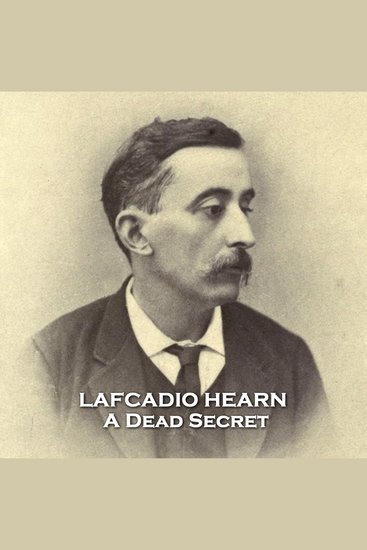
  • A Dead Secret - From their pens to your ears genius in every story - cover

    A Dead Secret - From their pens...

    Lafcadio Hearn

    • 0
    • 0
    • 0
    Lafcadio Hearn was born on the 27th June 1850 on the Ionian isle of Levkás in Greece to a British Army officer and a Greek Mother. 
    His father, fearing for his career prospects at being married to a Greek Orthodox wife, sent them to Dublin whilst he continued to advance his career with further postings.  Life there was difficult for mother and son.  His father returned, wounded and traumatised, when Lafcadio was three.  He annulled the marriage and she remarried but had to give up care of Lafcadio to her sister-in law.   
    After brief periods for Catholic education in England and France he emigrated to Ohio in the United States when he was 19, taking on a series of casual jobs before embarking on a career as a journalist, publishing poems and essays in Cincinnati.  It was whilst here that he began a side-line in translating, starting with Gautier and Flaubert.  He married in 1874 to a 20 year old African-American woman in violation of Ohio's anti-miscegenation law.  The marriage soon failed. 
    In 1877 he relocated to New Orleans to write on a variety of themes before picking up a two year assignment from Harper’s to write in the West Indies, where he also wrote his first novel. 
    In 1890 Harper’s sent him to Japan.  Here he left journalism and took the remarkable decision to become a schoolteacher in the north of Japan.   Enraptured by the culture he was driven to explain it in various Western publications to those who had little, if any, knowledge of its culture.  Within the year he had fallen in love with, and married, a high-born Japanese lady, together they would have four children.   
    In 1895 he became a Japanese national and took the name Koizumi Yakumo, Koizumi being his wife’s family name. 
    The following few years, whilst a professor of Literature at the Imperial University of Japan, were his most creative and admired period.   
    Lafcadio Hearn died of heart failure on the 26th of September 1904, in Tokyo, Japan shortly before leaving to deliver a series of lectures at Cornell University in New York State.  He was 54.
    Ver libro
  • 1984 With Full Cast - + Short Stories - cover

    1984 With Full Cast - + Short...

    George Orwell

    • 0
    • 0
    • 0
    George Orwell's novel "1984," published in 1949, stands as a profound and chilling exploration of dystopian society and totalitarianism. Set in a nightmarish future, the story depicts a world dominated by the all-seeing, all-controlling Party led by the enigmatic Big Brother. Orwell's stark portrayal of a society devoid of privacy, individuality, and truth has resonated deeply with readers for decades, making "1984" a timeless work of literature that continues to influence discussions about government control, surveillance, and the nature of truth. 
     
    In the aftermath of World War II, Orwell's "1984" emerged as a powerful cautionary tale, drawing upon the author's own experiences with authoritarian regimes and his concerns about the erosion of individual freedoms. The novel's protagonist, Winston Smith, becomes a symbol of the struggle for independent thought in a world where historical facts are constantly manipulated to serve the Party's narrative. The creation of the Newspeak language, designed to limit freedom of expression, underscores the insidious ways in which totalitarian governments seek to control the minds of their citizens. The harrowing depiction of psychological manipulation, surveillance, and the eradication of dissenting voices paints a stark warning about the dangers of unchecked power. 
     
    The significance of "1984" extends beyond its portrayal of a nightmarish future; it serves as a stark reminder of the fragility of democracy and the importance of safeguarding individual liberties. Orwell's themes of truth, memory, and language resonate with ongoing debates about the role of media, the spread of misinformation, and the erosion of civil liberties in the modern world. As technology continues to advance, the novel's warnings about the potential for mass surveillance and government control remain alarmingly relevant.
    Ver libro
  • Odour of Chrysanthemums - cover

    Odour of Chrysanthemums

    D H Lawrence

    • 0
    • 0
    • 0
    ‘Odour of Chrysanthemums’ was written by D H Lawrence in 1911. Lawrence is at his best in this story, taken from the scenes of his childhood and based on characters he knew intimately. He reworked the story in the play, ‘The Widowing of Mrs Holroyd’ but in this short story version, Lawrence sees the tragic episode through the eyes of the wife. The theme of a loveless marriage, redeemed by death is one which Lawrence was to come back to in other stories.
    Ver libro