¡Acompáñanos a viajar por el mundo de los libros!
Añadir este libro a la estantería
Grey
Escribe un nuevo comentario Default profile 50px
Grey
Suscríbete para leer el libro completo o lee las primeras páginas gratis.
All characters reduced
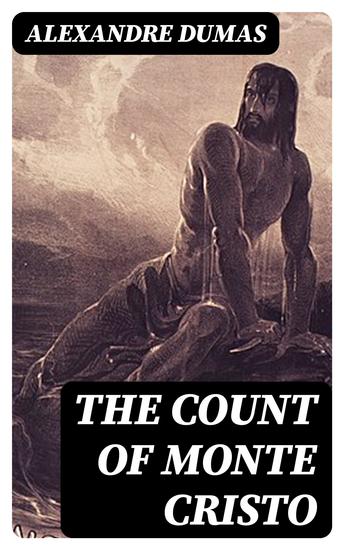
The Count of Monte Cristo - Must Read Classics - cover

The Count of Monte Cristo - Must Read Classics

Alexandre Dumas

Editorial: DigiCat

  • 0
  • 0
  • 0

Sinopsis

The Count of Monte Cristo, a hallmark of 19th-century literature, embodies the essence of adventure and revenge woven intricately through Dumas's rich and evocative narrative style. The novel unfolds the tale of Edmond Dantès, a young sailor who, wrongfully imprisoned, transforms into the enigmatic Count of Monte Cristo. Dumas masterfully explores themes of justice, retribution, and the moral complexities of revenge, set against the backdrop of post-Napoleonic France. The intricate plot is laced with historical and social commentary, revealing the interplay between personal ambitions and societal constraints, making it a timeless classic. Alexandre Dumas, a prolific writer and playwright, was born to a French nobleman and a black slave, which fueled his fascination with themes of identity and justice. His own life was marked by tumult and adventure; his experiences with betrayal and resilience influenced the creation of Dantès's character. Dumas's deep understanding of human emotion and ambition, combined with his penchant for storytelling, culminated in this masterpiece, reflecting not just his personal history but also the turbulent socio-political landscape of his time. Readers interested in a profound exploration of vengeance and redemption should delve into The Count of Monte Cristo. Dumas's intricate character development and poignant moral inquiries will resonate across generations, inviting readers to reflect on the boundaries of justice and the power of perseverance.
Disponible desde: 17/05/2022.
Longitud de impresión: 730 páginas.

Otros libros que te pueden interesar

  • Candide - cover

    Candide

    Voltaire

    • 0
    • 0
    • 0
    Candide, ou l'Optimisme is a French satire first published in 1759 by Voltaire, a philosopher of the Age of Enlightenment. The novella has been widely translated, with English versions titled Candide: or, All for the Best (1759); Candide: or, The Optimist (1762); and Candide: Optimism (1947). It begins with a young man, Candide, who is living a sheltered life in an Edenic paradise and being indoctrinated with Leibnizian optimism by his mentor, Professor Pangloss. The work describes the abrupt cessation of this lifestyle, followed by Candide's slow and painful disillusionment as he witnesses and experiences great hardships in the world. Voltaire concludes Candide with, if not rejecting Leibnizian optimism outright, advocating a deeply practical precept, "we must cultivate our garden", in lieu of the Leibnizian mantra of Pangloss, "all is for the best" in the "best of all possible worlds".
    Candide is characterized by its tone as well as by its erratic, fantastical, and fast-moving plot. A picaresque novel with a story similar to that of a more serious coming-of-age narrative (Bildungsroman), it parodies many adventure and romance clichés, the struggles of which are caricatured in a tone that is bitter and matter-of-fact. Still, the events discussed are often based on historical happenings, such as the Seven Years' War and the 1755 Lisbon earthquake. As philosophers of Voltaire's day contended with the problem of evil, so does Candide in this short theological novel, albeit more directly and humorously. Voltaire ridicules religion, theologians, governments, armies, philosophies, and philosophers. Through Candide, he assaults Leibniz and his optimism.
    Candide has enjoyed both great success and great scandal. Immediately after its secretive publication, the book was widely banned to the public because it contained religious blasphemy, political sedition, and intellectual hostility hidden under a thin veil of naïveté. However, with its sharp wit and insightful portrayal of the human condition, the novel has since inspired many later authors and artists to mimic and adapt it. Today, Candide is considered as Voltaire's magnum opus and is often listed as part of the Western canon. It is among the most frequently taught works of French literature. The British poet and literary critic Martin Seymour-Smith listed Candide as one of the 100 most influential books ever written.
    Ver libro
  • Cursed Curiosities Volume 2 - 10 More Relics That Shouldn’t Exist - cover

    Cursed Curiosities Volume 2 - 10...

    H. T. W. Bousfield, C. P....

    • 0
    • 0
    • 0
    A second collection of classic works concerning items that harbour sinister secrets and unusual powers. 
    Contents: 
    "The Uncommon Prayer-Book" by M. R. James (London Mercury 1925) 
    Eight unusual copies of the Book of Common Prayer. 
    "The Green Flame" by Donald Wandrei (Weird Tales 1930) 
    The tale of a strange jewel. 
    "The Disinterment of Venus" by Clark Ashton Smith (Weird Tales 1934) 
    A curious statue unearthed in the grounds of a monastery. 
    "The Man Who Made Faces" by C. P. Howard (HorrorBabble 2024) 
    The tale of a man haunted by a past mistake. 
    "The God with Four Arms" by H. T. W. Bousfield (1939) 
    A man takes his frustrations out on a rare bronze idol. 
    "The Ebony Frame" by Edith Nesbit (Longman's 1891) 
    A beautiful and curiously carved picture frame. 
    "The Meerschaum Pipe" by L. A. Lewis (Tales of the Grotesque 1934) 
    A series of strange dreams and mysterious murders. 
    "The Black Stone Statue" by M. E. Counselman (Weird Tales 1937) 
    The story of a weird deception practised on the world by an obscure artist. 
    "Out of the Aeons" by H. P. Lovecraft (Weird Tales 1935) 
    A Boston museum that displays an ancient mummy recovered from a sunken island. 
    "The Mezzotint" by M. R. James (Ghost-Stories of an Antiquary 1904) 
    A strange engraving, with even stranger properties.
    Ver libro
  • The Sister of the Baroness - cover

    The Sister of the Baroness

    Katherine Mansfield

    • 0
    • 0
    • 0
    In The Sister of the Baroness by Katherine Mansfield we have the theme of appearance, identity, self-importance, class and escape. Taken from her In a German Pension collection the story is narrated in the first person by an unnamed English woman and after reading the story the reader realises that Mansfield may be exploring the theme of appearance. With the exception of the narrator all the visitors at the Pension are in awe of the Baroness’ sister.
    Ver libro
  • The War of the Worlds - An Audiobook Empire Production - cover

    The War of the Worlds - An...

    H. G. Wells

    • 0
    • 0
    • 0
    “This isn’t a war… It never was a war, any more than there’s war between men and ants.” 
    The War of the Worlds is a classic science fiction novel that has been terrifying and enthralling readers for over a century. In this epic audiobook, you will experience the story like never before, as RJ Bayley and Audiobook Empire take you on a journey through the chaos and destruction of an alien invasion. 
    From the moment the Martians land in England, you will be on the edge of your seat. H.G. Wells' vivid descriptions of the Martian war machines and the heat rays they wield are given desperate urgency and authenticity by narrator RJ Bayley (Bayley's Bookshelf Podcast). You'll feel like you're right there, witnessing the invasion firsthand. 
    More than just a thrilling tale of alien invasion, The War of the Worlds is a groundbreaking work of fiction that explores the themes of fear, hope, survival and imperialism. Even now, H.G. Wells' masterpiece has the power to chill, awe and force listeners to confront their own society's impact on others. 
    This is a must-listen audiobook for anyone who loves science fiction, adventure, or wants to experience of the most important novels ever written. So what are you waiting for? Download your copy today!
    Ver libro
  • Occurrence at Owl Creek Bridge An - cover

    Occurrence at Owl Creek Bridge An

    Ambrose Bierce

    • 0
    • 0
    • 0
    Title: An Occurrence at Owl Creek Bridge 
    Author: Ambrose Bierce 
    Narrator: Jonathan Dunne 
    Original Publication: 1890 
    Public Domain: Yes 
    Series Placement: Number 19 in the Timeless Terrors series 
    Description: 
    An Occurrence at Owl Creek Bridge by Ambrose Bierce is a gripping Civil War-era psychological horror story first published in 1890. The narrative follows Peyton Farquhar, a Southern planter facing execution at Owl Creek Bridge. As the rope tightens, the boundary between reality and illusion blurs, revealing a haunting meditation on time, fate, and the fragility of life. 
    Narrated by horror author Jonathan Dunne, this recording captures Bierce’s suspenseful, eerie atmosphere, blending psychological dread with the tragic beauty of fleeting moments. While the text is in the public domain, this performance is an original work and copyright © 2025 Jonathan Dunne. 
    This audiobook is part of Timeless Terrors, a dedicated series bringing classic horror back to life — stories from the great masters of the macabre, narrated afresh to haunt a new generation. 
    Listeners should be prepared for a tense, haunting journey into mortality, illusion, and the subtle horrors that dwell within human experience.
    Ver libro
  • The League of the Scarlet Pimpernel - cover

    The League of the Scarlet Pimpernel

    Baroness Orczy

    • 0
    • 0
    • 0
    The sequel to The Scarlet Pimpernel; The League of the Scarlet Pimpernel is a collection of short stories that all see Sir Percy Blakeney, AKA The Scarlet Pimpernel, thumb his nose at the bloodthirsty members of the Revolutionary Government of Paris, snatching innocent aristocrats from their clutches and the guillotine.  
    Written by the Baroness Orczy, and narrated by Michael Ward.
    Ver libro