Rejoignez-nous pour un voyage dans le monde des livres!
Ajouter ce livre à l'électronique
Grey
Ecrivez un nouveau commentaire Default profile 50px
Grey
Abonnez-vous pour lire le livre complet ou lisez les premières pages gratuitement!
All characters reduced
Le chevalier de Maison-Rouge - cover

Le chevalier de Maison-Rouge

Alexandre Dumas

Maison d'édition: Librorium Editions

  • 0
  • 0
  • 0

Synopsis

It was on the evening of the 10th of March, 1793, ten o'clock was striking from Notre Dame, and each stroke sounding, emitted a sad and monotonous vibration. Night had fallen on Paris, not boisterous and stormy, but cold, damp, and foggy. Paris itself at that time was not the Paris of our day, glittering at night with thousands of reflected lights,—the Paris of busy promenades, of lively chat, with its riotous suburbs, the scene of audacious quarrels, and daring crime,— but a fearful, timid, busy city, whose few and scattered inhabitants, even in crossing from one street to another, ran concealing themselves in the darkness of the alleys, and ensconcing themselves behind their portes-cochères, like wild beasts tracked by the hunters to their lair.
As we have previously said, it was the evening of the 10th of March, 1793. A few remarks upon the critical situation of the country, which had produced the changed aspect of the capital, before we commence stating the events the recital of which form the subject of this history.
Disponible depuis: 01/09/2023.

D'autres livres qui pourraient vous intéresser

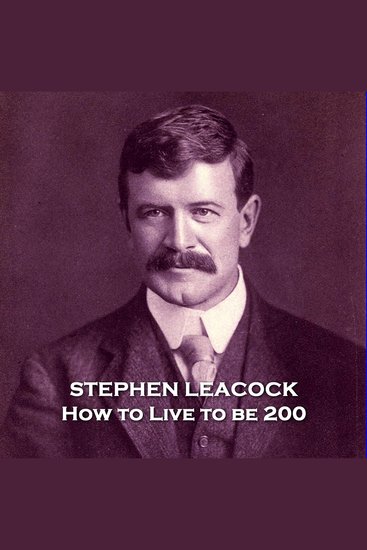
  • How to Live to be 200 - From their pens to your ears genius in every story - cover

    How to Live to be 200 - From...

    Stephen leacock

    • 0
    • 0
    • 0
    Stephen P H Butler Leacock FRSC was born on 30th December 1869 in Swanmore, near Southampton, England.  He was the third of eleven children. 
    The family emigrated to Canada in 1876, settling on a 100-acre farm in Sutton, Ontario.  There Leacock was home-schooled until, funded by his grandfather, he was enrolled into the elite private school Upper Canada College in Toronto.  Academically he was very strong.  In 1887, at age 17, he became head boy and then proceeded on to the University of Toronto to study languages and literature.  Despite completing two years of study in only one, he was obliged to leave the university because his father, an alcoholic, had abandoned the family and finances could not be stretched to continue his attendance.  Leacock now enrolled in a three-month course at Strathroy Collegiate Institute to become a qualified high school teacher with a regular income. 
    He worked at Upper Canada College from 1889 through 1899 and later resumed his studies part-time at the University of Toronto, graduating with a B A in 1891.  It was during this period that he was first published in The Varsity, a campus newspaper.  But his passion was now economics and political theory.  In 1899 he enrolled for postgraduate studies at the University of Chicago and earned his PhD in 1903. 
    Leacock had married Beatrix Hamilton in 1900 and 15 years later the couple had their only child, Stephen.  In time father and son developed a love-hate relationship, partially caused by his son’s diminutive stature of only four feet.  
    Accepting a post at McGill University Leacock would remain there until he retired in 1936.  In 1906, he wrote ‘Elements of Political Science’, quickly adopted as a standard textbook for the next two decades and his most profitable book.  He also began public speaking and lecturing, and took a year's leave of absence in 1907 to speak throughout Canada on the subject of national unity.  
    Leacock had submitted humourous articles to the Toronto magazine Grip in 1894, and was soon published in other Canadian and US magazines.  In 1910, he printed privately a collection of these as ‘Literary Lapses’.  Acquired by the British publisher, John Lane, it was released in London and New York.   He was now a commercially successful writer.  There soon followed ‘Nonsense Novels’ (1911) and the sentimental favourite, ‘Sunshine Sketches of a Little Town’ (1912).  His ‘Arcadian Adventures with the Idle Rich’ (1914) is a darker collection that satirizes city life.  Collections of sketches continued to be published almost annually, filled with a mixture of light-hearted whimsy, parody, nonsense, and satire. 
    In later life, he wrote on the art of humour writing and published biographies on Twain and Dickens.  Together with continued speaking tours he also added to his non-fiction with many well-regarded and award-winning volumes on Canada. 
    Politically Leacock was a social conservative and a partisan Conservative.  He opposed women’s right to vote and had a varied record on non-English immigration.  He was a champion of Empire but an advocate of social welfare legislation and wealth redistribution, but he often caused friction with his racist views towards blacks and Indigenous peoples. 
    Leacock has for some time been forgotten as an economist, but it’s often quoted that in 1911 more people had heard of him than had heard of Canada.  For the decade after 1915 Leacock was the most popular humorist in the English-speaking world. 
    Stephen Leacock died on 28th March 1944 of throat cancer in Toronto, Canada.  He was 74.  He was buried in the St George the Martyr Churchyard, Sutton, Ontario.
    Voir livre
  • A Favorite Daughter - cover

    A Favorite Daughter

    P. O. Dixon

    • 0
    • 0
    • 0
    Mr. Bennet had very often wished that, instead of spending his whole income, he had laid by an annual sum for the better provision of his children, and of his wife, if she survived him. Alas, he did not live long enough to do it. After her father’s untimely death, Miss Elizabeth Bennet reads a letter from him in which he tasks her with the protection of her family. 
    Elizabeth is willing to do everything in her power to fulfill her father's dying wish, even if it means marrying a man she cannot love. 
    There is, however, one man whom she can love. Mr. Fitzwilliam Darcy. The two start out as friends, but Mr. Darcy wants more. Much more. 
    Surely Elizabeth will not always sacrifice her own happiness for the sake of her family. Or will she?
    Voir livre
  • A Garland of Earth - From their pens to your ears genius in every story - cover

    A Garland of Earth - From their...

    Dorothy Edwards

    • 0
    • 0
    • 0
    Amelia Ann Blanford Edwards was born on 7th June 1831 in Islington, London.  She was educated at home by her mother and showed early promise as a writer, publishing her first poem at the age of 7 and her first story at 12.  Thereafter several popular periodicals published her poetry, stories and articles. 
    In addition she also illustrated some of her own writings and painted scenes from books she had read.  This talent was not supported by her parents, who saw an artist’s life as scandalous.  Undeterred Amelia took up composing and performing music until a bout of typhus caused throat damage.  Other interests soon followed until, early in the 1850s, Amelia focused exclusively on writing.  Her early novels were well received, and with ‘Barbara's History’ in 1864, a work revolving around bigamy, her reputation was established.  
    Amelia’s pen was also the purveyor of ghost stories for magazines and are still anthologized as classic tales to this day. 
    In January 1851, Amelia became engaged, apparently to please her parents, but she quickly broke it off.  In reality her emotional attachments were almost exclusively with women.  From the early 1860s she lived with Ellen Drew Braysher, a widow 27 years her senior, until both women died in early 1892.  During this relationship other women also entered and left her life.  Her frequent travelling companion, Lucy Renshaw, accompanied her to Egypt in the winter of 1873 and there she found a life-changing interest in Egyptology.  Aware of increasing threats from tourism and modern development she became an advocate for their research and preservation.  
    To advance the work Amelia largely abandoned much of her writing in favour of Egyptology and even took on strenuous lecture tours to raise funds. 
    After catching influenza, Amelia Edwards, ‘the Godmother of Egyptology’ died on 15th April 1892 at Weston-super-Mare.  She was 60.
    Voir livre
  • The Sun Also Rises - cover

    The Sun Also Rises

    Ernest Hemingway

    • 0
    • 0
    • 0
    "You can't get away from yourself by moving from one place to another."
    
    Set in the aftermath of World War I, The Sun Also Rises follows a group of young expatriates as they drift through Paris and Spain in search of meaning, love, and escape. At the heart of the story are Jake Barnes, a journalist and war veteran grappling with physical and emotional wounds, and Lady Brett Ashley, an independent Englishwoman exploring the opportunities afforded by a new era of liberated women and sexual freedom. The story follows the flamboyant Brett and the disillusioned Jake as they journey from the wild nightlife of 1920s Paris to the brutal bullfighting rings of Spain in an age of moral bankruptcy, spiritual dissolution, unrealized love and vanishing illusions.
    
    Published in 1926, The Sun Also Rises was Hemingways first major novel and the one that established his authorial voice and gave voice to the "Lost Generation"—those scarred by World War I and adrift in a modern world that felt morally and spiritually bankrupt.
    Ernest Hemingway (1899–1961) was an American novelist, short story writer, and journalist renowned for his econimical, understated prose, adventurous lifestyle and outspoken public image. He began his career as a reporter and published a number of short stories before gaining fame with novels such as The Sun Also Rises (1926) and A Farewell to Arms (1929), and his experiences during the Spanish Civil War informed the best-selling For Whom the Bell Tolls (1940). He was awarded the Nobel Prize in Literature in 1954, and some of his seven novels, six short-story collections and two non-fiction works have become classics of American literature.
    Voir livre
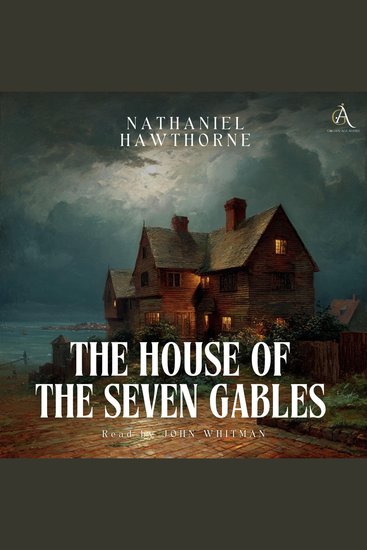
  • House of the Seven Gables The - Audiobook - cover

    House of the Seven Gables The -...

    Nathaniel Hawthorne, Classic...

    • 0
    • 0
    • 0
    The House of the Seven Gables is a gothic masterpiece by Nathaniel Hawthorne, blending family secrets, curses, and redemption. Set in a decaying New England mansion haunted by ancestral sins, the story follows the Pyncheon family as they struggle with the burden of the past and the possibility of renewal.With rich symbolism, mysterious characters, and an atmosphere thick with suspense, Hawthorne explores themes of guilt, inheritance, and the clash between old-world aristocracy and emerging American ideals. It is a haunting and beautifully written novel that continues to captivate readers with its dark elegance.
    Voir livre
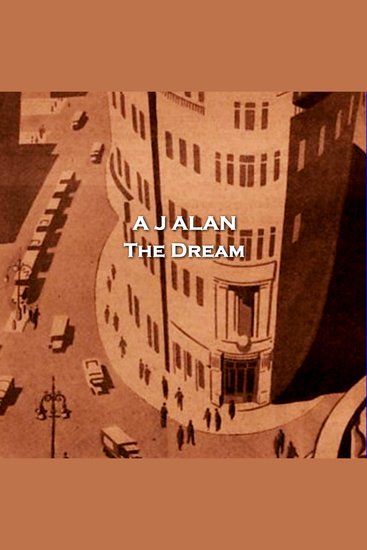
  • The Dream - From their pens to your ears genius in every story - cover

    The Dream - From their pens to...

    A J lan

    • 0
    • 0
    • 0
    Leslie Harrison Lambert was born on 11th November 1883 in Nottingham.  
    After attending Rugby School he trained to be a surveyor. One of his passions was magic and such was his prowess that he joined The Magic Circle, and performed at society events. 
    By the beginning of World War I he was an amateur radio ham and volunteered to work at a coastguard station in Norfolk to intercept German radio transmissions. By November 1914 he was with the Admiralty at Naval Intelligence Room 40.  By 1919 this had become part of the new Government Code and Cypher School.  He was still there as World War II erupted across Europe and with many of his colleagues he transferred to Bletchley Park.  There, in Hut 8, he was quoted as saying that "in contrast to his outrageously unconventional stories" that he led his life on "a monotonously regular timetable". 
    Life outside the Intelligence services was very different.  He married but the couple had no children.  They lived at Holland Park with a second home at Potter Heigham for sailing on the Norfolk Broads.  Other interests were as an amateur radio operator, using the call sign G2ST, and an authority on food and wine. 
    He contacted the BBC to suggest he might tell one of his own short stories on the radio.  Thus was born A J Alan, and his broadcast of ‘My Adventure in Jermyn Street’, on New Year’s Eve, 1924.  It was an immediate success and although he only broadcast a handful of times a year he was one of the most popular radio personalities of the time.  He spent weeks working on each short story, honing his conversational style, making his stories seem like anecdotes that had peculiarly happened to him.  
    A live broadcast was, in fact, a performance.  He used cards to avoid any rustling noises and kept a candle lit in case the lights failed.  His attire was a dinner jacket with eye glass, and a slim black briefcase.  
    Many of his stories were subsequently printed in newspapers and magazines. 
    By 1937 his health had deteriorated and he reduced his radio work making his last broadcast on 21st March 1940.  
    A J Alan died on 13th December 1941.
    Voir livre