Junte-se a nós em uma viagem ao mundo dos livros!
Adicionar este livro à prateleira
Grey
Deixe um novo comentário Default profile 50px
Grey
Assine para ler o livro completo ou leia as primeiras páginas de graça!
All characters reduced
Voyages from Montreal Through the Continent of North America - Journey to the Arctic Ocean and the Pacific in 1789 and 1793 - cover
LER

Voyages from Montreal Through the Continent of North America - Journey to the Arctic Ocean and the Pacific in 1789 and 1793

Alexander Mackenzie

Editora: Musaicum Books

  • 0
  • 0
  • 0

Sinopse

Alexander Mackenzie's 'Voyages from Montreal Through the Continent of North America' is a groundbreaking exploration narrative documenting his travels through the uncharted wilderness of North America. Written in a detailed and factual style, the book provides a glimpse into the challenging landscapes and encounters with Indigenous peoples during the late 18th century. Mackenzie's vivid descriptions of the harsh realities of pioneering expeditions offer a valuable historical and geographical account of the era. The book's narrative style reflects the author's firsthand experiences and keen observations, making it a valuable primary source for scholars and history enthusiasts alike. Mackenzie's work holds significant literary and historical importance for understanding the early exploration of the North American continent. His meticulous documentation of geographic landmarks and cultural interactions provides invaluable insights into the challenges and triumphs of early explorers. With its rich detail and historical significance, 'Voyages from Montreal Through the Continent of North America' is a must-read for anyone interested in the exploration and history of North America.
Disponível desde: 04/01/2022.
Comprimento de impressão: 351 páginas.

Outros livros que poderiam interessá-lo

  • The Ming Dynasty - Maritime Exploration and the Forbidden City - cover

    The Ming Dynasty - Maritime...

    Jun Liu

    • 0
    • 0
    • 0
    The Ming Dynasty, one of China's most influential and enduring dynasties, emerged in the aftermath of the Mongol-led Yuan Dynasty’s decline. It was a period marked by great transformation, political consolidation, and cultural revival. The dynasty's establishment under Zhu Yuanzhang, later known as Emperor Hongwu, signified the restoration of Han Chinese rule and the reinforcement of Confucian governance. Through military conquest, administrative reforms, and strategic centralization of power, the Ming Dynasty laid the foundation for a strong and prosperous China. 
    The fall of the Yuan Dynasty was driven by internal corruption, economic mismanagement, and widespread discontent. Mongol rulers faced difficulties controlling the vast empire, and their reliance on foreign administrators alienated the native Chinese population. Heavy taxation and frequent natural disasters exacerbated social unrest, leading to a series of revolts across the country. Among these rebellions, the Red Turban Rebellion, a movement rooted in peasant uprisings and religious discontent, played a crucial role in undermining Yuan authority. It was within this turbulent period that Zhu Yuanzhang, a former Buddhist monk turned military leader, rose to prominence. His leadership and military strategies enabled him to unify rebel factions and ultimately overthrow the Mongols in 1368, marking the beginning of the Ming Dynasty. 
    Upon ascending the throne, Emperor Hongwu sought to consolidate power and rebuild a nation weakened by war and misrule. His first priority was to eliminate threats to his rule, which led to purges against those he suspected of disloyalty. To prevent a recurrence of Yuan-era administrative failures, he restructured the government, reducing the influence of court eunuchs and emphasizing Confucian ideals in governance. He also reinstated the civil service examination system, ensuring that officials were selected based on merit rather than birthright.
    Ver livro
  • Egyptian Science and Technology - Innovations of the Ancient World - cover

    Egyptian Science and Technology...

    Omar Khalil

    • 0
    • 0
    • 0
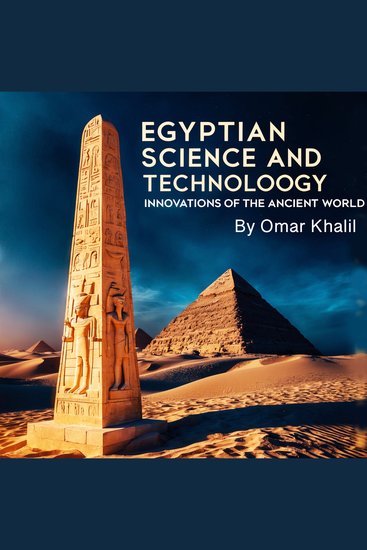
    Ancient Egypt, renowned for its monumental architecture and sophisticated culture, was also a hub of intellectual and scientific advancements. At the heart of Egyptian knowledge was a unique blend of practical experience, religious beliefs, and cultural traditions. Understanding the foundations of their knowledge requires examining the interplay between mythology, early scientific thought, and the ways this knowledge was transmitted through generations. 
    The role of religion and mythology in ancient Egypt cannot be overstated. Egyptian cosmology deeply influenced how people understood the world around them. Deities associated with creation, the afterlife, and natural phenomena shaped the Egyptians' perception of science and technology. For example, the god Thoth was believed to be the deity of wisdom, writing, and mathematics, and his influence permeated educational practices. Priests and scribes, who were often part of temple schools, acted as custodians of this sacred knowledge. Their training combined religious teachings with practical subjects like astronomy, mathematics, and medicine. 
    Early scientific thought in ancient Egypt was pragmatic rather than theoretical. Egyptians were skilled observers, and much of their knowledge arose from practical problem-solving. Whether it was calculating the Nile's flooding patterns or designing complex irrigation systems, their science emerged from the need to manage everyday challenges. For instance, their understanding of geometry developed out of the necessity to remeasure fields after the annual inundation of the Nile. Similarly, medical practices were rooted in practical observations of ailments and their treatments, blending empirical knowledge with spiritual beliefs.
    Ver livro
  • The Kingdom of Kush - Nubian Kings and the Black Pharaohs of the Nile - cover

    The Kingdom of Kush - Nubian...

    Rolf Hedger

    • 0
    • 0
    • 0
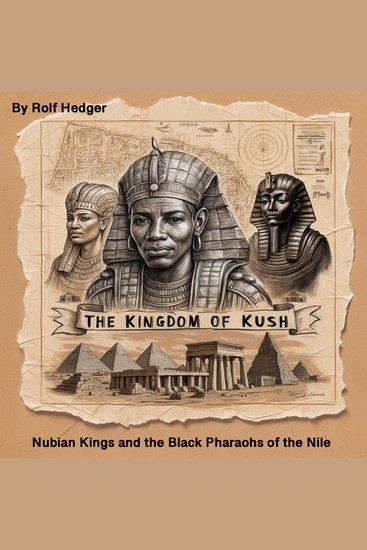
    The Kingdom of Kush, an ancient African civilization, flourished along the Nile River in what is now modern-day Sudan. This powerful kingdom played a crucial role in the history of northeastern Africa, often interacting with its northern neighbor, Egypt. The land of Kush was known for its rich natural resources, strategic location, and unique cultural identity, which set it apart from other civilizations of the time. 
    Geographically, Kush was centered in the region known as Nubia, a stretch of land between the first and sixth cataracts of the Nile. This location provided fertile lands for agriculture, supported by the annual flooding of the river. Unlike Egypt, which relied heavily on the predictable flooding of the Nile, the Kushites also adapted to drier conditions, developing irrigation techniques to sustain their crops. The region was abundant in valuable resources such as gold, ivory, ebony, and exotic animal skins, making it an important trade hub in the ancient world. These resources attracted merchants from Egypt, the Mediterranean, and even as far as the Middle East, contributing to the kingdom's economic strength. 
    Kushite civilization was heavily influenced by its relationship with Egypt, but it also maintained distinct cultural and political traditions. Early Kushite settlements date back to around 2500 BCE, and by the time of the Egyptian Middle and New Kingdoms, Kush had grown into a formidable power. Egyptian pharaohs often sought control over Nubia due to its wealth, leading to periods of conquest and integration. However, Kush was not merely a passive recipient of Egyptian influence. It developed its own identity, blending Egyptian religious beliefs with native Nubian traditions, which would later be reflected in Kushite art, architecture, and burial practices.
    Ver livro
  • Mallorca on a Budget - Save at Least 40% on the Cost of an Average Holiday - cover

    Mallorca on a Budget - Save at...

    Erika Mizzi

    • 0
    • 0
    • 0
    A compact travel guide tailored for budget-conscious travellers - whether you are a solo adventurer, a couple or a family looking to explore the wonderful Spanish island of Mallorca. The book includes: 
    · Tips and information: Methods to save money when booking your trip and while travelling, along with general information on Mallorca and its activities. 
    · Handpicked accommodation options: Suggested accommodation, including several surprisingly affordable stays in stunning old buildings with Gothic, Renaissance or Baroque architectural features. 
    · Cultural events and festivals: Events, including 7 of the most popular free festivals. Most are religious feasts of cultural significance, with various activities organised for the celebration. Additionally, there are music, wine and historical festivals listed. 
    · Activities for all: A comprehensive list of free and paid activities including cultural and historical places of interest, outdoor activities, as well as activities suitable for families with children, with prices included. 
    · Local markets: The best and most popular markets organised in various villages across Mallorca. Each entry includes information on the days of the week when they are organised and the goods sold.  
    · Hiking routes: Suggested areas for hiking for those who enjoy the outdoors in the most picturesque countryside areas. 
    · Restaurants: Inexpensive restaurants in the popular tourist hot spots of Cala Millor, Magaluf, Sóller, Port de Sóller, Port de Alcúdia, Port de Pollença, Palma de Mallorca, Palmanova and Santa Ponsa. 
    · Coloured images: Including many beautiful locations in Mallorca
    Ver livro
  • The Italian Soul - How to Savor the Full Joys of Life - cover

    The Italian Soul - How to Savor...

    Judith Valente

    • 0
    • 0
    • 0
    The Italian Soul is a pilgrimage of the heart, a journey toward change that will allow its readers to approach life with a more contemplative stance and recreate a sense of la dolce vita—the sweet life—wherever they might be.  The Italian Soul offers practical guidance into how we can transport a taste of the Italian “good life” into our own homes. Additionally, it explores the contemplative practices and attitudes that seem to come naturally to a people who have made an art of living and working joyfully. A cross between a travel dispatch and a spirituality guide for seekers who eschew traditional religious practices but are yearning for ways to bring more balance, sanity, and a greater sense of the transcendent into their daily lives.   Written by veteran journalist Judith Valente, who has lived and traveled extensively in Italy, The Italian Soul shares personal stories and insights into the Italian way of life, focusing on the attitudes, traditions, and practices that make the people of Italy role models for experiencing delight amid the demands and distractions of ordinary living. Readers will feel as though they are walking along, peering into windows, glimpsing activities as they unfold.  The Italian Soul is a book for lovers of Italy, those considering visiting Italy for the first time, and anyone who is interested in learning more about the art of living joyfully.  The Italian Soul will share how Italians:  Have a deep appreciation for quality and aesthetics   Value slowness and savor the little moments in life  Show a strong sense of community and make room for leisure and personal care  Honor their dead and have a deep respect for tradition  Find beauty in the everyday and are able to laugh at themselves The Italian Soul is a book that will change the way you look at life. It is a book that will inspire you to live more joyfully and to savor the simple things.
    Ver livro
  • The Buddha Sat Right Here - A Family Odyssey Through India and Nepal - cover

    The Buddha Sat Right Here - A...

    Dena Moes

    • 0
    • 0
    • 0
    Dena was a busy midwife trapped on the hamster wheel of working motherhood. Adam was an eccentric Buddhist yogi passing as a hard-working dad. Bella was fourteen and wanted to be normal. Sophia was up for anything that involved skipping school. Together, they shouldered backpacks, walked away from their California life of all-night births, carpool schedules, and Cal Skate, and criss-crossed India and Nepal for eight months—a journey that led them to His Holiness the Dalai Lama, the tree where the Buddha sat, and the arms of Amma the Divine Mother. 
    From the banks of the Ganges to the Himalayan roof of the world, this enthralling memoir is an unforgettable odyssey, a moving meditation on modern family life, and a spiritual quest, written with humor and honesty—and filled with love and awe.
    Ver livro