Junte-se a nós em uma viagem ao mundo dos livros!
Adicionar este livro à prateleira
Grey
Deixe um novo comentário Default profile 50px
Grey
Assine para ler o livro completo ou leia as primeiras páginas de graça!
All characters reduced
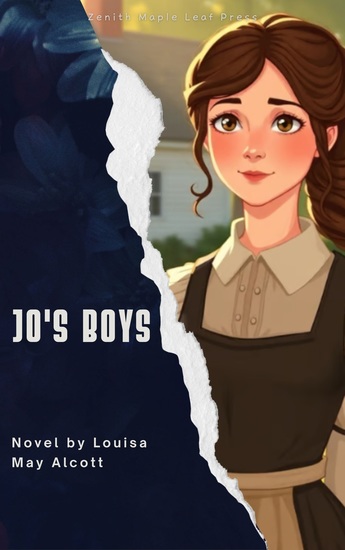
Jo's Boys - The Beloved Finale to Little Women and Little Men - cover
LER

Jo's Boys - The Beloved Finale to Little Women and Little Men

Alcott May

Editora: Zenith Maple Leaf Press

  • 0
  • 0
  • 0

Sinopse

The boys are grown, the world is changing—and life's greatest lessons are yet to come.

In Jo's Boys (1886), Louisa May Alcott brings her treasured Little Women saga to a warm and memorable close. Years have passed since Plumfield's lively school days, and Jo Bhaer now watches with pride, and occasional worry, as her former students—her "boys"—step into adulthood.

Some set out on adventures abroad, others face challenges at home, and each is tested in character, courage, and heart. With humor, wisdom, and tenderness, Alcott explores friendship, ambition, love, and the enduring influence of kindness.

More than a nostalgic return, Jo's Boys is a heartfelt reflection on how the seeds of guidance and compassion bear fruit in the lives of young men and women.

"A tender, satisfying conclusion to one of literature's most cherished family stories." – Literary Classics Review
"Alcott's warmth and moral insight shine as brightly here as in Little Women." – The Guardian

✅ Why Readers Love It:

❤️ The moving conclusion to the Little Women saga

👩‍👦 Themes of mentorship, morality, and growth

📚 Beloved characters reunited in their next chapter

🎯 Click 'Buy Now' to say farewell to Jo, her boys, and the world of Plumfield in this heartfelt classic.
Disponível desde: 15/08/2025.
Comprimento de impressão: 357 páginas.
Outros livros que poderiam interessá-lo

  • George Washington's Rules of Civility and Decent Behavior in Company and Conversation (Deluxe Hardbound Edition) - cover

    George Washington's Rules of...

    George Washington

    • 0
    • 0
    • 0
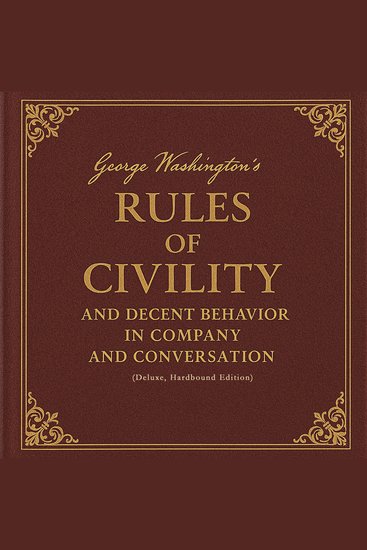
    George Washington's Rules of Civility and Decent Behavior in Company and Conversation is a collection of 110 maxims on etiquette and personal conduct, originally written by Washington as a young man. These concise yet profound rules offer insight into the values of respect, humility, and self-discipline that shaped Washington’s character and leadership. Also included is his first inaugural address, a foundational document that reflects the guiding principles of the early American republic. Together, these texts provide a window into the mindset of one of history’s most influential leaders and highlight the timeless importance of civility and moral conduct.
    Ver livro
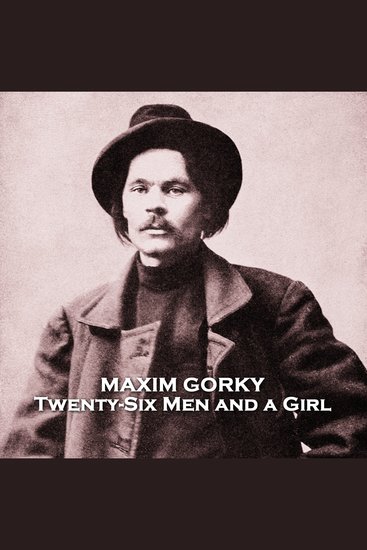
  • Twenty-Six Men and a Girl - From their pens to your ears genius in every story - cover

    Twenty-Six Men and a Girl - From...

    Maxim Gorky

    • 0
    • 0
    • 0
    Alexei Maximovich Peshkov was born on 28th March 1868, in Nizhny Novgorod, Russia. 
    Better known as Maxim Gorky he was orphaned at 11 and ran away from home at 12.  At 19 he had already attempted suicide and thereafter travelled, by foot, across the Russian Empire for 5 years. 
    His first book ‘Essays & Stories’ in 1898 was a sensation and so began a long career as an author of short stories, novels and plays.  Gorky saw writing as a moral and political act that would help to change the unjust world around him.  He was an ardent early advocate of the emerging Marxist movement and publicly opposed the Tsarist regime leading several times to his arrest.  
    In 1904 he began his own theatre but the censor banned every play and Gorky was forced to abandon the project. 
    But Gorky was a financially successful author, editor, and playwright and gave monies to political parties as well as for civil rights and social reform.  The brutal shooting of workers, which set in motion the Revolution of 1905, pushed Gorky more decisively toward radical solutions.  
    In 1906 he went to the United States to raise funds for the Bolsheviks. Those experiences including a scandal over travelling with his lover and not his wife deepened his contempt for the ‘bourgeois soul.’ 
    Gorky now moved to Capri in Italy, both for health reasons and to escape the increasingly repressive times in Russia.  
    An amnesty for the 300th anniversary of the Romanov dynasty saw him return to Russia in 1914. His politics remained close to the Bolshevik cause.  But soon, after the 1918 revolution, his essays referred to Lenin as a tyrant for his senseless arrests and repression.  He was soon appealing to the outside world for food aid after the catastrophic crop failure. 
    In October 1921 Gorky returned to Italy, now in Fascist hands, and settled in Sorrento until 1932.  His health worsened with the onset of tuberculosis. 
    He wrote several successful books there but now decided to find an understanding with the communist regime. Stalin invited him home and his return was hailed as a major propaganda victory.  He was decorated with the Order of Lenin, and a province, a park, and various streets re-named in his honour. 
    But he had his faults too.  In 1933, Gorky co-edited a book on the White Sea-Baltic Canal and denied even a single prisoner died during its construction, but thousands had. As well, knowing that some Nazis were homosexual, a phrase was attributed to him that said ‘exterminate all homosexuals and fascism will vanish’.  Although he was himself was quoting another he was decidedly homophobic. 
    With the increase of Stalinist repression in 1935 Gorky was placed under unannounced house arrest. 
    Maxim Gorky died on the 18th June 1936 from pneumonia.  He was 68. 
    Stalin and Molotov were among those who carried Gorky's urn of ashes at his funeral.
    Ver livro
  • Never Better - Two Kids Their Dad and His Wife's Ghost - cover

    Never Better - Two Kids Their...

    Gonzalo Riedel

    • 0
    • 0
    • 0
    His wife died before their second son turned one. How can he keep her memory alive when there's so much he wants to forget? 


    There was a time before his wife got sick when Gonzalo could think about other things. Where humor was more than a coping mechanism. Life wasn't all about treatments and recovery, or the emptiness he felt when she died. 


    They had kids together. Young kids. Less than a year after their youngest was born and suddenly he was strapping them both into their car seats to drive to their mother's funeral. 


    He used to think he was the glue holding the household together. It didn't take long for him to realize how wrong he'd been. A grieving husband is in no condition to raise kids alone. There were times when he wanted to toss himself into a raging river that would suck him under and bash his skull on the rocks. That's always an option for another day. For now, he'll just squash those feelings and drive the kids to daycare. 


    Does it get easier? Of course. But not right away. They say that hope only comes at the end of a long dark journey, but that isn't entirely true because the journey never really ends. But that means there's good news: hope is everywhere you look.
    Ver livro
  • Samurai - From Feudal Warriors to the Fall of a Legend - cover

    Samurai - From Feudal Warriors...

    Jodie Brooks

    • 0
    • 0
    • 0
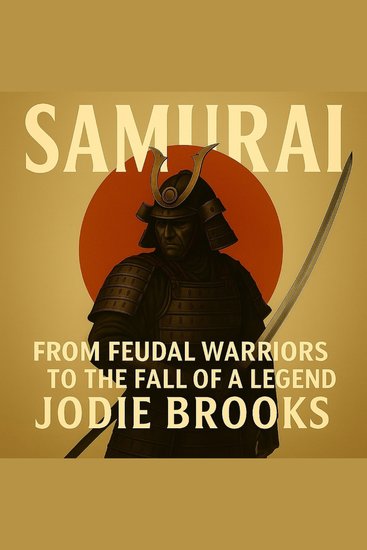
    This audiobook is narrated by an AI Voice.   
    Samurai: From Feudal Warriors to the Fall of a Legend 
    Honor. Power. Betrayal. The true story behind the myth. 
    Step into the shadows of ancient Japan and uncover the riveting saga of the samurai, the elite warrior class whose fierce loyalty, deadly skill, and unbreakable code of honor shaped the destiny of an empire. 
    From their blood-soaked rise during the Heian period to their dominance under the shogunate and eventual downfall in the modern age, Samurai: From Feudal Warriors to the Fall of a Legend brings history to life like never before. Journey through epic battles, political intrigue, and the philosophical heart of bushidō, the soul of the samurai. 
    ✔Richly detailed and deeply researched 
    ✔Features legendary figures like Miyamoto Musashi, Oda Nobunaga, and Tokugawa Ieyasu 
    ✔Perfect for fans of military history, Japanese culture, and epic storytelling 
    Whether you're a seasoned historian or a curious reader, this book offers a gripping narrative that is both educational and unforgettable. Discover how these warrior legends lived, fought, and died, and why their legacy still captivates the world today. 
    Unlock the legend. Learn the truth. Become part of the story.
    Ver livro
  • The Story of B24 - From their pens to your ears genius in every story - cover

    The Story of B24 - From their...

    Arthur Conan Doyle

    • 0
    • 0
    • 0
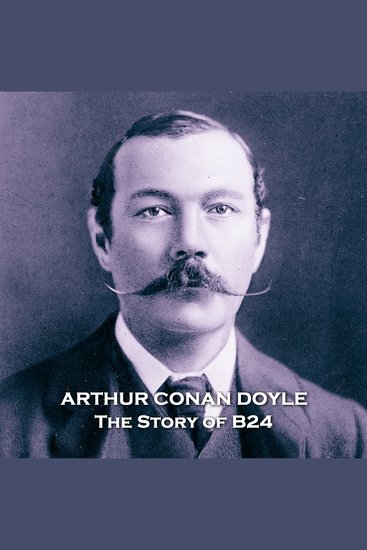
    Arthur Conan Doyle was born in Edinburgh, Scotland on 22nd May 1859.  His childhood was blighted by his father’s heavy drinking which for some years broke up the family. Fortunately, wealthy uncles were willing to support them by paying for education and clothing.  
    He was accepted at the University of Edinburgh to study medicine and also began to write short stories the first, ‘The Haunted Grange of Goresthorpe’, was published in Blackwood’s Magazine.  Despite several other stories and some articles in the British Medical Journal his medical studies took priority. 
    When these finished he was appointed as Doctor on the Greenland whaler ‘Hope of Peterhead’ in 1880 and then, after graduation, as ship’s surgeon on the SS Mayumba on its voyage to West Africa. 
    1882 saw a move to Plymouth and his own independent practice. With few patients he resumed writing and completed his first novel, ‘The Mystery of Cloomber’, although most of his output was short stories based on his experiences at sea.  
    He married Louisa Hawkins in 1885. However, two years later he met and fell in love with Jean Elizabeth Leckie, though they remained platonic out of respect for, and loyalty to, his wife. 
    His literary career suddenly burst into life in November 1886 with ‘A Study In Scarlet’, the first of the fabulously successful Sherlock Holmes stories.  
    With two children to support he now revisited his haphazard commercial arrangements and curtailed everything save for commissions from the Strand Magazine.  
    As a sportsman he was remarkably proficient. He was goalkeeper for Portsmouth Association Football Club and played ten first-class cricket matches for the Marylebone Cricket Club as well as captain of the Crowborough Beacon Golf Club in East Sussex.  
    In 1891 tired of writing Holmes stories, he began a series of historical novels and even went so far as to apparently kill off Holmes in a lethal brawl with his arch-nemesis Moriarty. 
    Despite heavy and sustained criticism he continued to write in support of the Boer War, a fact he thought contributed to his knighthood in 1902.  The following year to great relief and acclaim he brought Sherlock Holmes back from the dead in his first outing for a decade. 
    Sadly, his wife Louisa died from TB in 1906 and, a year later, he at last married Jean.  
    During the War and for several years after family deaths had left him depressed. In a search for solace and answers he alighted upon spiritualism and, such was his interest, that he wrote several books on the subject. 
    On 7th July 1930 Conan Doyle was discovered in the hall of Windlesham Manor, his house in East Sussex, clutching his chest dying of a heart attack.  He was 71.
    Ver livro
  • Angèle au Couvent - A young girls search for happiness in art is challenged by her religious commitments and society - cover

    Angèle au Couvent - A young...

    Mary Butts

    • 0
    • 0
    • 0
    Mary Frances Butts was born on 13th December 1890 in Poole, Dorset. 
     
    Her early years were spent at Salterns, an 18th-century house overlooking Poole Harbour.  Sadly in 1905 her father died, and she was sent for boarding at St Leonard's school for girls in St Andrews. 
     
    Her mother remarried and, from 1909, Mary studied at Westfield College in London, and here, first became aware of her bisexual feelings.  She was sent down for organising a trip to Epsom races and only completed her degree in 1914 when she graduated from the London School of Economics.  By then Mary had become an admirer of the occultist Aleister Crowley and she was given a co-authorship credit on his ‘Magick (Book 4)’. 
     
    In 1916, she began the diary which would now detail her future life and be a constant reference point for her observations and her absorbing experiences. 
     
    During World War I, she was doing social work for the London County Council in Hackney Wick, and involved in a lesbian relationship.  Life changed after meeting the modernist poet, John Rodker and they married in 1918. 
     
    In 1921 she spent 3 months at Aleister Crowley's Abbey of Thelema in Sicily; she found the practices dreadful and also acquired a drug habit.  Mary now spent time writing in Dorset, including her celebrated book of short stories ‘Speed the Plough’ which saw fully develop her unique Modernist prose style. 
     
    Europe now beckoned and several years were spent in Paris befriending many artists and writing further extraordinary stories.   
     
    She was continually sought after by literary magazines and also published several short story collections as books. Although a Modernist writer she worked in other genres but is essentially only known for her short stories.  Mary was deeply committed to nature conservation and wrote several pamphlets attacking the growing pollution of the countryside. 
     
    In 1927, she divorced and the following year her novel ‘Armed with Madness’ was published.  A further marriage followed in 1930 and time was spent attempting to settle in London and Newcastle before setting up home on the western tip of Cornwall.  By 1934 the marriage had failed. 
     
    Mary Butts died on 5th March 1937, at the West Cornwall Hospital, Penzance, after an operation for a perforated gastric ulcer. She was 46. 
     
    In ‘Angèle Au Couvent’ Butts takes up the story of a young school girl desperate for friendships but wrestling with her fluid interpretation of religion.
    Ver livro