¡Acompáñanos a viajar por el mundo de los libros!
Añadir este libro a la estantería
Grey
Escribe un nuevo comentario Default profile 50px
Grey
Suscríbete para leer el libro completo o lee las primeras páginas gratis.
All characters reduced
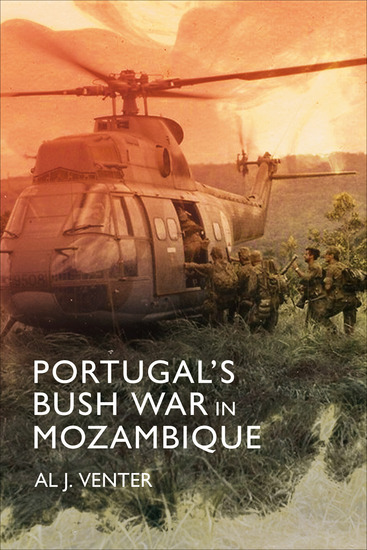
Portugal's Bush War in Mozambique - cover

Portugal's Bush War in Mozambique

Al J. Venter

Editorial: Casemate

  • 0
  • 0
  • 0

Sinopsis

A new account of how Portugal fought a bush war in Mozambique for over a decade.Portugal fought a bush war in Mozambique — one of the most beautiful countries in the world — for over a decade. The small European nation was ranged against formidable odds and in the end was unable to muster the resources required to effectively take on the might of the Soviet Union and its collaborators—every single communist country on the planet and almost all of Black Africa. Yet, Al Venter argues, Portugal did not actually lose the war, and indeed fought in difficult terrain with a good degree of success over an extended period. It was radical domestic politics that heralded the end.  Mozambique is once again embroiled in a guerrilla war, this time against a large force of Islamic militants, many from Somalia and some Arab countries, and unequivocally backed by Islamic State and the lessons of Mozambique’s bush war are still relevant today.
Disponible desde: 19/05/2022.
Longitud de impresión: 314 páginas.


Otros libros que te pueden interesar

  • The Age of Reason - cover

    The Age of Reason

    Thomas Paine

    • 0
    • 0
    • 0
    In "The Age of Reason", which is a classic in American literature, Thomas Paine argues for the philosophical position of Deism.  
    It follows in the tradition of 18th century British deism, and challenges institutionalized religion and the legitimacy of the Bible. 
    Paine's work inspired and guided many free thinkers including Thomas Jefferson, Abraham Lincoln, Mark Twain and Bertrand Russell.
    Ver libro
  • The Oak and the Larch - A Forest History of Russia and Its Empires - cover

    The Oak and the Larch - A Forest...

    Sophie Pinkham

    • 0
    • 0
    • 0
    Russia's forests account for nearly one-fifth of the world's wooded lands. The Oak and the Larch is the first-ever English-language exploration of this vast expanse—a dazzling environmental history of Russia that offers an urgent new understanding of the nature of Russian power, and of Russia's ideas of itself. 
    Award-winning scholar Sophie Pinkham's magisterial account spans centuries, revealing how forests have nourished ancient Siberian indigenous societies, defended medieval Slavic settlements from Mongol invasion, and served as both an essential natural resource and a potent cultural symbol for Russia in all its incarnations. By examining the country from the forest's perspective, Pinkham pushes far beyond the contemporary political environment in Russia. She draws on literature, history, and art to connect the expanse of the Russian wilderness and the nature of Russian culture, with indelible portraits of the diverse figures who have inhabited and celebrated these forests. She confronts the forest's role in Russia's long history of imperial conquest, and in resistance to this conquest. 
    The Oak and the Larch offers a vision of Russia rarely seen in the west, as a land defined by its wilderness, shaped by its encounters with the frontier, and—much like our own—ultimately beholden to nature's whim.
    Ver libro
  • Embracing (Rather Than Fixing) Our Authentic Selves - cover

    Embracing (Rather Than Fixing)...

    JD David Bedrick

    • 0
    • 0
    • 0
    We are a society of armchair psychologists, who are constantly self-diagnosing. There are scores of books and television programs that suggest ways for us to reprogram and rid ourselves of disturbing feelings and behavior patterns. Bedrick is deepening the dialogue about the role and practice of psychology in today’s society. Much of mainstream or “pop” psychology give us plenty of labels, but does it go deep enough to motivate us to truly change destructive patterns? David Bedrick gives us a new vision of psychology where people are seen not as either functional or dysfunctional. It’s a psychology where awareness and dialogue are more important than labels. 
    Mainstream psychology often misses the range of diversity in people and tries to “normalize” them into a sea of sameness. In Process Oriented Psychology, for example, there are no 7 steps to a cure. This branch of psychology acknowledges that everyone is different. Bedrick is an awareness follower and says, “I’m using my awareness in watching all the communication a person gives me, much of which is not verbal.” He follows what they are showing him until the client reveals their own cure or medicine. He gives many exciting examples in this dynamic dialogue. (hosted by Justine Willis Toms)
    Ver libro
  • MacArthur Reconsidered - General Douglas MacArthur as a Wartime Commander - cover

    MacArthur Reconsidered - General...

    James Ellman

    • 0
    • 0
    • 0
    One of America's most controversial generals, Douglas MacArthur's rise through the US Army's ranks was meteoric. However, he did not lead large formations of men in combat until he assumed command of forces in the Philippines in 1941. When war commenced with the bombing of Pearl Harbor, MacArthur's performance on the battlefield was a failure: he underestimated the Japanese, and his poorly trained forces were outmaneuvered and outfought by a much smaller invading force. 


    In his subsequent role as America's shogun in Tokyo, MacArthur was again surprised by an enemy he underestimated. The Korean War yielded his greatest victory, at Inchon, but also his greatest defeat, along the Yalu River. Unwilling to accept anything but complete victory, he openly defied President Truman: MacArthur fatally undermined chances for an early peace and attempted to widen a conflict which threatened to become a third world war. Raging against his subsequent firing, he only truly faded away after he was publicly criticized by a panoply of America's greatest WWII generals. 


    Today, MacArthur still polarizes. Many biographies agree he was a great and patriotic leader marred by a few failures. James Ellman argues the opposite: MacArthur was a lackluster battlefield commander who suffered stunning defeats while undermining the command structure of our military.
    Ver libro
  • The Viking Saga - Discovering the Mythology of the Norsemen - cover

    The Viking Saga - Discovering...

    Odessa Nightshade

    • 0
    • 0
    • 0
    The mythology of the Norsemen is a tapestry woven with gods, giants, heroes, and creatures, shaping the beliefs and culture of the Viking Age. Rooted in oral tradition, these stories were passed down through generations, evolving over time yet retaining their essence. Norse myths explain the creation of the world, the forces that govern existence, and the inevitable fate that awaits all beings, including the gods themselves. Unlike many mythologies that depict their deities as all-powerful, Norse mythology embraces the concept of struggle, destiny, and the impermanence of even the mightiest figures.  
      
    At the heart of Norse mythology is a pantheon of gods divided into two main groups: the Aesir and the Vanir. The Aesir, led by Odin, are associated with war, wisdom, and governance, while the Vanir, including Freyja and Njord, are linked to fertility and prosperity. Though originally at odds, these two factions eventually united, reflecting the Viking worldview of balance between opposing forces. Alongside these deities are powerful figures such as Loki, the trickster, and the Norns, who weave the fates of gods and men alike.  
      
    The Norse cosmos is structured around Yggdrasil, the World Tree, which connects the Nine Realms. These include Asgard, the home of the gods; Midgard, the realm of humans; and Hel, the domain of the dead. This vast and interconnected universe embodies the Viking understanding of life as an intricate web of cause and effect, where fate is both inescapable and deeply intertwined with personal action. 
    Ver libro
  • Spanish and Portuguese in the New World The: The History and Legacy of the First European Rivalry in the Americas - cover

    Spanish and Portuguese in the...

    Editors Charles River

    • 0
    • 0
    • 0
    In 1451, Prince Henry the Navigator helped fund and develop a new type of ship, the caravel, that featured triangular lateen sails and would be able to travel in the open ocean and sail against the wind. In 1488, Bartholomew Diaz rounded the southern tip of Africa, named the Cape of Good Hope by King John of Portugal, and entered the Indian Ocean from the Atlantic. 
    One explorer, Christopher Columbus, sought funding from the Portuguese to search for a passage to Asia by sailing westwards, but he was rejected. At this time in the late 15th century, Portugal’s domination of the western African sea routes prompted the neighboring Crown of Castile and the Catholic monarchs in modern Spain to search for an alternative route to south and east Asia (termed Indies), so they provided Columbus with the funding he required. By the time Christopher Columbus started setting back east from the New World after landing there in October 1492, he had explored San Salvador in the Bahamas (which he thought was Japan), Cuba (which he thought was China), and Hispaniola, the source of gold. As the common story goes, Columbus, en route back to Spain from his first journey, called in at Lisbon as a courtesy to brief the Portuguese King John II of his discovery of the New World. King John subsequently protested that according to the 1479 Treaty of Alcáçovas, which divided the Atlantic Ocean between Spanish and Portuguese spheres of influence, the newly discovered lands rightly belonged to Portugal. To make clear the point, a Portuguese fleet was authorized and dispatched west from the Tagus to lay claim to the “Indies,” which prompted a flurry of diplomatic activity in the court of Ferdinand and Isabella.
    Ver libro