Begleiten Sie uns auf eine literarische Weltreise!
Buch zum Bücherregal hinzufügen
Grey
Einen neuen Kommentar schreiben Default profile 50px
Grey
Jetzt das ganze Buch im Abo oder die ersten Seiten gratis lesen!
All characters reduced
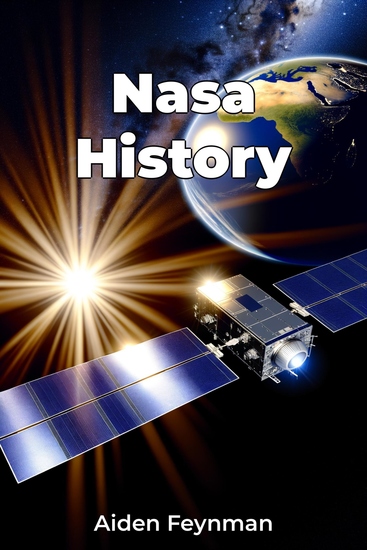
Nasa History - cover

Nasa History

Aiden Feynman

Verlag: Publifye

  • 0
  • 0
  • 0

Beschreibung

"NASA History" presents a fascinating exploration of how America's space agency has fundamentally shaped modern civilization since its establishment in 1958, extending far beyond its famous space missions. The book traces NASA's remarkable journey from a Cold War-era organization focused on beating the Soviets in space to a multifaceted scientific powerhouse that influences nearly every aspect of our daily lives.

 
Through careful examination of NASA's landmark programs - Mercury, Gemini, and Apollo - the book reveals how the quest for space exploration catalyzed unprecedented technological advancement. Readers discover how technologies originally developed for spaceflight have transformed into everyday innovations, from memory foam mattresses to advanced water filtration systems. The narrative skillfully connects aerospace engineering achievements to practical applications in medicine, environmental science, and communications technology, demonstrating the profound impact of space research on terrestrial life.

 
The book progresses chronologically while weaving together three core themes: NASA's organizational evolution, its role in technological innovation, and its ongoing influence on human understanding of Earth and space. Drawing from extensive archives and interviews, it presents a balanced assessment of both triumphs and setbacks, while maintaining an accessible tone that bridges the gap between technical complexity and general understanding. This comprehensive examination of NASA's history illuminates how space exploration continues to drive innovation and shape our future in unexpected ways.
Verfügbar seit: 05.01.2025.
Drucklänge: 102 Seiten.

Weitere Bücher, die Sie mögen werden

  • Area 51 Stonehenge Crystal skulls Poltergeist and our untold history - Everything is connected - cover

    Area 51 Stonehenge Crystal...

    Ian Paterson

    • 0
    • 0
    • 0
    Another incredible book from author Ian Paterson, continuing the same captivating style as the previous books in the series! With a Sherlock Holmes-like approach, Ian dives deep into inconsistencies within mainstream archaeology and science, revealing that there’s far more to these topics than anyone has previously considered. 
    This fast-paced book doesn’t just explore the idea that everything is connected—it explains why! Featuring the latest information on fascinating subjects such as:Area 51Alien CarvingsChanges in the BibleGreek MythsDifferent Types of GreysThe Grand Canyon and Ancient EgyptMemory WipesOut-of-Time ArtifactsPoltergeistsReincarnationThe Shroud of TurinSpace ForceStonehengeVenusCrystal Skulls 
    This is the third book in the series, with each installment containing 15 unique chapters covering a wide range of paranormal and alien-related topics. An exciting and thought-provoking read awaits!
    Zum Buch
  • Mastering OpenCV with Python - Use NumPy Scikit TensorFlow and Matplotlib to learn Advanced algorithms for Machine Learning through a set of Practical Projects - cover

    Mastering OpenCV with Python -...

    Ayush Vaishya

    • 0
    • 0
    • 0
    Unlocking Visual Insights: OpenCV Made Simple and Powerful. 


    ???Book Description
    "Mastering OpenCV with Python" immerses you in the captivating realm of computer vision, with a structured approach that equips you with the knowledge and skills essential for success in this rapidly evolving field. 


    From grasping the fundamental concepts of image processing and OpenCV to mastering advanced techniques such as neural networks and object detection, you will gain a comprehensive understanding. Each chapter is enriched with hands-on exercises and real-world projects, ensuring the acquisition of practical skills that can be immediately applied in your professional journey. 


    This book not only elevates your technical proficiency but also prepares you for a rewarding career. The technological job landscape is constantly evolving, and professionals who can harness the potential of computer vision are in high demand. 


    By mastering the skills and insights contained within these pages, you will be well-prepared to explore exciting career opportunities, ranging from machine learning engineering to computer vision research. This book is your ticket to a future filled with innovation and professional advancement within the dynamic world of computer vision. 


    Table of Contents
    
    1. Introduction to Computer Vision
    2. Getting Started with Images
    3. Image Processing Fundamentals
    4. Image Operations
    5. Image Histograms
    6. Image Segmentation
    7. Edges and Contours
    8. Machine Learning with Images
    9. Advanced Computer Vision Algorithms
    10. Neural Networks
    11. Object Detection Using OpenCV
    12. Projects Using OpenCV   
    Index
    Zum Buch
  • Coding For Beginners - Learn the Techniques and Strategies to Become an Expert in Coding - cover

    Coding For Beginners - Learn the...

    Alexander Cane

    • 0
    • 0
    • 0
    Coding is a very important part of our reality today. It is one of the fabrics that enable the modern world to run efficiently. I know you'd like to learn to code, or at least you know someone who would like to learn to code. But, perhaps you are being held back by the phrase "coding is too hard." I remember a friend telling me this once when I told him of my intention to learn to code. He was like, "Are you serious, it is very hard. You'd actually have to be a genius to learn how to code. In fact, you'd have to be some kind of mad man". We both knew I was neither a genius nor a madman. Fast forward 2 years later, now I know to code. Not just that, I'm also teaching everyday men and women the fundamentals of the subject. 
    There are lots of job opportunities for coders and programmers today. In fact, coding jobs are growing at an astounding rate. If the Internet and data are the infrastructures, then coders are the construction workers. As long as there is infrastructure to be built, construction workers will always have work. It is believed that this trend will continue for a long time. Now is the time to position yourself to benefit from this trend. 
    In this book, you'll be learning the fundamentals of coding languages, how to become an expert in the shortest time possible, and much more. I have attempted to demystify coding because coding is not that difficult, and all you need is a good teacher. This book has been written with you (a beginner) in mind. So there is no unnecessary jargon or words that will fly over your head.
    Zum Buch
  • Ultimate Robotics Programming with ROS 2 and Python - Design Develop and Implement Intelligent Robotics Applications with Advanced Navigation Simulation and Computer Vision for Mobile and Industrial Robots - cover

    Ultimate Robotics Programming...

    Jonathan Cacace

    • 0
    • 0
    • 0
    Learn Robotics and ROS 2 with Practical Examples
    Book Description
    Robot Operating System (ROS) and Python are essential tools for developing advanced robotics applications, offering reliability and scalability for both research and industrial solutions. Ultimate Robotics Programming with ROS 2 and Python introduces readers to ROS 2 without requiring prior experience in robotics. It blends theoretical explanations with practical exercises, empowering readers to solve specific robotics problems while understanding the reasoning behind various approaches.
    The book covers a broad spectrum of robotics topics, including mobile robots, industrial manipulators, and aerial robots. These systems are simulated using the modern Gazebo simulator and programmed with ROS 2’s out-of-the-box tools and custom solutions using the ROS 2 API. The book also delves into computer vision, generative AI, and machine learning, providing hands-on examples of real-world applications.
    Table of Contents
    1. Introduction to Robot Operating System
    2. Hands-on ROS 2 Programming Using Python
    3. Supplementary Tools for ROS
    4. Robot Visualization and Simulation
    5. Writing Tests Using Pytest for ROS 2 Nodes
    6. Controlling an Inverted Pendulum with a PID Controller
    7. Laser-based Obstacle Avoidance with a Wheeled Mobile Robot
    8. ROS 2 Behaviour Trees Using Python
    9. Surveillance System Using Behaviour Trees
    10. Robot Navigation Using ROS 2 Navigation Stack (Nav2)
    11. Robot Arm Control Using MoveIt
    12. Programming Aerial Robots Using ROS
    13. Computer Vision Using ROS
    14. Object Detection Using ROS
    15. Using Large Language Models with ROS
    16. Deep Reinforcement Learning Using ROS 2       
    
    Index
    Zum Buch
  • Bioenergy for the Energy Transition: Ensuring Sustainability and Overcoming Barriers - cover

    Bioenergy for the Energy...

    Irena International Renewable...

    • 0
    • 0
    • 0
    This report provides an overview of the challenges and related policy measures required to scale up the deployment of key bioenergy applications.
    Zum Buch
  • A Rare Recording of US Naval Rear Admiral and Computer Pioneer Grace Hopper Volume 1 - cover

    A Rare Recording of US Naval...

    Grace Hopper

    • 0
    • 0
    • 0
    Grace Brewster Hopper (December 9, 1906 to January 1, 1992) was an American computer scientist, mathematician, and United States Navy rear admiral. A pioneer of computer programming, Hopper was the first to devise the theory of machine-independent programming languages and used this theory to develop the FLOW-MATIC programming language and COBOL, an early high-level programming language still in use today. She was also one of the first programmers on the Harvard Mark I computer. She is credited with writing the first computer manual, "A Manual of Operation for the Automatic Sequence Controlled Calculator." The following audio recording is from a 1982 presentation.
    Zum Buch