Junte-se a nós em uma viagem ao mundo dos livros!
Adicionar este livro à prateleira
Grey
Deixe um novo comentário Default profile 50px
Grey
Assine para ler o livro completo ou leia as primeiras páginas de graça!
All characters reduced
In the Dozy Hours and Other Papers - cover
LER

In the Dozy Hours and Other Papers

Agnes Repplier

Editora: DigiCat

  • 0
  • 0
  • 0

Sinopse

In "In the Dozy Hours, and Other Papers," Agnes Repplier weaves a tapestry of reflective essays that delve into the nuances of everyday life. Her literary style is characterized by meticulous attention to detail and a conversational tone that is both engaging and thoughtful. Repplier engages readers with her keen observations on a variety of subjects, from the simplicity of nature to the complexities of human relationships, all framed within the broader context of late 19th-century American thought, where introspection and aesthetic appreciation were paramount. The collection invites the reader to linger in the quiet moments of life, exploring themes of tranquility and the passage of time, embodying the essence of a bygone era. Agnes Repplier, a noted American essayist born in 1855, was shaped by her upbringing in Philadelphia and a rich intellectual environment that valued literature and the arts. Her familial connections and esteemed educators fostered her early love for writing. Repplier's work reflects her insights into society's intellectual currents and her personal meditations on life—a rich backdrop that informs her essays, revealing a mind deeply engaged with the world around her. This collection is highly recommended for readers who appreciate contemplative writing and desire a deeper connection to their own experiences. Repplier's essays encourage us to slow down and reflect, making "In the Dozy Hours, and Other Papers" an essential read for anyone seeking solace in the written word.
Disponível desde: 16/09/2022.
Comprimento de impressão: 111 páginas.

Outros livros que poderiam interessá-lo

  • Blank Canvas - The Amazing Story of a Woman Who Awoke from a Coma to a Life She Couldn’t Remember - cover

    Blank Canvas - The Amazing Story...

    Marcy Gregg

    • 0
    • 0
    • 0
    When Marcy Gregg awoke from a coma, 13 years had vanished from her memory.She was 30 years old; she thought she was still 17. She didn’t recognize the man who introduced himself as her husband. She stared at pictures of the three children they said were hers, trying desperately to remember them, but her mind was blank.Terrified and confused, Marcy did the only thing she could think of: she faked it. She told the doctors she was starting to remember and bluffed her way through visits from friends and family. Against all odds, it worked: she was released to a home, family, and life she should have known intimately―but seemed to be a stranger’s. How was she going to pull off the biggest acting challenge imaginable―and would her memories ever return?Ghost Boy meets What Alice Forgot in this amazing true story of a woman who lost herself and tried to fight her way back on her own―but who found unexpected beauty in hope, faith, and second chances.
    Ver livro
  • Understanding Feminism - cover

    Understanding Feminism

    Marie-Hélène Bourcier

    • 0
    • 0
    • 0
    The male/female dichotomy is not obvious, and the feminist “we” is far from self-evident; its definition changes according to currents and ideologies. As well as fighting male domination, feminism can also defend different expressions of gender and sexuality. By examining the ideas defended by the different currents and how they fit into the social landscape, this book clarifies the direction in which they must unite if feminism is to remain a historically fertile movement.
    Ver livro
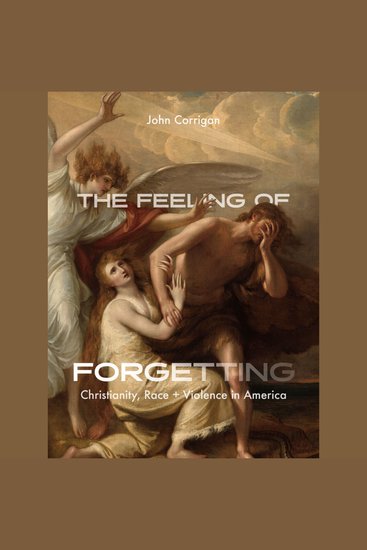
  • The Feeling of Forgetting - Christianity Race and Violence in America - cover

    The Feeling of Forgetting -...

    John Corrigan

    • 0
    • 0
    • 0
    A provocative examination of how religious practices of forgetting drive white Christian nationalism. 
      
    The dual traumas of colonialism and slavery are still felt by Native Americans and African Americans as victims of ongoing violence toward people of color today. In The Feeling of Forgetting, John Corrigan calls attention to the trauma experienced by white Americans as perpetrators of this violence. By tracing memory’s role in American Christianity, Corrigan shows how contemporary white Christian nationalism is motivated by a widespread effort to forget the role race plays in American society. White trauma, Corrigan argues, courses through American culture like an underground river that sometimes bursts forth into brutality, terrorism, and insurrection. Tracing the river to its source is a necessary first step toward healing.
    Ver livro
  • The Battle of Waterloo - Napoleon's Last Stand - cover

    The Battle of Waterloo -...

    Nova Ashford

    • 0
    • 0
    • 0
    In the early months of 1815, Europe found itself once again on the brink of war. Napoleon Bonaparte, exiled to the island of Elba after his abdication in 1814, had made a daring return to France. On March 1, he landed on the southern coast and began a dramatic march north to Paris. Along the way, regiments sent to arrest him instead joined his cause. By mid-March, he had reclaimed power in what would be known as the Hundred Days. This return sent shockwaves across the continent and disrupted the fragile peace established by the Congress of Vienna. 
    The leaders of the major European powers—Britain, Prussia, Austria, and Russia—swiftly moved to form the Seventh Coalition. Their shared goal was simple: defeat Napoleon once and for all. The coalition agreed to raise massive armies and converge on France from multiple directions. Among the key figures in this alliance were the Duke of Wellington, commanding Anglo-allied forces, and Field Marshal Gebhard Leberecht von Blücher, leading the Prussians. Napoleon, ever the strategist, understood the urgency of striking quickly before these forces could unite. 
    France, still weary from years of revolution and war, was divided in its support. While many rallied to Napoleon out of loyalty or fear, others viewed his return as a dangerous setback. Nonetheless, he managed to raise an army of around 124,000 men—smaller than the coalition forces, but composed largely of veterans loyal to him. Napoleon's plan hinged on speed: he would drive a wedge between Wellington and Blücher’s armies in Belgium, defeat them separately, and then force a negotiated peace.
    Ver livro
  • Acceptance-Based Emotion Regulation Therapy - A Clinician's Guide to Treating Emotion Dysregulation and Self-Destructive Behaviors Using an Evidence-Based Therapy Drawn from ACT and DBT - cover

    Acceptance-Based Emotion...

    PhD Matthew T. Tull, PhD Kim L....

    • 0
    • 0
    • 0
    Originally developed for treating self-injury among women with borderline personality disorder, research shows that acceptance-based emotion regulationtherapy is effective in treating emotion dysregulation and related psychiatric symptoms and self-destructive behaviors in a wide range of clients. 


    Acceptance-Based Emotion Regulation Therapy offers an empirically supported protocol that addresses all key dimensions of emotion regulation using evidence-based strategies drawn from dialectical behavior therapy (DBT), acceptance and commitment therapy (ACT), and emotion-focused therapy (EFT), as well as basic behavioral principles—resulting in a treatment that is more targeted and far briefer than comprehensive DBT. 


    With this comprehensive protocol, you'll be fully equipped to treat psychiatric symptoms stemming from emotion dysregulation, self-destructive behaviors serving an emotion-regulating function, and emotion dysregulation more broadly. 


    If you've been searching for an emotion regulation therapy that efficiently and effectively targets all the core dimensions of emotion dysregulation driving your clients' symptoms and clinical difficulties, this guide has everything you need.
    Ver livro
  • The Golden Age of Islam - Science of Culture in the Califhates - cover

    The Golden Age of Islam -...

    Nova Ashford

    • 0
    • 0
    • 0
    The Islamic Golden Age, which spanned from the 8th to the 13th century, was a period of extraordinary cultural, intellectual, and scientific development within the Islamic world. This flourishing era was deeply rooted in the foundational principles of Islam, where the pursuit of knowledge, the preservation of classical texts, and the quest for understanding the natural world were seen as acts of divine service. The Islamic civilization, during this time, became the beacon of knowledge and scholarship, laying the groundwork for significant advances in various fields that would influence the world for centuries to come. 
    The foundation of this golden age can be traced back to the establishment of the early Islamic empire, starting with the Rashidun Caliphate and continuing through the Umayyad and Abbasid Caliphates. Under the Abbasids, particularly, the capital city of Baghdad became a hub of intellectual activity and learning. The Abbasid caliphs, especially during the reign of Caliph Harun al-Rashid and his successors, recognized the importance of knowledge and promoted the translation of Greek, Persian, and Indian texts into Arabic. This movement, known as the translation movement, brought works of classical antiquity, such as those of Aristotle, Galen, and Ptolemy, to Islamic scholars. These translated texts formed the basis of advanced research in fields like philosophy, mathematics, and medicine. 
    At the heart of the Islamic intellectual renaissance was the House of Wisdom (Bayt al-Hikma), an institution established in Baghdad that became a center for scholars from diverse backgrounds. The House of Wisdom hosted translators, philosophers, mathematicians, astronomers, and doctors who would carry out research and engage in dialogue that bridged cultures and philosophies. This institution was instrumental in the synthesis of knowledge from different civilizations, fostering an environment of intellectual collaboration and exchange.
    Ver livro