¡Acompáñanos a viajar por el mundo de los libros!
Añadir este libro a la estantería
Grey
Escribe un nuevo comentario Default profile 50px
Grey
Suscríbete para leer el libro completo o lee las primeras páginas gratis.
All characters reduced
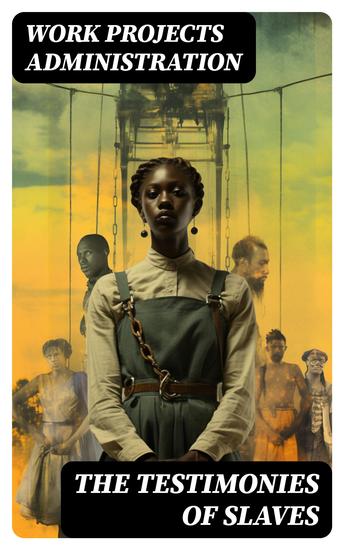
The Testimonies of Slaves - Hundreds of Recorded Interviews and Life Stories of Former Slaves in the South - cover

The Testimonies of Slaves - Hundreds of Recorded Interviews and Life Stories of Former Slaves in the South

Administration Work Projects

Editorial: DigiCat

  • 0
  • 0
  • 0

Sinopsis

The Testimonies of Slaves, a landmark contribution from the Work Projects Administration (WPA), compiles firsthand accounts of African American slaves, illuminating the complexities of their lives and experiences. This profound collection features a rich tapestry of narratives that reflect a multitude of voices, providing a window into the psychological and social dimensions of slavery. The literary style is marked by a raw authenticity that is both haunting and poignant, resonating with the emotional weight of individual testimonies. Set against the backdrop of the Great Depression, this work serves to document an often-overlooked aspect of American history, offering a critical commentary on the legacy of slavery and its enduring impacts on contemporary society. The Work Projects Administration, established during President Franklin D. Roosevelt's New Deal, aimed to provide jobs and preserve cultural heritage. The compilation of these testimonies was driven by a desire to capture the truths of enslaved lives, as many of the witnesses and narrators were aging and fading into memory. This concerted effort reflects a broader cultural movement during the 1930s to recognize and reclaim African American history, emphasizing the importance of primary sources in understanding complex historical realities. I highly recommend The Testimonies of Slaves to scholars, students, and anyone interested in American history, social justice, or African American literature. By providing a platform for marginalized voices, this work not only educates but also urges critical reflection on the narratives that shape our understanding of the past. Engaging with this collection will deepen your appreciation for the resilience of the human spirit amidst the trials of oppression.
Disponible desde: 15/11/2023.
Longitud de impresión: 7859 páginas.

Otros libros que te pueden interesar

  • Tough Rugged Bastards - A Memoir of a Life in Marine Special Operations - cover

    Tough Rugged Bastards - A Memoir...

    John A. Dailey

    • 0
    • 0
    • 0
    Following the 9/11 attacks, Secretary of Defense Donald Rumsfeld directed the Marine Corps to establish a unit that would answer to US Special Operations Command. The eighty-six-man "Detachment One" was formed with a two-year charter to train and deploy as a "proof-of-concept" to assess the viability of a larger Marine Special Operations contribution in support of the Global War on Terror. 


    For such a departure from the norm, a special leader was needed. The Commanding Officer—Colonel Robert J. Coates, a Marine Force Recon legend—was given his pick of personnel. One of the four team leaders he selected was Gunnery Sergeant John A. Dailey. 


    These men built a unit from nothing, trained for unknown missions in an unknown location, and deployed amid controversy and skepticism. Once in Iraq, they were dubbed "Task Unit Raider" and quickly won over the naysayers who doubted the Marine's ability to operate successfully. 


    This book tells Dailey's story of the creation, training, and volatile 2004 Iraq deployment of Task Unit Raider that led to the creation of the Marine Forces Special Operations Command. Det-1 served as the bridge between the Raiders of WWII and the Marine Raiders of today.
    Ver libro
  • W E B DuBois on Sociology and the Black Community - cover

    W E B DuBois on Sociology and...

    W. E. B. DuBois

    • 0
    • 0
    • 0
    Historian, journalist, educator, and civil rights advocate W. E. B. Du Bois was perhaps most accomplished as a sociologist of race relations and of the black community in the United States. This volume collects his most important sociological writings from 1898 to 1910. The eighteen selections include five on Du Bois’s conception of sociology and sociological research, especially as a tool in the struggle for racial justice; excerpts from studies of black communities in the South and the North, including The Philadelphia Negro; writings on black culture and social life, with a selection from The Negro American Family; and later works on race relations in the United States and elsewhere after World War II. This section includes a powerful fiftieth-anniversary reassessment of his classic 1901 article in the Atlantic in which he predicted that “the problem of the twentieth century is the problem of the color line.“ 
     
    The editors provide an annotated bibliography, a lengthy overview of Du Bois’s life and work, and detailed introductions to the selections.
    Ver libro
  • Ted Bundy: The Horrifying Story of the Charming Serial Killer (True Crime) - cover

    Ted Bundy: The Horrifying Story...

    Dawson West

    • 0
    • 0
    • 0
    Step into the twisted mind of America’s most infamous serial killer. 
    Out of all of the world’s most dangerous serial killers, none are more infamous than Ted Bundy. Known as the charming, charismatic killer who stalked young women to commit his unspeakable crimes, Ted Bundy left a dark shadow on America’s history that has haunted our collective consciousness for generations. 
    Delving into the haunting life of this cunning and cold-blooded killer, this eye-opening true crime story exposes his murders in all their gory details. Examining the cruel tricks he’d use to lure in his victims, the investigation that led to his discovery by the police, and the daring jailbreaks that let him slip through the fingers of authorities, inside this true crime novel, you’ll discover a chilling look at the twisted mind and motives of Ted Bundy. 
    Perfect for anyone morbidly curious about the evil that lurks just out of sight, as well as fans of true crime books, Ted Bundy: The Horrifying Story of the Charming Serial Killer offers you a gritty, detailed, and unforgettable look at the monster Ted Bundy became.
    Ver libro
  • Mayan Astronomy: The History of the Maya’s Measurements of the Planets and Stars - cover

    Mayan Astronomy: The History of...

    Editors Charles River

    • 0
    • 0
    • 0
    Many ancient civilizations have influenced and inspired people in the 21st century, and the Greeks and Romans continue to fascinate the West today, but of all the world’s civilizations, none have intrigued people more than the Mayans, whose culture, astronomy, language, and mysterious disappearance all continue to captivate people. In the past decade especially, there has been a renewed focus on the Mayans, whose advanced calendar led many to speculate the world would end on the same date the Mayan calendar ended in 2012.  
    	For the Maya, astronomy was not a purely scientific pursuit but intimately linked to religious, mythological, and ideological elements that were of the highest importance. The celestial realm held a sacred nature, as did the many gods and goddesses that dwelt there, so for all Mesoamerican cultures, astronomy was a fundamental part of their everyday lives. Thus, astronomy was present in their calendars, religion, and even agriculture, and in close relation to astronomy, the concept of time was also an essential part of their worldview. The Maya recorded time on almost every surface they could, including lintels, cornices, panels, stelae, friezes, ceramics, and paper. This insistence on capturing dates has led many scholars to suggest the Maya were obsessed with time. 
    The Maya had some of the most advanced astronomical measurements in the world, and their work built upon thousands of years, spanning from around 2500 BCE until the the arrival of the Spanish in 1519. Thanks to their hieroglyphic writing, archaeologists have been able to learn a wealth of information about the way they lived and their complex system of beliefs.
    Ver libro
  • A Rare Recording of Poet Seamus Heaney’s 1995 Nobel Prize Acceptance Speech - cover

    A Rare Recording of Poet Seamus...

    Seamus Heaney

    • 0
    • 0
    • 0
    Seamus Justin Heaney (April 13, 1939 to August 30, 2013) was an Irish poet, playwright and translator. Among his best-known works is Death of a Naturalist (1966), his first major published volume. American poet Robert Lowell described Heaney as "the most important Irish poet since Yeats." Heaney delivered his Nobel Prize in Literature acceptance speech in Stockholm on December 7, 1995--a powerful defense of poetry as "the ship and the anchor" of our spirit within an ocean of violent, divisive politics and world-sorrow.
    Ver libro
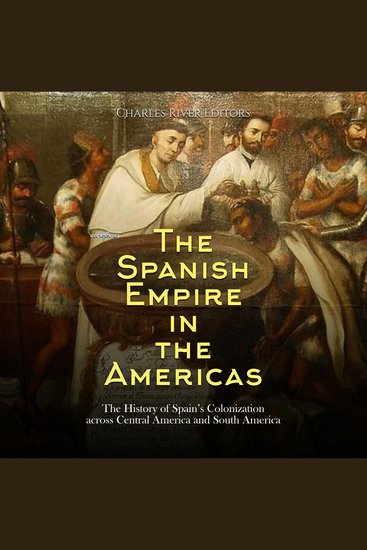
  • Spanish Empire in the Americas The: The History of Spain’s Colonization across Central America and South America - cover

    Spanish Empire in the Americas...

    Editors Charles River

    • 0
    • 0
    • 0
    By the time Christopher Columbus started setting east from the New World, he had explored San Salvador in the Bahamas (which he thought was Japan), Cuba (which he thought was China), and Hispaniola, the source of gold. As the common story goes, Columbus, en route back to Spain from his first journey, called in at Lisbon as a courtesy to brief the Portuguese King John II of his discovery of the New World. King John subsequently protested that according to the 1479 Treaty of Alcáçovas, which divided the Atlantic Ocean between Spanish and Portuguese spheres of influence, the newly discovered lands rightly belonged to Portugal. To make clear the point, a Portuguese fleet was authorized and dispatched west from the Tagus to lay claim to the “Indies,” which prompted a flurry of diplomatic activity in the court of Ferdinand and Isabella. At the time, Spain lacked the naval power to prevent Portugal from acting on this threat, and the result was the hugely influential 1494 Treaty of Tordesillas. 
    The Treaty of Tordesillas was one of the most important documents of its kind of the age, for it established the essential parameters of the two competing empires, the first of the major European imperial entities. The Treaty of Tordesillas drew an imaginary line from pole to pole, running 100 leagues west of the westernmost islands of the Azores. According to the terms of a supporting papal bull, all the lands to the west of that belonged to Spain, and all of those to the east belonged to Portugal. What this meant in practical terms was that Portugal was given Africa and the Indian Ocean while Spain was granted all the lands to the west, including the Americas and the Caribbean, all collectively known as the “Indies,” or the New World. 
    Perhaps inevitably, a regional rivalry had developed as the Portuguese began to establish a colony in Brazil and push its boundaries southwards. 
    Ver libro