Rejoignez-nous pour un voyage dans le monde des livres!
Ajouter ce livre à l'électronique
Grey
Ecrivez un nouveau commentaire Default profile 50px
Grey
Abonnez-vous pour lire le livre complet ou lisez les premières pages gratuitement!
All characters reduced
The Theory of Moral Sentiments - cover

The Theory of Moral Sentiments

Adam Smith

Maison d'édition: Passerino

  • 0
  • 0
  • 0

Synopsis

The Theory of Moral Sentiments is a 1759 book by Adam Smith. It provided the ethical, philosophical, economic, and methodological underpinnings to Smith's later works, including The Wealth of Nations (1776), Essays on Philosophical Subjects (1795), and Lectures on Justice, Police, Revenue, and Arms (1763) (first published in 1896).

Adam Smith (June 1723 – 17 July 1790) was a Scottish economist and philosopher who was a pioneer in the thinking of political economy and key figure during the Scottish Enlightenment. Seen by some as "The Father of Economics" or "The Father of Capitalism", he wrote two classic works, The Theory of Moral Sentiments (1759) and An Inquiry into the Nature and Causes of the Wealth of Nations (1776).
The latter, often abbreviated as The Wealth of Nations, is considered his magnum opus and the first modern work that treats economics as a comprehensive system and as an academic discipline.
Disponible depuis: 28/09/2023.

D'autres livres qui pourraient vous intéresser

  • The 16 Human Desires That Make People Buy - cover

    The 16 Human Desires That Make...

    Reece Wideman

    • 0
    • 0
    • 0
    Legacy is the desire to matter beyond the present moment. 
    It is the pull toward impact — the quiet question that asks what will remain because you were here. 
    In this audiobook, Reece Wideman explores what legacy really is, how it shapes human behavior and buying decisions, and why people are willing to sacrifice comfort for long-term meaning. 
    Listeners will gain insight into how legacy influences business building, parenting, education, investing, and value-driven decision-making — and how intentional living today shapes what is passed on tomorrow. 
    Designed for creators, leaders, and anyone seeking purpose beyond short-term wins, Legacy offers a grounded perspective on one of the deepest human desires.
    Voir livre
  • Day That Will Live in Infamy A: The History and Legacy of Japan’s Initial Attacks against the United States at Pearl Harbor Wake Island and the Philippines on December 7 1941 - cover

    Day That Will Live in Infamy A:...

    Editors Charles River

    • 0
    • 0
    • 0
    All Americans are familiar with the “day that will live in infamy.” At 9:30 a.m. on Sunday, December 7, 1941, Pearl Harbor, the advanced base of the United States Navy’s Pacific Fleet, was ablaze. It had been smashed by aircraft launched by the carriers of the Imperial Japanese Navy. All eight battleships had been sunk or badly damaged, 350 aircraft had been knocked out, and over 2,000 Americans lay dead. Indelible images of the USS Arizona exploding and the USS Oklahoma capsizing and floating upside down have been ingrained in the American conscience ever since. In less than an hour and a half the Japanese had almost wiped out America’s entire naval presence in the Pacific. 
    Less than 24 hours earlier, Japanese and American negotiators had been continuing their diplomatic efforts to stave off conflict in the region, but as they did, President Roosevelt and his inner circle had seen intelligence reports strongly suggesting an imminent attack - though they did not know where. The U.S. rightly believed that Japan would take action to prevent the Americans from interfering with their military activities in Southeast Asia, and American military forces in the Philippines were already bracing for a potential attack. However, as the negotiations were ongoing, the powerful Japanese carrier fleet had been surging southwards through the Pacific while maintaining radio silence, preparing to strike the blow that would ignite war in an area spanning half the globe. 
    Posted on the other side of the world, it was early on the morning of December 8 in the Philippines when American general Douglas MacArthur received news of the Japanese attack on Pearl Harbor hours earlier. With that, it could only be a matter of time before the Japanese attacked the Philippines. Although MacArthur and Allied forces tried to hold out, they could only fight a delaying action, and the Japanese managed to subdue all resistance by the spring of 1942.
    Voir livre
  • Life Death And Love - Berkeley 1969 - Public Talk 3 - cover

    Life Death And Love - Berkeley...

    Jiddu Krishnamurti

    • 0
    • 0
    • 0
    Life, death and love - 5 February 1969 
    • What is it that we call living? 
    • How can a confused mind find somebody who will tell the truth? 
    • When there is no comparison, no opposite, you are actually faced with the fact of anger, then is there anger? 
    • Without knowing what sorrow is, understanding its nature and structure, we shall not know what love is. 
    • What is it to die? 
    • One is never afraid of the unknown; one is afraid of the known coming to an bend. 
    • It is only the mind that has shed all its burdens every day, ended every problem, that is an innocent mind. Then life has a different meaning altogether. Then one can find out what love is."
    Voir livre
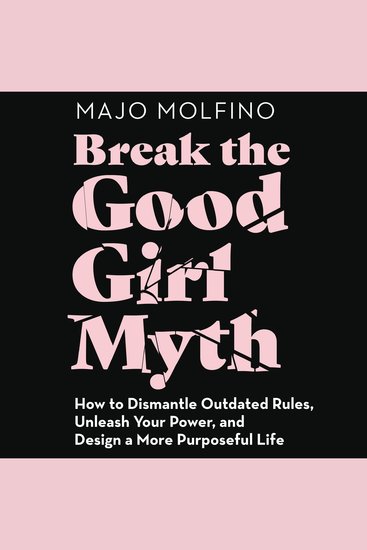
  • Break the Good Girl Myth - How to Dismantle Outdated Rules Unleash Your Power and Design a More Purposeful Life - cover

    Break the Good Girl Myth - How...

    Majo Molfino

    • 0
    • 0
    • 0
    ""A must-read for any woman who is ready to design a life on her own terms.” – Sophia Amoruso, Founder and CEO, Girlboss 
    Women: it’s time to break the good girl myths that are holding you back and share your true gifts with this groundbreaking book from Stanford University-trained designer and women’s leadership expert Majo Molfino. 
    For thousands of years, women have been taught to be “good” instead of powerful. But when we embody the good girl, we hold back their voices and gifts in a world that desperately needs female perspectives.  
    Drawing on countless coaching sessions and conversations with female leaders, Majo identifies five self-sabotaging tendencies (“the five Good Girl Myths”) every woman must overcome to unleash her power and design a more purposeful life: The Myth of Rules 
    The Myth of Perfection 
    The Myth of Logic 
    The Myth of Harmony 
    The Myth of Sacrifice 
    While there are many women’s leadership books, Majo uses her knowledge and training in design thinking (which is used by the world’s most innovative people and companies) to help you build creative confidence and break free from these disempowering myths once and for all.  
    Discover how each myth negatively affects your relationships, career, and well-being and identify your primary good girl myth – the blindspot that’s zapping most of your power as a creative badass.  
    If you’re a woman who can’t seem to get your voice or ideas out into the world, Break the Good Girl Myth will finally help you understand why and light the way out so you can become the woman you’re meant to be.   
    Your time – our time – is now.  
    Supplemental enhancement PDF accompanies the audiobook.
    Voir livre
  • History Speaks - Volume 3 - cover

    History Speaks - Volume 3

    Alfred Lord Tennyson, Frederick...

    • 0
    • 0
    • 0
    Along with historical narrative, hear rare recordings of some of the most people in history, including Alfred Lord Tennyson, William Edward Gladstone, Guiglielmo Marconi, William McKinley, Leo Tolstoy, William Booth, Pope Leo Xlll, Sir Robert Baden-Powell, Dr. Frederick Cook, and Robert E. Peary. Recording obtained and published by Rick Sheridan.
    Voir livre
  • Disembedded - Regulation Crisis and Democracy in the Age of Finance - cover

    Disembedded - Regulation Crisis...

    Basak Kus

    • 0
    • 0
    • 0
    During the last two decades, there has been much scholarly and popular interest in the financialization of the American economy—why the turn to finance has taken place, what constituted it, and what has come out of it. In Disembedded, Basak Kus draws from the theories of Karl Polanyi—one of the greatest and most influential political economists of the twentieth century—to answer these questions. Focused primarily on the state's regulatory role in a dominantly financialized economy, Kus examines how neoliberal principles influenced the evolution of American regulatory policies, shaping the financial sector's operations and practices. Her narrative traces the trajectory of these interactions, highlighting critical junctures, policy decisions, and market outcomes that culminated in the financial crisis. Offering historical insights into the financial crisis spanning 2007-2010 and its ensuing influence on American politics and democracy, Disembedded provides a broad-ranging and systemic explanation of the American political economy, especially the regulatory landscape that shaped the patterns of financialization.
    Voir livre