Junte-se a nós em uma viagem ao mundo dos livros!
Adicionar este livro à prateleira
Grey
Deixe um novo comentário Default profile 50px
Grey
Assine para ler o livro completo ou leia as primeiras páginas de graça!
All characters reduced
Sun TzÅ­ on the Art of War: The Oldest Military Treatise in the World - Enriched edition Strategic Insights from Ancient Warfare Mastery - cover
LER

Sun TzÅ­ on the Art of War: The Oldest Military Treatise in the World - Enriched edition Strategic Insights from Ancient Warfare Mastery

active 6th century B.C. Sunzi

Tradutor Lionel Giles

Editora: Good Press

  • 0
  • 0
  • 0

Sinopse

Sun Tz≈≠ on the Art of War: The Oldest Military Treatise in the World stands as a seminal work in the canon of military strategy and philosophy, providing timeless insights into the art of warfare and governance. Written in the 6th century B.C., Sunzi's treatise is characterized by its concise, aphoristic style which encapsulates complex concepts into succinct maxims. The book encompasses key themes such as the importance of strategy over brute force, the psychological dimensions of combat, and the necessity of adaptability. Embedded in the context of ancient Chinese thought, it resonates with Daoist elements, emphasizing harmony and Wu Wei (non-action), thus shaping the approaches of generations of military leaders and strategists across cultures. The enigmatic figure of Sunzi, whose life remains largely shrouded in mystery, is believed to have drawn from both his military experiences and the sociopolitical turbulence of his time. His insights emerge from an understanding of human nature, the dynamics of power, and the need for disciplined leadership. Some scholars suggest that his work may also reflect the historical context of the Warring States period in China, where strategic acumen was crucial for survival and dominance. I wholeheartedly recommend this influential text to scholars, military enthusiasts, and anyone seeking a deeper understanding of strategy and human conflict. Its relevance transcends its time, serving not only as a guide for military operations but also as a philosophical treatise on leadership, decision-making, and the complexities of human relationships.

In this enriched edition, we have carefully created added value for your reading experience:
- A succinct Introduction situates the work's timeless appeal and themes.
- The Synopsis outlines the central plot, highlighting key developments without spoiling critical twists.
- A detailed Historical Context immerses you in the era's events and influences that shaped the writing.
- An Author Biography reveals milestones in the author's life, illuminating the personal insights behind the text.
- A thorough Analysis dissects symbols, motifs, and character arcs to unearth underlying meanings.
- Reflection questions prompt you to engage personally with the work's messages, connecting them to modern life.
- Hand‐picked Memorable Quotes shine a spotlight on moments of literary brilliance.
- Interactive footnotes clarify unusual references, historical allusions, and archaic phrases for an effortless, more informed read.
Disponível desde: 17/01/2022.
Comprimento de impressão: 216 páginas.

Outros livros que poderiam interessá-lo

  • The Moral Equivalent of War - cover

    The Moral Equivalent of War

    William James

    • 0
    • 0
    • 0
    This essay is based upon a speech given at Stanford University in 1906, William James’ last public utterance and is the original expression of the idea of non-military national service.  While acknowledging the horrors of war and its motives, he also acknowledges the benefits that accrue when groups of people address themselves to a common purpose evident in military behavior.  The modern reader will no doubt find certain attitudes regarding sex, race, and conquest of nature outdated. Nonetheless, one can’t help but admire the enlightened principles that have led to the establishment of the Civilian Conservation Corps, the Peace Corps, VISTA, and AmeriCorps, and will likely be part of the effort to deal with global warming and climate change.The following from the essay is the gist of James’ thesis:“If now -- and this is my idea -- there were, instead of military conscription, a conscription of the whole youthful population to form for a certain number of years a part of the army enlisted against Nature, the injustice would tend to be evened out, and numerous other goods to the commonwealth would remain blind as the luxurious classes now are blind, to man’s relations to the globe he lives on, and to the permanently sour and hard foundations of his higher life. To coal and iron mines, to freight trains, to fishing fleets in December, to dishwashing, clotheswashing, and windowwashing, to road-building and tunnel-making, to foundries and stoke-holes, and to the frames of skyscrapers, would our gilded youths be drafted off, according to their choice, to get the childishness knocked out of them, and to come back into society with healthier sympathies and soberer ideas.”
    Ver livro
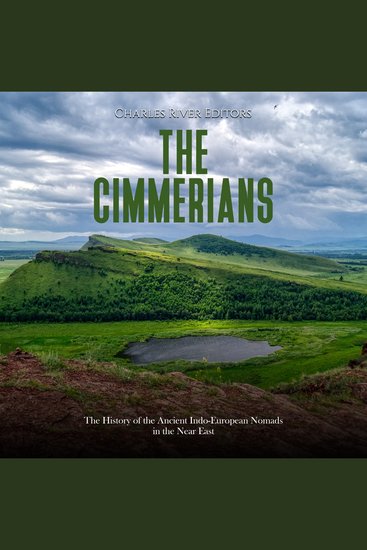
  • Cimmerians The: The History of the Ancient Indo-European Nomads in the Near East - cover

    Cimmerians The: The History of...

    Editors Charles River

    • 0
    • 0
    • 0
    The early 1st millennium BCE was a time of great change and turmoil in the Near East and Eastern Europe. Many of the Bronze Age empires had collapsed, but in their place came new ones in Assyria, Persia, and Babylon, as well as a rejuvenated Egypt. Other peoples also began to enter the historical record and assert themselves. In the wake of the Sea Peoples destruction in Anatolia, the Lydians and Phrygians established powerful kingdoms, and by the 8th century BCE the Greek city-states had formed and the Greeks began establishing colonies along the western coast of Anatolia. Farther to the north in Europe, the Celts were the dominant people, establishing their cultural dominance over most of the continent by the 6th century BCE, while the Scythians and other peoples in what is today Ukraine began to migrate into Anatolia and the Near East.  
    	As the warlike Scythians moved south, they pushed another people known as the Cimmerians south into Assyria and Anatolia, resulting in more destruction and chaos and altering the course of history over the next several centuries. The Cimmerians present historians with many dilemmas because a fair amount is known about them for an approximate 200 year period, but little else before or after that time. It is known the Cimmerians had a major impact on the Assyrians, Lydians, and the people of Uratu in the 7th and 6th centuries BCE, as evidenced by the numerous texts that testify to their ability to level cities and spread fear across the land. At the same time, however, little is known about the Cimmerians’ origins, other than that they probably originated somewhere north of the Caucasus Mountains and were probably Indo-Europeans.  
    	Unlocking the mystery of the Cimmerians’ origins is crucial, and a complete understanding of the group is impossible without it, but there is plenty more to their story.
    Ver livro
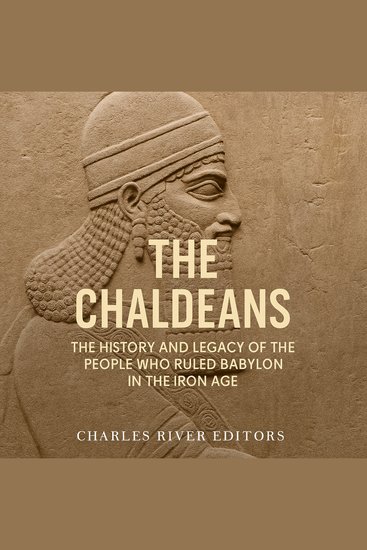
  • Chaldeans The: The History and Legacy of the People Who Ruled Babylon in the Iron Age - cover

    Chaldeans The: The History and...

    Charles River Editors

    • 0
    • 0
    • 0
    Today, Babylon has become a byword for greed, excess, and licentiousness, mostly due to its mention in the Bible, but a closer examination reveals that Babylon was so much more, and even perhaps the most important city in the ancient world. Ancient Babylon was home to great dynasties that produced some of the world’s most influential leaders, most notably Hammurabi and Nebuchadnezzar, and these rulers invoked their wills on the entire ancient Near East and have been remembered as both progressive and cruel all at the same time. Babylon was also the seat of culture in ancient Mesopotamia and the place where scholars made amazing scientific advances that would not be eclipsed for several centuries. Babylon was also instrumental in the development of the region’s religions, and naturally, Westerners have been fascinated by the close connections between some of the Mesopotamian religious texts, which include a flood story, a creation story and a story of the righteous sufferer, and their parallels in the Hebrew Bible.  
    	The Chaldeans were among the last of the native Mesopotamian peoples to rule ancient Babylon. Before them, Akkadians, Kassites, Assyrians, and others ruled the land situated in the middle of Mesopotamia, and before them, the Sumerians ruled southern Mesopotamia and briefly most of the region in the late 3rd millennium BCE. Understanding ancient Mesopotamia requires knowing studying how different city-states and ethnic groups were often vying for power, asserting themselves and their ethnic identities while simultaneously accepting core elements of Mesopotamian culture – notably language, science, religion, and historiography – as they played a role in the region’s development.  
    	What makes the Chaldeans unique, however, is that they can be traced to the Levant. Sometime in the late 2nd millennium BCE, the Chaldeans began a trek across the region, as many people did at that time, and eventually occupied land along the Euphrates River.
    Ver livro
  • The Dog Who Followed the Moon - cover

    The Dog Who Followed the Moon

    James Norbury

    • 0
    • 0
    • 0
    From the international bestselling author and illustrator of Big Panda and Tiny Dragon and The Cat Who Taught Zen comes a beautifully illustrated adult fable of a lost young puppy, the old wolf who rescues her, and their journey to follow the moon—with meditations on friendship, connection, and sacrifice. 
    Deep in the mountain forests, a young pup named Amaya wanders lost and alone, until an aging wolf rescues her from a terrifying encounter with his vicious pack. To try and reunite Amaya with her parents, the unlikely pair embark on a journey to follow the moon. 
    Eerie woods, forgotten cities, and other obstacles await Amaya and the Wolf on their adventure. As they make their way through the wilderness, the two learn profound lessons about love, sacrifice, and the importance of embracing change. 
    From bestselling author and illustrator James Norbury, The Dog Who Followed the Moon is a moving, poignant reflection on love and loss, grief and growth.
    Ver livro
  • You Are Not a Fraud - A Scientist's Guide to the Imposter Phenomenon - cover

    You Are Not a Fraud - A...

    Marc Reid

    • 0
    • 0
    • 0
    YOU'RE NOT GOOD ENOUGH! 
    Those people to whom you compare yourself are every bit as superior as you believe them to be. They belong there. They know more than you. Your achievements don't count. And you're just not that clever. 
    Why bother? Give up. Go home...before you get found out. 
    Sound familiar? 
    This is how you speak to yourself if you think you're going to be found out and thrown out of your workplace. 
    This is how you speak to yourself when you think you're a phoney...but all of the evidence says otherwise. 
    This is how you speak to yourself when you're suffering from the Imposter Phenomenon. 
    My own thoughts of the Imposter Phenomenon almost made me quit before I got started. I almost gave up on my career before there ever was one. I almost gave up on myself. 
    In You Are (Not) a Fraud, I invite you to come with me as I share some of the hidden data behind the Imposter Phenomenon. Come with me as I tell you the stories that can help you understand that it's NOT the Imposter 'Syndrome'! 
    We can all understand what true imposters are. 
    We can all understand how to be mindful of useless comparisons we make between ourselves and other people. 
    We can all understand how the Imposter Phenomenon might always be there...but it should never stop you doing exactly what you want to do. 
    This is not an imposter syndrome book. It's the book that will help you to ditch the term 'imposter syndrome' forever...
    Ver livro
  • Stay Here - Uncovering God's Plan to Restore Your Mental Health - cover

    Stay Here - Uncovering God's...

    Jacob Coyne, Nick Vujicic

    • 0
    • 0
    • 0
    Please stay. The world is so much better with you in it. 


    Every forty seconds, someone takes his or her life. Anxiety, depression, and suicide are at all-time highs—and they're stealing our sons, daughters, friends, and spouses. 


    With tender passion and bold hope, Jacob Coyne, founder of Stay Here, infuses life into the dark corners of mental health. Giving hurting souls a reason to live, he shows not only how Jesus brings life to the full, but also how anyone—regardless of their past or pain—can find healing, including how to attack our anxiety and calm our storms; defeat depression and live with a sound mind; overcome intrusive suicidal thoughts and enjoy life; and transform pain, trauma, suicidal thoughts, and addictions into purpose. 


    It's okay to not be okay—but you don't have to stay that way. It's time to shine the hope of Christ into the darkness and witness His love transform broken souls into living, breathing signs to live.
    Ver livro