Rejoignez-nous pour un voyage dans le monde des livres!
Ajouter ce livre à l'électronique
Grey
Ecrivez un nouveau commentaire Default profile 50px
Grey
Abonnez-vous pour lire le livre complet ou lisez les premières pages gratuitement!
All characters reduced
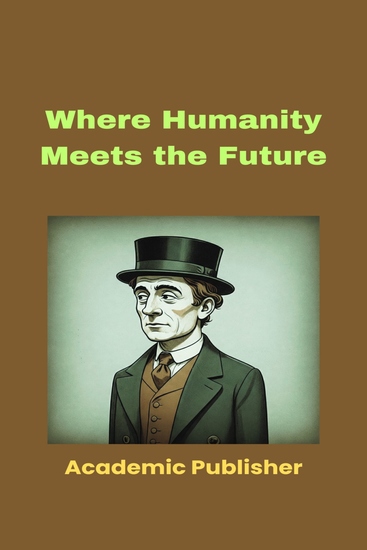
Where Humanity Meets the Future - cover

Where Humanity Meets the Future

Academic Publisher

Maison d'édition: Royal Co.

  • 0
  • 0
  • 0

Synopsis

Where Humanity Meets the Future
 
Ever feel like the world is changing faster than you can keep up? Yeah, me too. That's why I wrote this book. It's a guide to help us navigate the crazy, exciting, and sometimes scary trends shaping our lives. We'll dive into how social media is rewiring our brains, explore the mind-blowing potential of AI (and why it won't take over the world... probably!), and face the urgent reality of climate change.


But it's not all doom and gloom! We'll also unlock the secrets of learning, discover the power of mindfulness in our always-on world, and explore how to find happiness in the midst of it all.  Think of it as your roadmap to thriving in the 21st century.  We'll tackle gene editing, the future of work, and even how to stay safe in the wild west of cyberspace.  Ready to explore the future, together?


This book is a deep dive into the 17 most important trends shaping the 21st century. It's about understanding how technology, society, and our own minds are evolving.  It explores the challenges we face, like climate change and social division. It also highlights the incredible opportunities ahead, from AI-powered solutions to a more inclusive world.  The book draws on psychology, sociology, and even neuroscience to give you a complete picture. It's packed with the latest research and insights.


What makes this book different?  It's not just about understanding the future; it's about shaping it.  It gives you the tools to think critically and become an active participant in creating the world you want to live in.  Other books might tell you what's coming, but this one empowers you to make a difference. It's a call to action for anyone who wants to make the most of this incredible moment in history.
Disponible depuis: 03/06/2025.
Longueur d'impression: 188 pages.

D'autres livres qui pourraient vous intéresser

  • Girl as Birch - Poems - cover

    Girl as Birch - Poems

    Rebecca Kaiser Gibson

    • 0
    • 0
    • 0
    Gibson’s previous book Opinel, starts and ends on the image of a workaday knife used by shepherds, peasants, and artists, using her sensitive and critical eye to explore family, culture, nature, and the world we inhabit. In Girl as Birch, Gibson turns her attention to the experience of growing up as a girl in the United States, coming of age while pushing against expectations for what a girl should be. The title poem uses the image of a birch tree to describe the pressure to bend to what others want: 
    Rebecca Kaiser Gibson is the author of Opinel (Bauhan Publishing, 2015) and two chapbooks, Admit the Peacock and Inside the Exhibition. She is the recipient of fellowships from MacDowell, The Heinrich Böll Cottage in Ireland, and the 2008 Fellowship in Poetry, Massachusetts Cultural Council, and was selected as a Fulbright Scholar to teach poetry in Hyderabad, India, in 2011. She is founder and director of The Loom, Poetry in Harrisville, a poetry reading series. Her poems have appeared in The Adroit Journal; Agni; Field; The Greensboro Review; Green Mountain Review; The Harvard Review; The Massachusetts Review; Ocean State Review; Salamander; Slate; and been featured in VerseDaily. Rebecca lives in Marlborough, New Hampshire, and taught poetry at Tufts University for twenty-three years. 
    Praise for Girl as Birch: “Rebecca Kaiser Gibson’s Girl as Birch is a wonder of lyric compression and subtle music. At times deeply personal, at times nearly mythic, these poems meditate on the complexities of memory and mortality, the fact of the female body, and the lessons of the natural world, cultivated and wild. These are beautiful poems and I’ll return to them with great pleasure.”  ––Kevin Prufer, author of The Art of Fiction
    Voir livre
  • The Eurasian Century - Hot Wars Cold Wars and the Making of the Modern Century - cover

    The Eurasian Century - Hot Wars...

    Hal Brands

    • 0
    • 0
    • 0
    We often think of the modern era as the age of American power. In reality, we're living in a long, violent Eurasian century. That giant, resource-rich landmass possesses the bulk of the global population, industrial might, and potential military power. Eurasia is a strategic prize without equal—which is why the world has been roiled, reshaped, and nearly destroyed by clashes over the supercontinent. 


    Since the early twentieth century, autocratic powers have aspired for dominance by seizing commanding positions in the world's strategic heartland. Offshore sea powers, namely the United Kingdom and America, have sought to make the world safe for democracy by keeping Eurasia in balance. America's rivalries with China, Russia, and Iran are the next round in this geopolitical game. If this new authoritarian axis succeeds in enacting a radically revised international order, America and other democracies will be vulnerable and insecure. 


    Hal Brands argues that a better understanding of Eurasia's strategic geography can illuminate the contours of rivalry and conflict in today's world. The Eurasian Century explains how revolutions in technology and warfare, and the rise of toxic ideologies of conquest, made Eurasia the center of twentieth-century geopolitics—with pressing implications for the struggles that will define the twenty-first.
    Voir livre
  • Carl Jung and Alcoholics Anonymous - The Twelve Steps as a Spiritual Journey of Individuation - cover

    Carl Jung and Alcoholics...

    Ian McCabe

    • 0
    • 0
    • 0
    The author visited the archives of the headquarters of A.A. in New York, and discovered new communications between Carl Jung and Bill Wilson. For the first time this correspondence shows Jung's respect for A.A. and in turn, its influence on him. In particular, this research shows how Bill Wilson was encouraged by Jung's writings to promote the spiritual aspect of recovery as opposed to the conventional medical model which has failed so abysmally. The book overturns the long-held belief that Jung distrusted groups. Indeed, influenced by A.A.'s success, Jung gave "complete and detailed instructions" on how the A.A. group format could be developed further and used by "general neurotics". Wilson was an advocate of treating some alcoholics with LSD in order to deflate the ego and induce a spiritual experience. The author explains how alcoholism can be diagnosed and understood by professionals and the lay person; by examining the detailed case histories of Jung, the author gives graphic examples of its psychological and behavioural manifestations. 
     
    This audiobook is expertly read and engineered by Peter Coates. It was produced and published by Echo Point Books & Media, an independent bookseller in Brattleboro, Vermont.
    Voir livre
  • Age of Reason - The Crucial Time in Which the Renaissance and Transformation in Knowledge Took Place (3 in 1) - cover

    Age of Reason - The Crucial Time...

    Kelly Mass

    • 0
    • 0
    • 0
    This is a 3 in 1 combo, with the following topics: 
    1 - Age of Enlightenment: Finally… finally, humanity began to wake up. Finally, they decided to take science, knowledge, politics, development, multiple angles and perspectives, and the details of our everyday lives a bit more seriously. For centuries, raw and primal urges and principles had taken hold of conquerors, officials, and governments. But there was a light at the end of the tunnel. Humanity just needed to acknowledge knowledge. It needed to value the art of studying phenomena and learning, not just spiritual notions and religion. Welcome to the book about how this happened. Welcome to a glimmer of hope in humanity’s realization of what this world is and what lies in the elements yet to be discovered. 
    2 - Renaissance: The Renaissance is a time in European history marking the shift from the Middle Ages to modernity and covering the 15th and 16th centuries, identified by an effort to restore and exceed ideas and accomplishments of classical antiquity. It happened after the Crisis of the Late Middle Ages and was related to great social change. Aside from the basic periodization, advocates of a "long Renaissance" might put its start in the 14th century and its end in the 17th century. 
    3 - Dutch East India Trading Company: Did you know that the Dutch were some of the first who came up with stocks? They were also known for their gigantic fleet, their ships, their colonies, and so much more. The 17th century was a golden age, a golden century for the Dutch, who discovered how to go to the new world in Asia, America, and other continents to transport spices, minerals, and other materials. 
    The Dutch East India Company, officially the United East India Company (Dutch: Vereenigde Oost Indische Compagnie; VOC), was a megacorporation created in the early 17th century by a government-directed merger of many competing Dutch trade services.
    Voir livre
  • Turkish War of Independence The: The History of the Conflicts that Created the Modern State of Turkey - cover

    Turkish War of Independence The:...

    Editors Charles River

    • 0
    • 0
    • 0
    The fall of the Ottoman Empire set the political and geostrategic scene of the new Middle East. In 1920, two years after the end of the war, the region was already experiencing growing instability. The issues and trends that would plague the region until today were growing. On April 4, Arab riots broke out in Jerusalem, fueled by the growing hostility against the Zionist movement. The British passivity would convince one of the Jewish leaders, Vladimir Jabotinsky (the future founder of the Israeli right-wing), of the strategic necessity of a strong Jewish military as the core of the future state.  
    	Just two weeks later in Turkey, the Grand National Assembly in Ankara set the foundation of the Turkish state, opening the way for several years of reforms. In Iraq, a Shiite revolt broke out in the south, as locals demanded the creation of an Islamic state. The British compromise was to place Faisal, the son of Sharif Hussein and a Sunni, on the throne. His father, meanwhile, was embroiled in a conflict with a local tribe, the Ibn Saud, that sought to carve a new kingdom in the Arabian Peninsula. 
    	As this makes clear, the collapse of the Ottoman Empire entirely altered the imperial complexion of the world, leaving a vacuum in the midst of which the surviving imperial powers felt obligated to secure and protect their strategic interests. More broadly, the long decline of the “sick man of Europe” fostered the emergence of nationalistic and ideological movements that are still key to any understanding of the Middle East today. The compatibility between the Islamic religion and culture and Western reforms were first discussed within the Ottoman Empire, and they are still up for debate today. Abdul Hamid’s pan-Islamism, while its results at the time remain limited, still resonates within the Muslim world and can still be seen as a viable rival to the region’s various nationalistic aspirations. 
    Voir livre
  • Psychology - The Basics - cover

    Psychology - The Basics

    Rolf Reber

    • 0
    • 0
    • 0
    This compact introduction is the ideal primer for anyone looking for an accessible overview of the basic principles of psychology, the fascinating science of mind and behavior.In everyday life we often ask why people act the way that they do, especially when we encounter or hear about puzzling behavior. Psychology: The Basics introduces everyday explanations of behavior, considering them through a psychological lens. Illustrating how behavior can be explained through fundamental psychological principles, the book covers the core areas of cognitive, developmental, and social psychology as well as behaviorism, the human brain, our emotions, personality and individual differences, and psychological disorders. This book, which includes further reading in each chapter for those wishing to study more deeply, is the perfect easy-to-understand introductory text for students, teachers, health personnel, human resource managers, administrators, and anyone interested in the human mind and behavior.
    Voir livre