¡Acompáñanos a viajar por el mundo de los libros!
Añadir este libro a la estantería
Grey
Escribe un nuevo comentario Default profile 50px
Grey
Suscríbete para leer el libro completo o lee las primeras páginas gratis.
All characters reduced
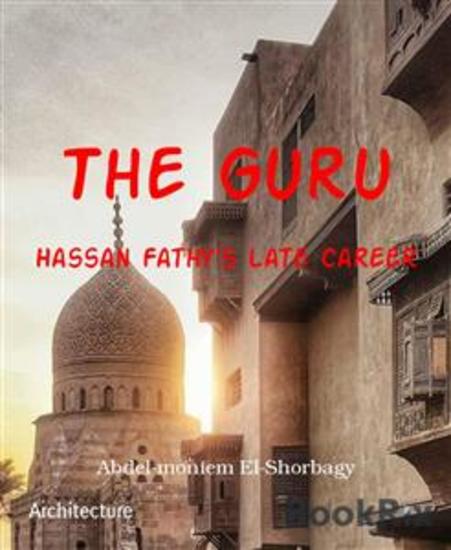
The Guru - Hassan Fathy's Late Career - cover

The Guru - Hassan Fathy's Late Career

Abdel-moniem El-Shorbagy

Editorial: BookRix

  • 0
  • 0
  • 0

Sinopsis

Hassan Fathy returned from Athens to live in Cairo in 1962. He was thoroughly depressed at the thought of having to live among the noisy, crowded streets of modern Cairo. However, he lived in a flat in the Aly Labib house, a Mamluk house built in the 18th century and was known as Beit Al-Fan (home of the art). Not surprisingly, Fathy’s belief in the value of tradition was still strong. His primary concern was to develop his mud-brick style and the self-help building approach, which he had been experimenting with since the mid-1940s. In the period between 1962 and 1967, Fathy experienced misfortune in realizing many projects. However, since 1967 until his death in 1989, Fathy’ traditional approach began to be appreciated and he was able to design and build many different residential projects as well as commercial ones. In the 1980, Fathy’s effort was acknowledged by many awards including, the United Nations Peace Medal, the Aga Khan Award for Architecture, and the first Gold Medal of the Union Internationale des Architects. In 1989, Fathy died in his 18th century Mamluk house, Cairo.
Disponible desde: 20/12/2023.
Longitud de impresión: 60 páginas.

Otros libros que te pueden interesar

  • The Story of Harshad Mehta - cover

    The Story of Harshad Mehta

    Aman Redhu

    • 0
    • 0
    • 0
    Mehta's involvement in the 1992 Indian securities scam made him infamous as a market manipulator. Harshad Shantilal Mehta. Born. Harshad Mehta.
    Ver libro
  • Making Tutus - cover

    Making Tutus

    Amanda Hall

    • 0
    • 0
    • 0
    Making Tutus is a practical guide to making these traditional costumes for classical ballet dancers. As with the tutu itself, the book approaches the task in three parts – the tutu plate, the bodice and the decorative sections. It shares the secrets of a leading costume-maker as it explains the challenging task of, on the one hand, creating a light and beautiful ballet outfit suitable for performance and, on the other, making a comfortable and hardwearing costume that suits a character. In doing so, it reveals the extraordinary talent and techniques required by the costume-maker.
    Ver libro
  • The Forerunner & The Madman - cover

    The Forerunner & The Madman

    Kahlil Gibran

    • 0
    • 0
    • 0
    Most famously known for his book The Prophet, the Lebanese poet Kahlil Gibran, who has been called "the single most important influence on Arabic poetry and literature during the first half of [the twentieth] century."Contained herein are two lesser known works. The Madman was the first book Kahlil published in English, and it's success was enough for The Forerunner to be released by the same publisher less than two years later.
    Ver libro
  • The Alchemist - cover

    The Alchemist

    Ben Jonson

    • 0
    • 0
    • 0
    An outbreak of plague in London forces a gentleman, Lovewit, to flee temporarily to the country, leaving his house under the sole charge of his butler, Jeremy. Jeremy uses the opportunity given to him to use the house as the headquarters for fraudulent acts. He transforms himself into 'Captain Face', and enlists the aid of Subtle, a fellow conman and Dol Common, a prostitute.    In The Alchemist, Jonson unashamedly satirizes the follies, vanities and vices of mankind, most notably greed-induced credulity. People of all social classes are subject to Jonson's ruthless, satirical wit. He mocks human weakness and gullibility to advertising and to "miracle cures" with the character of Sir Epicure Mammon, who dreams of drinking the elixir of youth and enjoying fantastic sexual conquests. The Alchemist focuses on what happens when one human being seeks advantage over another. In a big city like London, this process of advantage-seeking is rife. The trio of con-artists - Subtle, Face and Dol - are self-deluding small-timers, ultimately undone by the same human weaknesses they exploit in their victims.
    Ver libro
  • The Kushan Empire - Rulers and the Spread of Buddhism - cover

    The Kushan Empire - Rulers and...

    Rolf Hedger

    • 0
    • 0
    • 0
    The Kushan Empire, one of the most influential powers in Central and South Asia, originated from the nomadic Yuezhi people. The Yuezhi were an Indo-European group that initially resided in the western regions of China, near the Tarim Basin. However, in the 2nd century BCE, they were forced to migrate westward due to conflicts with the Xiongnu, a dominant steppe confederation. This migration led them into Central Asia, where they eventually settled in the Bactrian region, which had previously been under Greek influence following the campaigns of Alexander the Great. 
    Over time, the Yuezhi tribes consolidated their power, and by the 1st century CE, one of their clans, the Kushans, emerged as the dominant force. Kujula Kadphises, the first major ruler of the Kushan Dynasty, is credited with unifying the fragmented Yuezhi groups and establishing the foundation of the empire. Under his leadership, the Kushans expanded their influence, incorporating regions of modern-day Afghanistan, Pakistan, and northern India. His military campaigns against the remnants of the Indo-Greek and Indo-Scythian kingdoms allowed the Kushans to gain control over crucial trade routes, solidifying their position as a major power in the region. 
    The early political structure of the Kushan Empire reflected its nomadic roots while incorporating elements from the civilizations it encountered. The rulers maintained a centralized authority but allowed local governance to continue in many areas, a practice that helped integrate diverse cultural and ethnic groups into the empire. This pragmatic approach to governance enabled the Kushans to sustain their rule over a vast and multicultural domain.
    Ver libro
  • Modernization and Reform - Den Xiaoping's Legacy - cover

    Modernization and Reform - Den...

    Jun Liu

    • 0
    • 0
    • 0
    Deng Xiaoping’s rise to power is a tale marked by perseverance, political acumen, and the ability to navigate the turbulent political landscape of 20th-century China. Born in 1904 in the Sichuan province, Deng’s early life was shaped by his education in France, where he studied at the University of Paris. His exposure to Marxist ideas during this time laid the foundation for his later role in the Chinese Communist Party. Upon his return to China, Deng became an important figure in the party’s early years, rising through the ranks as a trusted leader. 
    Deng’s political career began during the Second Sino-Japanese War, where he served in key military roles, building his reputation as a capable leader. However, it was during the Chinese Civil War that Deng truly began to cement his place in the party hierarchy. His involvement in the revolution and his leadership of various military campaigns helped to solidify his standing as a rising star in the Communist Party. Despite the chaos and upheaval surrounding the war, Deng’s strategic thinking and leadership made him an indispensable figure in the fight against both the Japanese and later the Nationalists. 
    After the establishment of the People’s Republic of China in 1949, Deng continued to rise through the ranks of the Communist Party, serving in various influential positions. However, his career was not without its setbacks. During the Cultural Revolution, a political movement led by Mao Zedong, Deng fell out of favor and was purged from his positions of power. He was sent to work on a farm, and his political influence was effectively diminished. Yet, despite these challenges, Deng’s political resilience would eventually lead to his return to power.
    Ver libro