¡Acompáñanos a viajar por el mundo de los libros!
Añadir este libro a la estantería
Grey
Escribe un nuevo comentario Default profile 50px
Grey
Suscríbete para leer el libro completo o lee las primeras páginas gratis.
All characters reduced
The Architecture of Roger Walker - Theory and Application - cover

The Architecture of Roger Walker - Theory and Application

Abdel-moniem El-Shorbagy

Editorial: BookRix

  • 0
  • 0
  • 0

Sinopsis

The New Zealand architect Roger Walker has contributed significantly to the development of New Zealand architecture. He believes that building can make people happy and a good building adds to what nature has given humankind. Walker says that “We have a duty to build well. Our perception of cultural meaning and hence part of the pleasure of being is tied up in how we make our places”. It has been said that his creativity could lead him into another direction than architecture but he has devoted much of his time developing his architecture. Walker argued that he loved what he is doing. He has loved building things from the time he built model aeroplanes as a kid.
Disponible desde: 20/12/2023.
Longitud de impresión: 36 páginas.

Otros libros que te pueden interesar

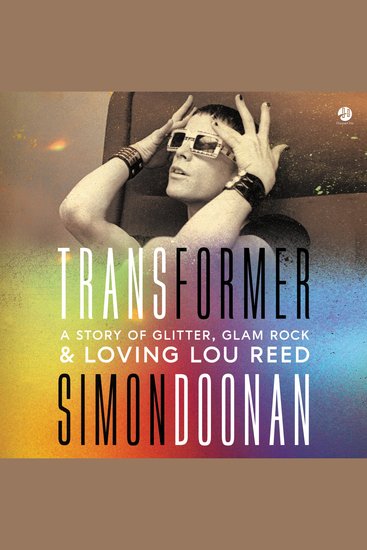
  • Transformer - A Story of Glitter Glam Rock and Loving Lou Reed - cover

    Transformer - A Story of Glitter...

    Simon Doonan

    • 0
    • 0
    • 0
    In this funny and poignant memoir and cultural history, the television personality, columnist, and author of Drag pays homage to Lou Reed’s groundbreaking album Transformer on its fiftieth anniversary and recalls its influence on his coming of age and coming out through glam rock. 
    In November 1972, Lou Reed released his album, Transformer because he thought it was “dreary for gay people to have to listen to straight people’s love songs.” That groundbreaking idea echoed with the times. That same year, Sweden was the first country to legalize gender-affirming surgery, and San Francisco struck down employment discrimination based on sexual orientation. 
    Sometimes an artistic creation perfectly aligns with a broader social and political history, and Transformer—with the songs “Walk on the Wild Side,” “Perfect Day,” and “Vicious”—perfectly captured its time. “Walk on the Wild Side” was banned on radio across the country but became a massive hit when young people threatened to boycott stations that would not play it. The album's cover featured a high-contrast image of Lou, flaunting a new mascara'd glamrock incarnation, shot by legend Mick Rock, thereby underscoring his intention to create ""a gay album."" 
    In Transformer, Doonan tells the story of how Lou Reed came to make the album with the help of David Bowie, and places its creation within the course of Reed’s life. Doonan offers first-hand testimony of the album’s impact on the LGBTQ+ community, recalling how it transformed his own life as a 20-year-old working class kid from Reading, England, who had just discovered the joys of London Glam Rock and was sparked by the artistic freedom of Warhol’s The Factory. Transformer was a revelation—hearing Reed’s songs, Doonan understood how the world was changing for him and his friends. 
    A poignant, personal addition to modern music and LGBTQ+ history, Transformer captures a pivotal moment when those long silenced were finally given a voice. As transgender icon Candy Darling, highlighted in his lyrics, told Reed, “It’s so nice to hear ourselves.” 
    Supplemental enhancement PDF accompanies the audiobook. 
    This book would make a great gift for any music lover, LGBTQ+ activist, or history buff looking to learn more about the cultural impact of Lou Reed's Transformer album on the world.
    Ver libro

  • The Way They Were - How Epic Battles and Bruised Egos Brought a Classic Hollywood Love Story to the Screen - cover

    The Way They Were - How Epic...

    Robert Hofler

    • 0
    • 0
    • 0
    It's one of the greatest movie romances of all time. Yet the friction and controversy surrounding The Way We Were was so enormous, the movie was nearly never made at all. 


    Screenwriter Arthur Laurents wrote the role of Katie with Barbra Streisand in mind. Casting Hubbell was another matter. Robert Redford, already a superstar, was reluctant to play what he perceived as the "Ken doll" to Streisand's lead, and demanded his role be changed and expanded. Laurents resisted, telling director Sydney Pollack, "You'll ruin the movie if it ends up being about two people. It's Katie's story, not Hubbell's." Despite his protests, ten writers were brought on to rework the script. 


    Laurents's fears were well founded, and the first preview was disastrous. Producer Ray Stark and Pollack cut several scenes, upsetting Streisand and Laurents. Yet the edits worked. Such was the movie's success that Redford was open to making a sequel, though the script was never greenlit. 


    Drawing on Laurents's and Pollack's unpublished writings, as well as interviews with Streisand, Redford, and other key players, this is the definitive account of a film that changed the rules of moviemaking and defined romance ever since.
    Ver libro
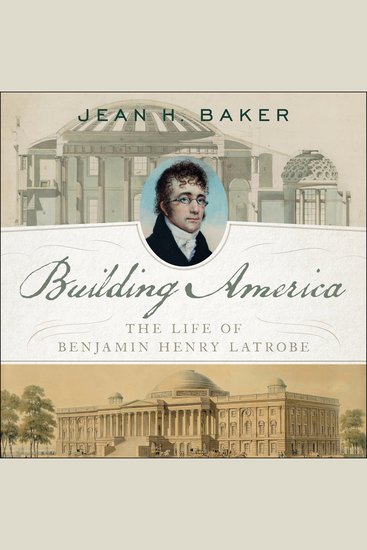
  • Building America - The Life of Benjamin Henry Latrobe - cover

    Building America - The Life of...

    Jean H. Baker

    • 0
    • 0
    • 0
    An English émigré who became America's first professional architect, Benjamin Henry Latrobe put his stamp on the built landscape of the new republic. Latrobe contributed to such iconic structures as the south wing of the US Capitol building, the White House, and the Navy Yard. He created some of the early republic's greatest neoclassical interiors, including the Statuary Hall. 


    As a young man, Latrobe was apprenticed to both a leading architect and civil engineer in London, studied the European continent's architectural and engineering monuments, worked on canals, and designed private houses. After the death of his first wife, he was bankrupt and emigrated to the United States in 1796 to restart his career. For the new nation with grand political expectations, he intended buildings and engineering projects to match those aspirations. Like his patron Thomas Jefferson, Latrobe saw his neoclassical designs as a way to convey American democracy. He envisioned his engineering projects as a way to unite the nation and improve public health. 


    Building America masterfully narrates the life and legacy of a key figure in creating an American aesthetic in the new United States.
    Ver libro
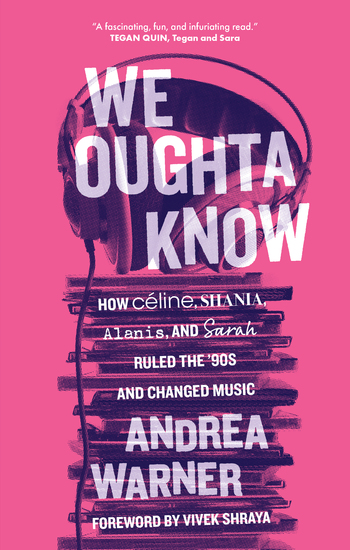
  • We Oughta Know - How Céline Shania Alanis and Sarah Ruled the ’90s and Changed Music - cover

    We Oughta Know - How Céline...

    Andrea Warner

    • 0
    • 0
    • 0
    A lively collection of essays that re-examines the extraordinary legacies of the four Canadian women who dominated ’90s music and changed the industry forever
    		 
    Fully revised and updated, with a foreword by Vivek Shraya
    		 
    “A fascinating, fun, and infuriating read.” — Tegan Quin, Tegan and Sara 
    		 
    In this of-the-moment essay collection, celebrated music journalist Andrea Warner explores the ways in which Céline Dion, Shania Twain, Alanis Morissette, and Sarah McLachlan became bonafide global superstars while revolutionizing ’90s music. In an era when male-fronted musical acts dominated radio and were given serious critical consideration, these four women were reduced, mocked, and disparaged by the media and became pop culture jokes, even as their albums were topping the charts and demolishing sales records.
    		 
    With empathy, humor, and reflections on her own teenaged perceptions of Céline, Shania, Alanis, and Sarah, Andrea offers us a revised and expanded edition of her 2015 book, providing a new perspective on the legacies of the four Canadian women who dominated the ’90s airwaves and influenced an entire generation of current day popstars with their voices, fashion, and advocacy. As the world is now reconsidering the treatment and reputations of key women in ’90s entertainment, We Oughta Know is definitively entering the chat.
    Ver libro
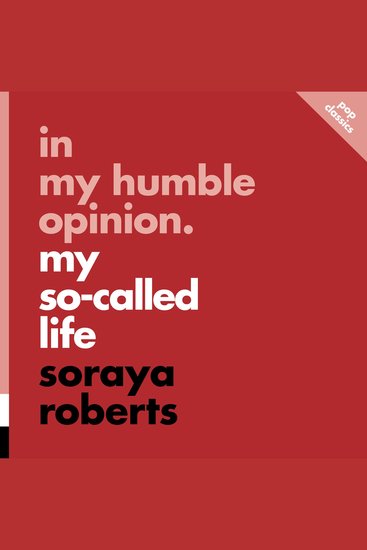
  • In My Humble Opinion: My So-Called Life - cover

    In My Humble Opinion: My...

    Soraya Roberts

    • 0
    • 0
    • 0
    A smart, engaging investigation of the show that brought real teens to TV My So-Called Life lasted only 19 episodes from 1994 to 1995, but in that time it earned many devoted viewers, including the showrunners who would usher in the teen TV boom of the late ’90s and the new millennium. With its focus on 15-year-old Angela Chase’s search for her identity, MSCL’s realistic representation of adolescence on TV was groundbreaking; without her there would be no Buffy or Felicity, Rory Gilmore or Veronica Mars. The series’ broadcast coincided with the arrival of third-wave feminism, the first feminist movement to make teen voices a priority, and Angela became their small-screen spokesperson. From her perspective, MSCL explored gender, identity, sexuality, race, class, body image, and other issues vital to the third wave (and the world). To this day, passionate fans dissect everything from what Rickie Vasquez did for gay representation to what Jordan Catalano did for leaning, and Soraya Roberts makes an invaluable contribution to that conversation with In My Humble Opinion.
    Ver libro
  • GLOBO ARTE JANUARY 2023 ISSUE - AN art magazine for helping artist in their art career - cover

    GLOBO ARTE JANUARY 2023 ISSUE -...

    Globo Arte team

    • 0
    • 0
    • 0
    Hi guys this is the January 2023 Magazine issue, s contains artists interviews to inspire artists, and so much more to help the artist in their art career,it contains artist interviews, art-related topics articles and question of the month, step of the month and social media updates
    Ver libro