¡Acompáñanos a viajar por el mundo de los libros!
Añadir este libro a la estantería
Grey
Escribe un nuevo comentario Default profile 50px
Grey
Suscríbete para leer el libro completo o lee las primeras páginas gratis.
All characters reduced
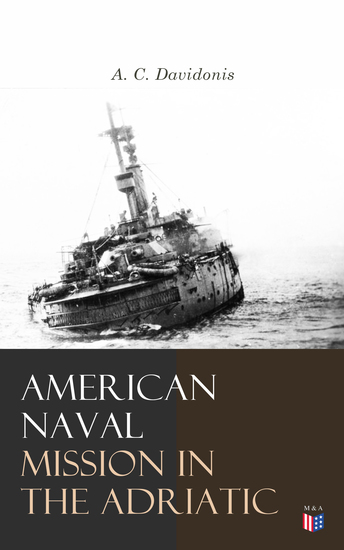
American Naval Mission in the Adriatic - 1918-1921 - cover

American Naval Mission in the Adriatic - 1918-1921

A. C. Davidonis

Editorial: Madison & Adams Press

  • 0
  • 0
  • 0

Sinopsis

"American Naval Mission in the Adriatic, 1918-1921" by A. C. Davidonis offers an in-depth analysis of the United States naval forces' occupation of central Dalmatia, spanning from November 1918 to September 1921. This occupation, encompassing over 100 miles of the Dalmatian coast, is notable for its duration and territorial extent. The book details various incidents and measures, such as the establishment of inter-Allied patrols and the handling of rumored Italian troop movements, showcasing the complexity of the American naval governor's role in the region. These episodes illustrate the intricate dynamics of military governance and diplomacy during this period. Overall, Davidonis' book provides a comprehensive account of this unique episode in American naval history, shedding light on the challenges and strategies employed during the American Naval Mission in the Adriatic.
Disponible desde: 27/11/2023.
Longitud de impresión: 61 páginas.

Otros libros que te pueden interesar

  • Ancient Turkey: A Captivating Guide to Göbekli Tepe and the Ancient Civilizations of Anatolia and Eastern Thrace - cover

    Ancient Turkey: A Captivating...

    Captivating History

    • 0
    • 0
    • 0
    King Midas turned everything he touched into gold. Shahmaran was a being of infinite knowledge who helped create the world’s first doctor. What did they have in common?  
    Ancient Turkey was a land of myth and mystery, but its secrets are slowly being uncovered. Find out about the legendary cultures that left their mark on this unique region, and discover which stories are fact and which are fiction. 
    The history of ancient Turkey is important since it gives insight into what Anatolia was like before the Roman and Byzantine Empires, but much of the information has been buried by time. Many ancient Anatolian cultures didn’t leave behind many written records, which made it difficult for scholars to decipher their stories. It has been a strenuous journey, but Anatolia’s past has finally come to light. Now, listeners can discover ancient Turkey’s secrets in this simple, comprehensive audiobook. 
    This audiobook will give you an overview of the civilizations of ancient Turkey and guide you through the following:The world’s first cathedralA quick look into the Anatolian Bronze and Iron AgesThe history and exploits of the Hittites and the MitanniWhat led to the world’s first peace treaty?Who was the real King Midas?Various mythical figures who feature in famous Greek mythsThe mysterious Kingdom of UrartuThe Phrygian king who tied the Gordian KnotEmperors and kings who changed the course of Anatolian historyAnd much, much more! 
    Scroll up and click the “add to cart” button to learn more about ancient Turkey today!
    Ver libro
  • Family Abolition - Capitalism and the Communizing of Care - cover

    Family Abolition - Capitalism...

    M.E. O’Brien

    • 0
    • 0
    • 0
    For some of us, the family is a source of love and support. But for many others, the family is a place of private horror, coercion, and personal domination. In a capitalist society, the private family carries the impossible demands of interpersonal care and social reproductive labor. Can we imagine a different future? 


    In Family Abolition, author M. E. O'Brien uncovers the history of struggles to create radical alternatives to the private family. O'Brien traces the changing family politics of racial capitalism in the industrial cities of Europe and the slave plantations and settler frontier of North America, explaining the rise and fall of the housewife-based family form. From early Marxists to Black and queer insurrectionists to today's mass protest movements, O'Brien finds revolutionaries seeking better ways of loving, caring, and living. Family Abolition takes us through the past and present of family politics into a speculative future of the commune, imagining how care could be organized in a free society.
    Ver libro
  • Sahih Muslim English Audio - cover

    Sahih Muslim English Audio

    Imam Muslim,...

    • 0
    • 0
    • 0
    Sahih Muslim is a collection of hadith compiled by Imam Muslim ibn al-Hajjaj al-Naysaburi (rahimahullah). His collection is considered to be one of the most authentic collections of the Sunnah of the Prophet (ﷺ), and along with Sahih al-Bukhari forms the "Sahihain," or the "Two Sahihs." It contains roughly 7500 hadith (with repetitions) in 57 books.
    Ver libro
  • Joseph Stalin - cover

    Joseph Stalin

    Kelly Mass

    • 0
    • 0
    • 0
    From 1924 till his death in 1953, Joseph Vissarionovich Stalin was a Georgian revolutionary and Soviet politician who ruled the Soviet Union. He was General Secretary of the Communist Party of the Soviet Union from 1922 to 1952 and Chairman of the Soviet Union's Council of Ministers from 1941 to 1953. In spite of ruling the nation as part of a collective management, he ultimately combined power and ended up being the totalitarian of the Soviet Union by the 1930s. Stalin, a communist dedicated to Lenin's grasp of Marxism, formalized these concepts as Marxism-- Leninism, while his personal policies were called Stalinism.Stalin was born into an penniless family in Gori, Georgia, under the Russian Empire. He participated in the Tbilisi Spiritual Academy before signing up with the Marxist Russian Social Democratic Labour Party. He went on to modify the party's paper, Pravda, and used thefts, kidnappings, and security rackets to raise cash for Vladimir Lenin's Bolshevik faction. He was usually imprisoned and banished within the nation. Stalin ended up being a member of the freshly formed Communist Party's ruling Politburo when the Bolsheviks took power at the time of the October Revolution and developed a one-party state. Following Lenin's death in 1924, Stalin got control of the nation after serving in the Russian Civil War and managing the development of the Soviet Union in 1922. Socialism in one nation ended up being a major component of the party's concept under Stalin. The nation observed farming collectivization and quick industrialization because of the Five-Year Plans launched under his management, leading to a central command economy. That led to serious food production disturbances, which added to the starvation of 1932-- 33. Between 1934 and 1939, Stalin carried out the Great Purge to rid the nation of declared "working-class adversaries."
    Ver libro
  • BankruptMe-Not Book of Problems - cover

    BankruptMe-Not Book of Problems

    Yury Yavorsky

    • 0
    • 0
    • 0
    Bankruptcy is not death. It may seem hard to believe but bankruptcy can bring salvation. This book describes the rules of survival, the problems to be solved in preparation for bankruptcy, if it can no longer be avoided, and gives an understanding of the full range of extralegal measures. It also offers an insight into the safeguards, which are a tactic for building your future business — the survivor that is debt- and loan-free. The book is based on true events and the author's own experience.Content:IntroductionSection 1. MistakesSection 2. All of a suddenSection 3. InevitabilitySection 4. Psychological tsunamiSection 5. Centrifugal forceSection 6. Contrived bankruptcySection 7. DepressionSection 8. AsceticismSection 9. Know thy friendSection 10. Know thy enemySection 11. ImmediatelySection 12. No hurrySection 13. SlowlySection 14. As long as possibleSection 15. LegalSection 16. IllegalSection 17. Of banks and bankruptcySection 18. Live not dieSection 19. From scratchAbout the author
    Ver libro
  • The Late Medieval Scottish Parliament - Politics and the three Estates 1424–1488 - cover

    The Late Medieval Scottish...

    Roland Tanner

    • 0
    • 0
    • 0
    In this ground-breaking study of the medieval parliament, Roland Tanner gives the Scottish Parliament a human face by examining the actions and motives of those who attended. In the past, the Scottish Parliament was seen as a weak and ineffective institution – damned because of its failure to be more like its English counterpart. But Roland Tanner shows that the old picture of weakness is far from accurate. In its very different way, the Scottish Parliament was every bit as powerful as the English institution. The ‘Three Estates’ (the clergy, nobility and burgh representatives who attended Parliament) were able to wield a surprising degree of control over the Crown during the fifteenth century. For instance, they threatened to lock James I’s taxation in a box to which he, the king, would have no access, made James II swear not to alter acts of Parliament, and prevented him from using his own lands and wealth as patronage for his supporters, and forbade James III to leave the country.  Roland Tanner has avoided a dry constitutional approach. Instead he has sought to bring Parliament to life through the people who attended, the reasons why they attended, and the complex interactions which occurred when all the most wealthy, powerful and ambitious people in the kingdom gathered in one place.
    Ver libro