Begleiten Sie uns auf eine literarische Weltreise!
Buch zum Bücherregal hinzufügen
Grey
Einen neuen Kommentar schreiben Default profile 50px
Grey
Jetzt das ganze Buch im Abo oder die ersten Seiten gratis lesen!
All characters reduced
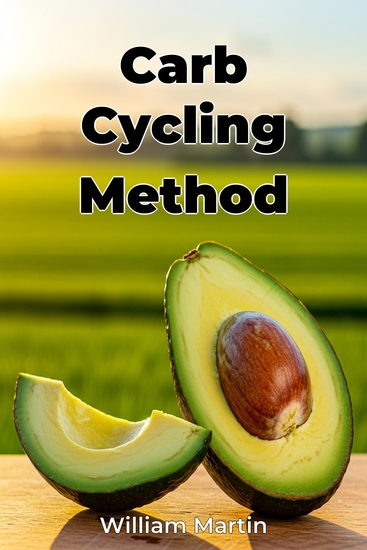
Carb Cycling Method - cover

Carb Cycling Method

William Martin

Übersetzer A AI

Verlag: Publifye

  • 0
  • 0
  • 0

Beschreibung

Carb Cycling Method explores a dynamic nutritional strategy focused on manipulating carbohydrate intake to optimize fat loss, preserve muscle, and balance hormones. This approach, rooted in nutrition science and exercise physiology, offers a refreshing alternative to restrictive diets. Did you know strategically varying carb intake can lead to superior results for fat loss and maintaining lean muscle compared to static diets? This book uniquely emphasizes metabolic flexibility—how efficiently your body switches between using carbs and fats for fuel—and provides tools to create personalized plans. The book progresses methodically, first introducing core principles of macronutrient metabolism and hormonal function. It then details the science behind low-carb and high-carb days, offering practical strategies for creating carb cycling plans tailored to individual goals and activity levels. Guidance is provided on monitoring progress and making adjustments, ultimately integrating carb cycling into a long-term lifestyle.
Verfügbar seit: 14.03.2025.
Drucklänge: 105 Seiten.


Weitere Bücher, die Sie mögen werden

  • Mastitis - Causes Symptoms and Treatment - cover

    Mastitis - Causes Symptoms and...

    Lilly Richardsen

    • 0
    • 0
    • 0
    Mastitis is an inflammation of the breast tissue that often results from an infection. It is a condition that primarily affects women, especially those who are breastfeeding, although it can also occur in non-lactating women and, in rare cases, men. The inflammation associated with mastitis is typically caused by bacteria entering the breast tissue through a cracked or sore nipple, though other factors such as blocked milk ducts, hormonal changes, or injury to the breast can also contribute. Mastitis is not only physically painful but can also cause significant emotional distress, particularly for new mothers who may already be dealing with the challenges of breastfeeding and caring for an infant. 
    The importance of understanding mastitis lies in its ability to impact both the physical and emotional well-being of those affected. When left untreated, mastitis can lead to complications such as breast abscesses, which may require surgical intervention. Additionally, untreated or recurrent mastitis can cause long-term issues with breastfeeding, leading to early weaning or, in some cases, chronic breast pain. Early recognition and appropriate treatment are critical for preventing these complications and ensuring the best possible outcome for the individual. 
    While mastitis is most commonly associated with breastfeeding, it is essential to recognize that the condition can affect women and men in other contexts as well. For non-lactating women, mastitis can sometimes be linked to hormonal changes, particularly during pregnancy or menopause. Men, though rarely affected, can also experience mastitis, often as a result of an infection or other underlying health issue. Understanding the different causes, symptoms, and risk factors of mastitis can help individuals identify the condition early and seek appropriate medical care before it progresses into something more serious.
    Zum Buch
  • Human Upgrade Book The - Version 40 - Biohacking Your Biology for Peak Performance and Longevity - cover

    Human Upgrade Book The - Version...

    John Navarro

    • 0
    • 0
    • 0
    This audiobook is narrated by an AI Voice.   
    Embark on a voyage through the human body's potential, where science and clarity blend to illuminate the path to wellness. This guide reveals the genetic orchestration of life, offering insights into biohacking and functional medicine, and taking readers from survival to peak performance. Discover the regenerative secrets of sleep, the enlightening power of psychedelics, and the electric language of your being. It's a masterful exploration of health, connecting us with our elemental roots under the sun's life-giving dance. This tome is a beacon, lighting the way to an optimized body, a life amplified, and an invigorated spirit, encouraging a symbiotic embrace with the nurturing cosmos.
    Zum Buch
  • Artificial Intelligence with Python for Beginners - Comprehensive Guide to Building AI Applications - cover

    Artificial Intelligence with...

    James Ferry

    • 0
    • 0
    • 0
    "Artificial Intelligence with Python for Beginners: A Practical Guide to Building AI Applications" is your gateway to understanding and harnessing the power of artificial intelligence using Python. Whether you're a novice programmer, a student eager to explore the world of AI, or a professional looking to expand your skill set, this book offers a comprehensive introduction to the fundamentals of AI and practical guidance on building AI applications. 
    Starting with the basics of Python programming, you'll learn essential concepts and techniques that form the foundation of AI development. From there, you'll delve into the exciting world of machine learning, exploring supervised and unsupervised learning algorithms using popular libraries such as Scikit-learn. Through hands-on projects, you'll gain experience in data analysis, predictive modeling, and evaluation, preparing you to tackle real-world problems with confidence. 
    The journey continues with a deep dive into deep learning, where you'll discover the power of neural networks for tasks like image classification and natural language processing. Using TensorFlow and Keras, you'll build and train neural networks from scratch, mastering essential techniques for model architecture design, training, and evaluation. 
    As you progress, you'll explore advanced topics such as reinforcement learning, diving into algorithms that enable agents to learn through trial and error. Through practical projects and step-by-step tutorials, you'll develop skills in problem-solving, decision-making, and optimization, equipping you to tackle a wide range of AI challenges. 
    Throughout the book, emphasis is placed on hands-on learning, with plenty of code examples, exercises, and projects to reinforce your understanding. By the end, you'll have the knowledge and confidence to build your own AI applications, from predictive models and recommendation systems to intelligent agents and chatbots.
    Zum Buch
  • Beekeeping for Beginners - A Comprehensive Beginner’s Guide to Bee farming - cover

    Beekeeping for Beginners - A...

    Melibeth Wilson

    • 0
    • 0
    • 0
    Welcome to the world of beekeeping! Whether you're looking 
    to start your own hive, or simply learn more about these 
    fascinating creatures, you've come to the right place. 
    What is Beekeeping? 
    Beekeeping, also known as apiculture, is the practice of managing 
    honey bee colonies, typically in hives, by humans. It is a form of 
    agriculture that has been practiced for centuries, and is used to 
    produce honey, beeswax, pollen, propolis, and other bee products.
    Zum Buch
  • 101 Amazing Sega Mega Drive Facts - also known as the Sega Genesis - cover

    101 Amazing Sega Mega Drive...

    Jimmy Russell

    • 0
    • 0
    • 0
    In this volume of Jimmy Russell's Games Console History series, narrator J.D. Kelly talks us through over 100 facts about Sega's Mega Drive - or the Genesis if you're from American shores. 
    Covering areas such as the history, hardware, games both rare and popular and some fascinating information you probably never knew, this is the ideal audio-book for retro fans and newcomers alike! 
    ©2017 Jack Goldstein Books (P)2017 Jack Goldstein Books
    Zum Buch
  • The Fabric of Cosmos - Unraveling the Mystery of Dark Matter - cover

    The Fabric of Cosmos -...

    Dirk Fallon

    • 0
    • 0
    • 0
    The story of dark matter begins not in the distant reaches of the universe, but in the questions that humans have asked for centuries. What is the universe made of? Why do galaxies behave the way they do? As our tools for observing the cosmos improved, so did our understanding—but with every answer came more mystery. In the early 20th century, astronomers began to notice strange things. Galaxies were spinning in ways that defied the laws of physics, at least as we understood them. The stars on the outer edges of galaxies were moving far too fast to be held together by the gravity from visible matter alone. There had to be something else out there, something invisible, something we couldn’t detect with telescopes. This was one of the first big hints that something massive and unseen—what we now call dark matter—was shaping the universe. 
    Modern cosmology was born when scientists started to view the universe not just as a collection of stars and planets, but as a dynamic, evolving structure governed by deep physical laws. Einstein’s theory of general relativity reshaped our understanding of space, time, and gravity. Suddenly, the universe was a place where space could bend, expand, and even accelerate. These ideas led to the Big Bang theory and the realization that the cosmos had a beginning and has been changing ever since. But as astronomers began mapping out galaxies and measuring their movements, inconsistencies popped up. The math didn’t add up unless we assumed that most of the mass in the universe was missing from our view. That mass didn’t emit light, didn’t reflect it, and didn’t absorb it. It was dark, but it was there.
    Zum Buch