Rejoignez-nous pour un voyage dans le monde des livres!
Ajouter ce livre à l'électronique
Grey
Ecrivez un nouveau commentaire Default profile 50px
Grey
Abonnez-vous pour lire le livre complet ou lisez les premières pages gratuitement!
All characters reduced
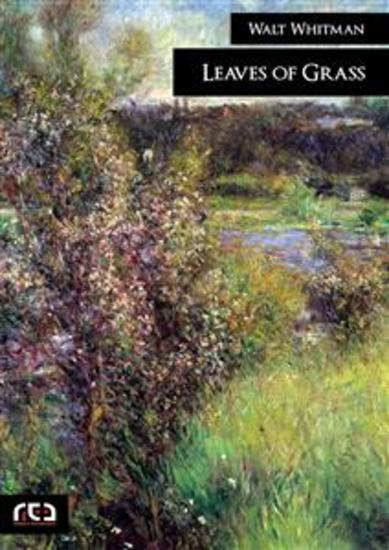
Leaves of Grass - cover

Leaves of Grass

Walt Whitman

Maison d'édition: REA Multimedia

  • 0
  • 0
  • 0

Synopsis

Leaves of Grass is a poetry collection by American poet Walt Whitman. Though it was first published in 1855, Whitman spent most of his professional life writing, rewriting, and expanding Leaves of Grass until his death in 1892. Six or nine individual editions of Leaves of Grass were produced, depending on how they are distinguished. This resulted in vastly different editions over four decades. The first edition was a small book of twelve poems, and the last was a compilation of over 400.
The collection of loosely connected poems represents the celebration of his philosophy of life and humanity and praises nature and the individual human's role in it. Rather than focusing on religious or spiritual matters, Leaves of Grass focuses primarily on the body and the material world. Its poems do not rhyme or follow standard rules for meter and line length.
Disponible depuis: 15/10/2023.
D'autres livres qui pourraient vous intéresser

  • Talisman for the Soul - cover

    Talisman for the Soul

    Andrew Bell

    • 0
    • 0
    • 0
    ‘Talisman for the Soul’ is an immersive and illuminating collection that expresses a powerful intensity of emotion, exploring overarching themes of human interaction, as well as the human need to transform and adapt as individuals. Written by a poet of rare descriptive power, the poems speak to a world of increasing disconnection, one that is careering towards climate breakdown and ecological destruction. The poems seek to reconnect with the mystery and sacredness of human life by exploring the foundations of human identity through themes that touch us all: love and loss, humour, beauty, joy, relationships, and the natural world.
    Voir livre
  • The Orchid Folios - cover

    The Orchid Folios

    Mok Zining

    • 0
    • 0
    • 0
    “When you take an orchid out of its pot, you must first loosen the roots’ hold on the soil. Late last evening as I unravelled the braids of the shattered phalaenopsis, I saw how the ends were white and shrivelled from neglect. You have to do it gently—it’s like combing hair. I remember Mum’s fingers running through mine, and mine through hers, until the final months when all of it started to fall.” 
     
     
    A pot shatters. An arrangement falls apart. A florist finds herself amidst the scattered leaves of history. At once a poetry collection and a documentary novella, The Orchid Folios reimagines the orchid as a living, breathing document of history: a history that enmeshes the personal, colonial, linguistic, and biotechnological with the Vanda Miss Joaquim, the symbol of Singapore’s postcolonial hybridity. While the Orchid has shaped the fantastical narratives that govern our multiracial City in a Garden, it continues to shape-shift and bloom on its own terms, challenging us to imagine a decolonised Singapore. This is the organism at the heart of The Orchid Folios—by turns stark and unruly, documenting and challenging the narratives that are the roots of our national consciousness.
    Voir livre
  • A Scattering - cover

    A Scattering

    Emma Cameron

    • 0
    • 0
    • 0
    In Highland Scotland in 1850, Catrìona lives life to the rhythm of seasons and Gaelic songs, until a dramatic change of circumstances forces her to fight for everyone and everything she loves.  
    Years later Rose, an artist, who's trying to make sense of her fractured family and her own restlessness, searches among ruins in a deserted landscape.
    Voir livre
  • Arbitrary Light Bulb An - cover

    Arbitrary Light Bulb An

    Ian Duhig

    • 0
    • 0
    • 0
    Not Yet Available
    Voir livre
  • The Poetry of Robert Herrick - 17th Century lyrical poet that was also a cleric - cover

    The Poetry of Robert Herrick -...

    Robert Herrick

    • 0
    • 0
    • 0
    The Clergyman and poet, Robert Herrick was born in Cheapside, in London in 1591. An exact date is not known though he was baptized on August 24th, the seventh child of Nicholas Herrick, a wealthy goldsmith.  
    Some controversy surrounds several chapters in his early years.  The first are allusions that his father, in November 1592, two days after making a will, killed himself by jumping from the fourth-floor window of his house. However, the Queen's Almoner did not confiscate the Herrick estate for the crown as was the usual procedure with suicides, so an alternate narrative emerged that he fell accidentally which seems to have more credence. 
    There is no record of Herrick attending school. Some claim a poem alludes to Westminster School, others merely that he meant Westminster, the area. Another school of thought claims he was educated at Merchant Taylor’s School.  What is known is that in 1607 he was apprenticed to his uncle Sir William Herrick as a goldsmith.   
    Herrick certainly seems to have been a keen and avid poet. The earliest work known to be written by him dates from 1610; 'A Country Life', and deals with the move from London to farm life in Leicestershire.  
    After six years as an apprentice, when Herrick was 22 he matriculated at St John’s College, Cambridge before moving to Trinity College and graduating with his Bachelor of Arts in 1617, Master of Arts in 1620, and in 1623 he was ordained priest.  
    By 1625 he was well known as a poet, mixing in literary circles in London such as that around Ben Jonson. An avowed admirer of Jonson he was also one of a group whom became known as ‘The Sons of Ben’ writing both in his style and about him. 
    In 1629 he was presented by Charles I to the parishioners of Dean Prior, a remote parish of Devonshire. The best of his work was written in the peace and seclusion of country life; 'To Blossoms' and 'To Daffodils' are classical depictions of a devoted appreciation of nature.  
    However, after he refused to subscribe to The Solemn League and Covenant, he was ejected from Devonshire in 1647 and moved to London where he published his religious poems Noble Numbers (1647), and Hesperides (1648). 
    Herrick was distinguished as a lyric poet, and some of his love songs, for example, 'To Anthea' and 'Gather Ye Rose-buds' are considered exceptional.  
    By 1660 he was reinstated at Dean Prior where he lived for the remainder of his life. He wrote no more poems after 1648 but over his life it is thought he wrote in the region of 2,500 poems in total, only a small portion of which were ever published. 
    He died in October 1674, at the age of 83 in circumstances unknown.  He was buried on October 15th, 1674 in an unmarked grave in the churchyard at Dean Prior. 
     This volume comes to you from Portable Poetry, a specialized imprint from Deadtree Publishing.  Our range is large and growing and covers single poets, themes, and many compilations.
    Voir livre
  • Imaginari - A Collection of Fantasy and Science Fiction Poetry - cover

    Imaginari - A Collection of...

    Kristina W. Kelly

    • 0
    • 0
    • 0
    Step into lyrics of science, science fiction, and fantasy where robots fight for their autonomy, fairies wage war against goblins, and humanity reaches for what awaits them in the stars. 
    This collection of poetry holds a glimpse of the human experience disguised in fairytales and stardust. You will encounter themes that resonate with our reality, such as motherhood, growth, feminism, hope, and nature. Whether you are a fan of epic sagas, whimsical tales, or lyrical reflections, you will find something to spark the imagination in this collection. Prepare to be enchanted by an invitation to dreams of the fantastical. 
    Read by the author.
    Voir livre